Panama Pulls the Plug on CK Hutchison Canal Ports
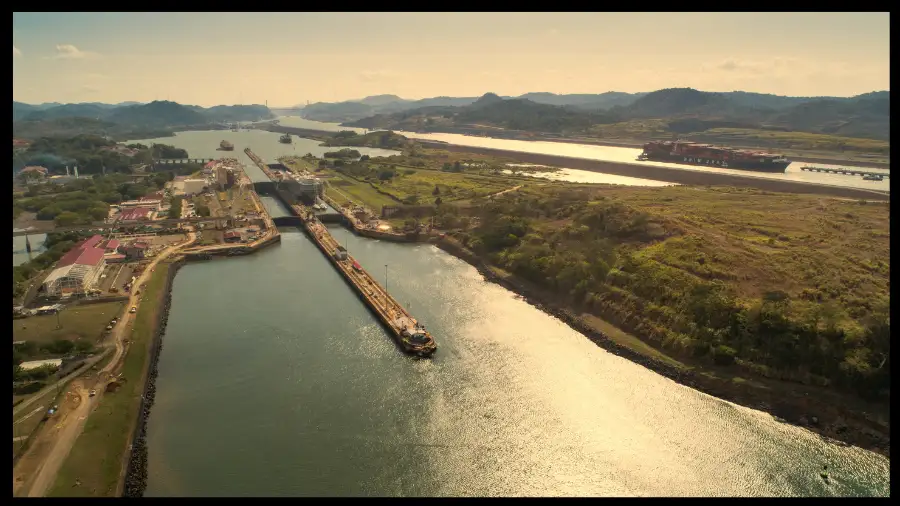
Panama has moved to cancel CK Hutchison’s long-running Panama Canal port concessions for Balboa and Cristóbal, triggering an immediate operator handover that keeps boxes moving but injects legal, concession, and counterparty risk into a critical chokepoint interface.
Subscribe to the Ship Universe Weekly Newsletter
Click here for 30 second summary ▶
Panama Canal ports flip operators after court-backed concession annulment
Panama has moved to end CK Hutchison’s concessions at the Balboa (Pacific) and Cristóbal (Atlantic) terminals and place the facilities under interim operators while a new concession framework is prepared. The shift is being presented as an operational continuity move, not an asset expropriation, but it is paired with sharp legal and political dispute.
- Immediate trigger
Supreme Court ruling invalidated the legal basis of the concession and a later extension, enabling a government occupation decree and takeover. - What changed on the ground
Control of terminal operations shifted to interim managers (Maersk’s APM Terminals and MSC-linked operator) during a transition window. - What shippers feel first
Counterparty and contract uncertainty rises fast even if quay operations continue, especially for long-dated service and inland coordination.
| Reader shortcut | Changes | Assets and control | Operational continuity | Commercial ripple | Next gates to watch |
|---|---|---|---|---|---|
| Concession reset |
Panama moved to end CK Hutchison’s operating concessions at Balboa and Cristóbal after a Supreme Court ruling voided the legal basis of the contract and a later extension.
Legal finality was tied to publication and formal occupation steps.
|
Government action enabled occupation of port assets to maintain service while changing who runs day-to-day operations.
Key ports at both Canal entrances
|
Interim operators were installed with the stated goal of keeping quay and gate operations running while the state designs a new concession process.
Transition window referenced as up to about 18 months.
|
Expect faster tightening of credit, indemnities, and “change of operator” clauses in shipper, trucking, and depot arrangements tied to these terminals. | New concession timeline, labor continuity commitments, and how courts, arbitration, and politics interact with the interim operating plan. |
| Counterparty risk | CK Hutchison objected publicly and pointed to legal action pathways as employees were removed and operations ceased under the prior operator structure. |
Control split by terminal: Balboa to Maersk’s APM Terminals, Cristóbal to MSC-linked operator during the interim period.
Operational ownership vs asset ownership becomes the key distinction for contracts.
|
The most sensitive operating interfaces are IT systems, equipment custody, safety management, and access controls during handover. | Claims posture can harden in transition periods, especially around demurrage, detention, appointment systems, and data mismatches. | Any “no expropriation” language tested by compensation, asset valuation, and how port revenue flows are handled during the interim. |
| Channel politics | The move sits inside wider U.S.-China tension around strategic infrastructure, with Panama emphasizing judicial basis and transparency. | Maritime-facing exposure concentrates at the Canal gateways, where confidence in governance matters as much as crane rate. | Near-term berth productivity can remain stable, but commercial processes often slow while legal teams rewrite assumptions. | Watch for re-papering of service agreements, revised liability wording, and increased scrutiny of long-dated commitments. | Arbitration steps, diplomatic responses, and the shape of the competitive tender that replaces the concession. |
| Practical watchlist | Notable signal: Panama framed the takeover as urgent public interest and continuity, while CK Hutchison framed it as unlawful. | Terminal users should track any change to booking windows, gate hours, appointment rules, and documentation formats. | The highest-friction phase is the first 2 to 6 weeks: systems, staff role clarity, and SOP alignment. | Carriers and BCOs may temporarily push more cargo via alternative nodes if paper flows become noisy, even if cranes are fine. | Government decrees, regulator notices, and operator bulletins on process changes at Balboa and Cristóbal. |
Panama’s decision to end the Hutchison-era concession and install interim operators keeps terminal activity moving, but it creates a temporary period where contracts, liability, and process ownership are being rewritten in real time. That is where most “hidden delay” shows up for users of Balboa and Cristóbal.
We welcome your feedback, suggestions, corrections, and ideas for enhancements. Please click here to get in touch.