More Fires at Sea: June Shipping Safety Alert
Subscribe to the Ship Universe Weekly Newsletter
Fire is fast becoming one of the most dangerous threats at sea. From a Singapore-flagged container ship explosion off the coast of India to a blazing EV cargo ship drifting near Alaska, June has already seen multiple maritime fire emergencies. These incidents are raising alarms across the industry as crews face growing risks tied to battery cargo, outdated suppression systems, and evolving global trade routes.
Singapore-Flagged Container Ship Fire (June 9, 2025)
On June 9, 2025, at approximately 10:30 AM IST, a powerful under-deck explosion shook the Singapore-flagged container ship MV Wan Hai 503 roughly 78 nautical miles off Kerala’s coast. Carrying 22 crew members en route from Colombo to Mumbai, the blast ignited a fierce fire, forcing 18 officers overboard—4 went missing and 5 were injured in the scramble. The Indian Navy (INS Surat) and Coast Guard immediately launched a rescue and containment operation, with firefighting still underway as the 270 m vessel drifted at sea.
EV-Powered Cargo Ship Blaze – (June 3, 2025)
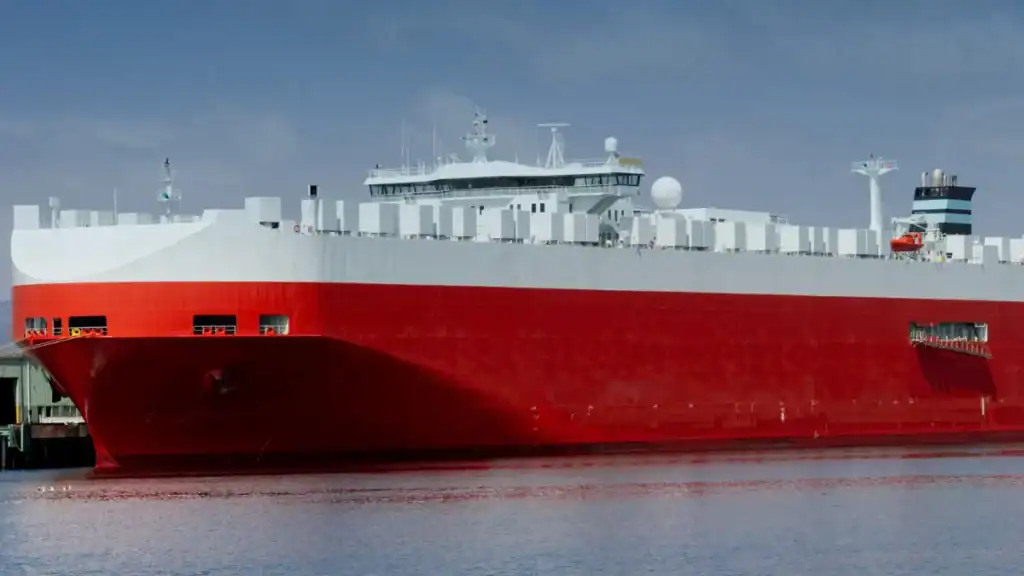
On June 3, 2025, about 300 miles southwest of Adak Island, Alaska, the car-and-truck carrier Morning Midas, en route from Yantai, China, to Lázaro Cárdenas, Mexico, with around 3,000 vehicles (including ~800 EVs) caught fire mid-Atlantic. A deck carrying electric vehicles erupted in flames that CO₂ suppression couldn’t fully extinguish. The 22-person crew abandoned ship safely and was rescued by Cosco Hellas. Salvage operations are under way, spotlighting the growing threat of lithium-ion cargo in busy maritime lanes.
Industry Responds to Rising Maritime Fire Risks
The recent fires aboard the Morning Midas and MV Wan Hai 503 have intensified industry-wide scrutiny over maritime fire safety, especially involving lithium-ion cargo and hazardous goods. Key stakeholders across insurance, regulatory, and shipping sectors are now taking visible steps to reduce risk.
Insurance Industry Actions
Major underwriters are tightening their policies for car carriers and containerships:
- Allianz Commercial called the Morning Midas blaze a “clear warning” of rising risks at sea.
- Premiums are being raised for EV-carrying ships and operators with inadequate safety records.
- New policy conditions include:
- EVs must be shipped at low state-of-charge (SOC).
- Increased spacing between vehicles to limit thermal spread.
- Requirements for fire-resistant deck coatings and linings.
Regulatory Movement: IMO and SOLAS
The International Maritime Organization (IMO) and national regulators are accelerating rule changes:
- Proposed amendments to SOLAS (Safety of Life at Sea) may include:
- Mandatory thermal isolation for EV cargo.
- Additional firefighting training for crews, focused on lithium-ion ignition.
- Working groups are drafting:
- New EV-specific cargo handling protocols.
- Recommendations for enhanced fire detection and suppression systems.
Operator & Salvage Response
Shipping companies and salvage firms are adjusting procedures and investing in readiness:
- Zodiac Maritime (operator of Morning Midas) has:
- Deployed a salvage tug with specialized firefighting capability.
- Begun internal reviews of crew protocols, CO₂ suppression limits, and response readiness.
- Other operators are:
- Running new onboard fire drills for EV scenarios.
- Auditing cargo manifests for high-risk batteries and flammable materials.
Broader Industry Debate
Across the maritime sector, a structural reassessment is underway:
- Vessel design may shift to include:
- Compartmentalized car decks.
- Improved ventilation and thermal monitoring systems.
- OEMs and shippers are discussing:
- Pre-shipment battery safety certification.
- Unified standards for EV stowage on international voyages.
The shipping industry is now facing a pivotal moment in its approach to fire safety. Incidents like Morning Midas and MV Wan Hai 503 are no longer seen as isolated cases. They are part of a broader pattern linked to the rising transport of high-risk cargo, especially electric vehicles and hazardous goods.
Insurers are raising premiums and tightening terms. Regulators are drafting new safety protocols. Ship operators are reviewing everything from fire drills to vessel design. The pressure to adapt is growing.
As cargo types evolve, so must the systems that carry them. The industry’s next phase will depend on how quickly it can close the gap between modern risk and outdated safeguards.