Middle East Network Tightens as Maersk Pauses FM1 and ME11 and Suspends Gulf Shuttles
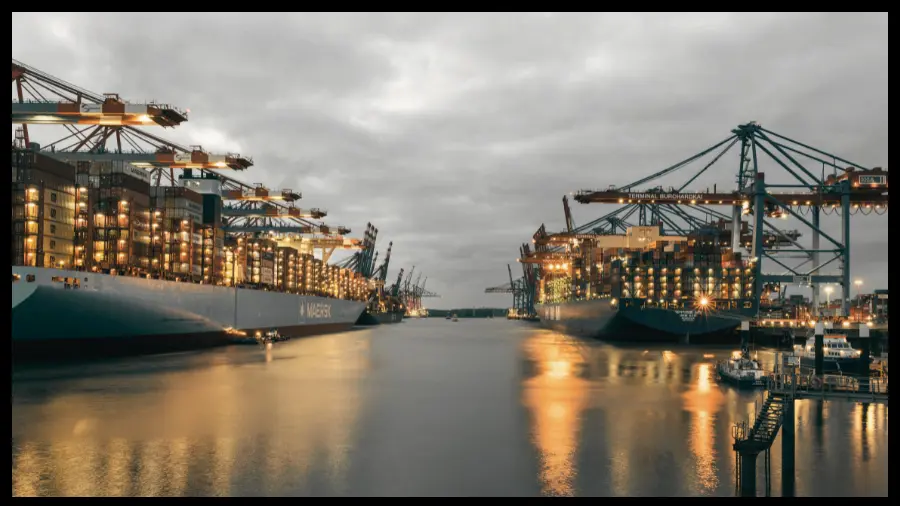
Maersk has temporarily suspended two major container services that connect the Middle East with Asia and Europe, a clear signal that the current Gulf risk picture is now driving network-level decisions, not just higher costs. The suspension affects FM1 (Far East to Middle East) and ME11 (Middle East to Europe), and Maersk also confirmed its Gulf shuttle services are suspended while it adjusts coverage and contingency plans for cargo already in motion.
Subscribe to the Ship Universe Weekly Newsletter
Click here for 30 second summary of the full piece ▶
Maersk pauses FM1 and ME11 and halts Gulf shuttles
Maersk has temporarily suspended two key services in its Middle East network: FM1 (Far East to Middle East) and ME11 (Middle East to Europe). It also confirmed Gulf region shuttle services are suspended until further notice. The change is paired with a defined phase-out plan for final westbound sailings and contingency communications for containers already gated in or already on board.
- Immediate reality: fewer scheduled strings covering Gulf-linked flows and more reliance on alternative gateways and contingency storage.
- Operational signal: network design is being changed to reduce exposure while maintaining stability across the wider system.
- Most exposed moves: time-sensitive cargo and tight transshipment chains tied to Gulf calls.
When two core services are paused and Gulf shuttles stop, disruption transmits first through cutoffs and reroutes, then through congestion and longer lead times as cargo is reflowed via fewer, more concentrated gateway options.
| Fast reader take | Service move | Last westbound sailing markers | Network knock-on | Shows up first | Closest stakeholders |
|---|---|---|---|---|---|
| FM1 paused on a defined phase-out timeline |
FM1 service temporarily suspended (Far East to Middle East).
FM1 suspended
Far East to Middle East
|
VUNG TAU EXPRESS 607W First load: Xingang ETD 02-15 Phase-out: Tanjung Pelepas ETD 09-03 |
Fewer direct Asia to Gulf options pushes more cargo into alternative gateways and tighter transshipment windows. | Cutoff changes, rebookings, and revised inland handoffs for Gulf-connected cargo. | BCOs, forwarders, operations teams, depot planners. |
| ME11 paused, Middle East to Europe link reduced |
ME11 service temporarily suspended (Middle East to Europe).
ME11 suspended
Middle East to Europe
|
ASTRID MAERSK 609W First load: Mundra ETD 04-03 Phase-out: Salalah ETD 13-03 |
Reduced string diversity concentrates demand into fewer loops, raising the risk of rolled cargo and extended dwell in contingency locations. | Slot availability, feeder alignment, and revised ETA reliability on Europe-linked flows. | Europe importers, exporters, forwarders, port terminals. |
| Gulf shuttles stopped, short-sea flexibility drops |
Gulf region shuttle services suspended until further notice.
Shuttles suspended
Short-sea impact
|
Near-term effect is fewer “pressure relief” moves to reposition boxes and clear yard build-up. | Less flexibility to rebalance equipment and reposition cargo between Gulf ports during disruption. | Port yard density, gate appointment pressure, and feeder bottlenecks. | Terminals, depot operators, truckers, customs brokers. |
| ME1 drops Jebel Ali call to reduce exposure |
ME1 temporarily removes Jebel Ali and continues India and Oman calls.
ME1 change
Jebel Ali removed
|
Previous rotation included Jebel Ali; updated rotation starts at Mundra and Nhava Sheva then Salalah and Europe. | Cargo originally planned via Jebel Ali faces reroute decisions, transshipment reshuffles, and revised inland plans. | Port pairs and transshipment plans tied to UAE gateways. | UAE-linked shippers, Gulf distributors, Europe service planners. |
| Booking acceptance is being tightened across parts of the region |
Additional operational measures include temporary booking acceptance limits for several Gulf-linked origins, destinations, and transshipment flows.
Acceptance limits
Contingency storage
|
Exceptions may apply for critical cargo categories, but the main operational signal is “stability first” network management. | More cargo pauses at origin, more rework on routing, and more pressure on alternative gateway capacity. | Early visibility in customer advisories and booking platform availability. | Shippers, forwarders, procurement, customer service. |
Planning lens for shippers when a service pause hits
A service suspension usually converts into three practical effects: added transit days, higher inventory carrying cost, and higher probability of rolled cargo or extended dwell at a contingency gateway. The calculator below sizes the carrying-cost side using your assumptions.
Execution signals that matter this week
- Phase-out sailings matter: cargo already gated in or already on board tends to be managed through discharge and contingency plans as the last westbound voyages complete.
- Shuttle removal concentrates pressure: without Gulf shuttles, repositioning options shrink and yard density can become the limiter.
- Gateway concentration risk: flows shift into fewer ports, so cutoffs and feeder alignment become more sensitive to small schedule slips.
Inventory buffer cost estimator
Enter added transit days from rerouting or slower handoffs, plus a simple view of cargo value and cost of capital. Output estimates the working-capital cost of delay.
Pausing FM1 and ME11, combined with Gulf shuttle suspensions, concentrates cargo into fewer paths and lengthens planning cycles. The earliest measurable effect is more delay-days per box and higher buffer cost for shippers, followed by tighter slot availability as the network rebalances.
We welcome your feedback, suggestions, corrections, and ideas for enhancements. Please click here to get in touch.