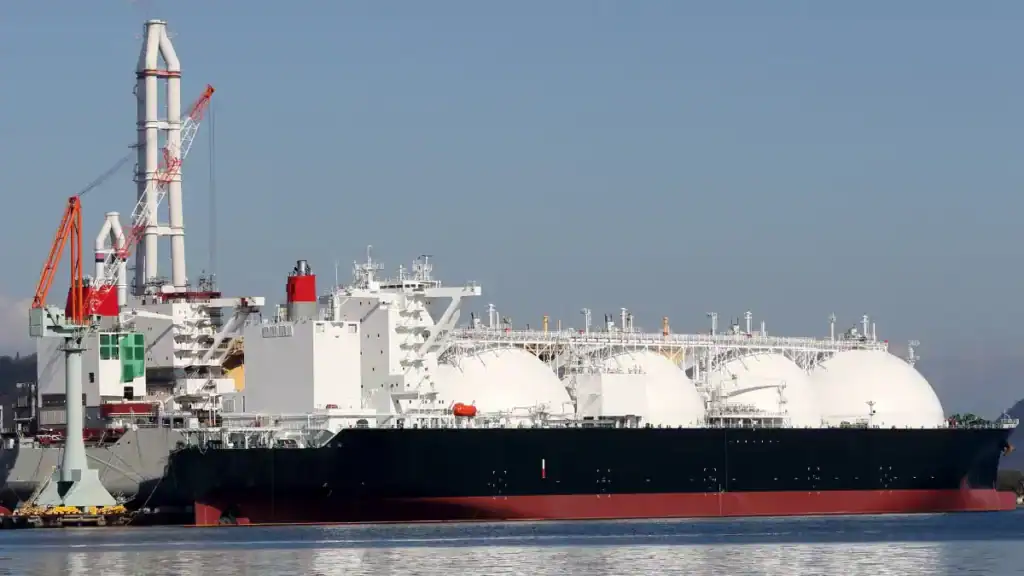
From Canada’s first direct Pacific export to the Arctic-ready tankers preparing for deployment, the LNG shipping sector is rapidly evolving. New infrastructure, expanded capacity, and shifting trade flows are all playing a part in the sector’s accelerated growth.
This overview highlights five of the most notable recent events in maritime LNG. Each reflects a key aspect of the industry's evolution, from construction milestones and trade route breakthroughs to long-term contracts that set the stage for sustained supply and investment.
Canada’s First LNG Export from the Pacific Coast
On June 30, 2025, the GasLog Glasgow departed Kitimat, British Columbia, loaded with LNG—the first-ever export from Canada’s Pacific Coast. This marks a transformative moment, as LNG Canada’s facility began production in late June and can export up to 14 million metric tons per year. Supported by a C$40 billion investment led by Shell with international partners, this project opens direct access to Asia without transiting the Panama Canal.
Key Takeaways
Aspect
Details
Importance
First Cargo Departure
June 30, 2025 aboard GasLog Glasgow
Marks operational launch of Pacific export capability
Export Capacity
14 million metric tons per year
Positions Canada as a major global LNG supplier
Route Efficiency
Bypasses Panama Canal for direct Asia access
Cuts fuel use and time for transpacific deliveries
Startup Timeline
First production mid-June, shipping within weeks
Fast commissioning showcases infrastructure readiness
Future Expansion
Capacity could double if Phase 2 proceeds
Offers long-term growth in Pacific LNG volumes
Note: LNG Canada’s first export voyage represents a historic shift in Canada’s energy export model, offering a shorter, more cost-efficient supply route to Asian buyers compared to traditional Gulf Coast departures.
Surge in European LNG Imports While Asian Demand Drops
In H1 2025, global seaborne LNG imports rose 1.7% year‑on‑year, reaching 208.6 million tons. Europe drove this increase with a 21.6% rise to 66.4 million tons, as buyers replace curtailed Russian pipeline gas. Meanwhile, Asia’s imports fell 6.4%, totaling 133.4 million tons, as elevated spot prices pushed buyers in China and India to reduce purchases.
Key Takeaways
Aspect
Details
Importance
European Storage Levels
56.8% full by late June 2025
Lower-than-usual reserves increase reliance on LNG imports
Asian Spot Prices
$13–16 per mmBtu
High prices reduce demand from major Asian buyers
Trade Flow Shift
Contracted LNG volumes redirected toward Europe
Reflects growing European demand and price advantage
Global Market Adjustment
Rebalancing driven by regional pricing and storage differences
Shows dynamic responsiveness in global LNG trading
Note: Europe’s stronger pull on LNG cargoes reflects a reshaped global trade flow, as price-sensitive Asian markets scale back and storage readiness becomes a critical factor in destination preference.
Cheniere Greenlights $2.9 B Corpus Christi Expansion
Cheniere Energy approved its Corpus Christi Midscale Trains 8 & 9 and related debottlenecking efforts. With a capital outlay of $2.9 billion, the project adds 3 mtpa of liquefaction capacity and increases existing output by around 20%, targeting a total uplift of ~5 mtpa. This is part of a broader plan to reach 60–63 mtpa run-rate capacity by 2028 and up to ~75 mtpa by the early 2030s.
Key Takeaways
Aspect
Details
Importance
Project Scope
Adds Trains 8 & 9 plus debottlenecking
Expands Corpus Christi facility’s output significantly
Capital Investment
$2.9 billion allocated
Represents part of a broader $25 billion growth plan
New Capacity
~5 million tons per year added
Equivalent to powering Houston for nearly 3 years
Long-Term Targets
60–63 mtpa by 2028; ~75 mtpa by 2030s
Positions Cheniere among the top global LNG exporters
Note: Cheniere’s expansion at Corpus Christi reflects rising global demand and a competitive race to boost U.S. LNG export capacity, especially along the Gulf Coast where infrastructure and deep-water access are optimal.
Russia Prepares First Ice‑Class LNG Carrier
Russia’s first domestically built ice‑class LNG tanker, named Alexey Kosygin, is slated for launch in the second half of 2025. Constructed at the Zvezda shipyard, the vessel is designed to navigate Arctic conditions with up to 2 meters of sea ice, supporting the Arctic LNG 2 export project. It is currently in final sea trials.
Key Takeaways
Aspect
Details
Importance
Vessel Name
Alexey Kosygin
First domestically built Russian LNG ice-class tanker
Launch Timeline
Expected in late 2025 after sea trials
A key milestone in Russia’s Arctic LNG logistics push
Builder
Zvezda Shipyard
Part of national effort to localize strategic shipbuilding
Ice Capability
Can break through up to 2 meters of sea ice
Enables year-round Arctic export operations
Supported Project
Arctic LNG 2
Expands Russia’s LNG supply via Northern Sea Route
Note: The Alexey Kosygin represents a strategic advancement for Russia’s LNG ambitions in the Arctic. Designed for harsh ice conditions, it supports year-round exports from the Arctic LNG 2 project via the Northern Sea Route.
Energy Transfer and Chevron Expand Lake Charles Supply Deal
Energy Transfer announced it is expanding its LNG supply agreement with Chevron, adding 1 mtpa from its Lake Charles export terminal. This brings Chevron’s total committed volume to 3 mtpa under a 20‑year contract, building on an initial 2 mtpa deal signed in late 2024. It supports project financing and development momentum.
Key Takeaways
Aspect
Details
Importance
New Supply Volume
1 mtpa added to existing deal
Raises Chevron’s total to 3 mtpa from Lake Charles
Contract Terms
Free-on-board (FOB), Henry Hub–linked, 20-year duration
Provides long-term pricing clarity and delivery control
Additional Buyers
Kyushu Electric (Japan) and MidOcean Energy
Broadened buyer base supports project viability
Market Context
U.S. export activity increasing after policy shifts
Reflects growing global demand for U.S.-sourced LNG
Investment Signal
Supports financing for Lake Charles final investment decision
Reinforces investor and stakeholder confidence in project timeline
Note: Chevron’s expanded commitment underscores strong commercial support for the Lake Charles terminal and highlights the role of long-term contracts in stabilizing U.S. LNG project development amid shifting regulatory and market conditions.
The events demonstrate significant milestones across LNG export infrastructure, trade dynamics and vessel innovation. From Canada’s Pacific debut to U.S. capacity expansion, Arctic vessel development and long-term supply deals, momentum in maritime LNG is accelerating. There’s a wealth of strategic storytelling to position your site at the center of this growing global narrative.
Targets 75 mtpa by 2030s with $25B investment roadmap
Russia Ice-Class LNG Tanker
Zvezda Shipyard / Arctic LNG 2
Launch of "Alexey Kosygin" – 2m ice-class LNG carrier
Secures Arctic LNG shipping route for year-round export
Part of domestic fleet strategy supporting Arctic LNG 2
Energy Transfer–Chevron Deal
Lake Charles, Louisiana
Chevron expands deal to 3 mtpa, 20-year FOB contract
Supports financing and builds commercial confidence
Signals rising U.S. LNG export stability post-permitting
Note: These LNG developments reflect rising infrastructure investment, shifting trade patterns, and innovative vessel solutions—all signaling accelerated growth and strategic realignment in maritime LNG shipping for 2025 and beyond.