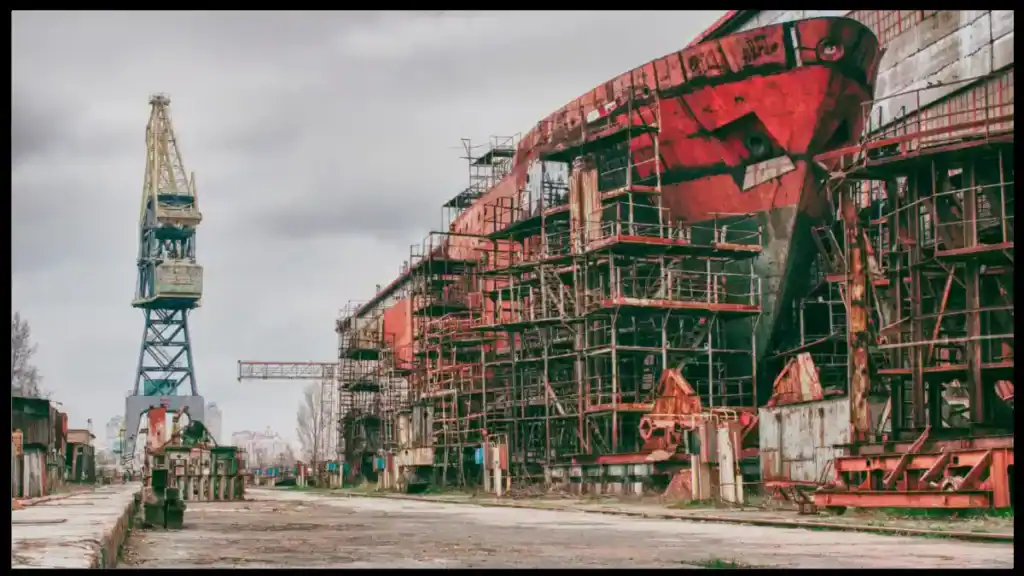
Shipbuilding momentum continues across naval, commercial, and industrial sectors as global demand evolves. Governments are investing in new warships and polar research vessels, commercial carriers are securing next-generation container ships and LNG tankers, and shipyards themselves are adapting through expansion, restructuring, or reopening. From Asia to Europe to the U.S., these developments reflect an industry repositioning for sustainability, capacity growth, and strategic advantage. The following updates offer a comprehensive snapshot of the latest shifts shaping the global shipbuilding landscape.
Commercial Shipbuilding Highlights
As global trade patterns shift and decarbonization goals intensify, shipbuilders around the world are responding with a wave of high-value orders, technological innovation, and fuel diversification. From LNG megaships and ammonia-fueled bulk carriers to hybrid-electric ferries and fully electric tugs, this past week has seen significant movement across Asia, Europe, and the U.S. Below is a snapshot of the most notable recent shipbuilding developments.
Commercial Shipbuilding Highlights
Project
Details
Value & Delivery
MSC Megamax Container Orders
Six 22,000 TEU LNG dual-fuel boxships ordered from China Merchants Haimen; each over $200M. Yard's first large boxships.
$1.2B / From 2027
TS Lines Fleet Expansion
Up to 10 x 5,000 TEU container vessels from Huangpu Wenchong. Boosts intra-Asia capacity.
$62.5M each / 2028
Marinakis LNG Carrier Order
Four 174,000 m³ LNG carriers from HD Hyundai Samho. Total LNGC count ordered reaches 26.
$1.03B / Late 2028
BHP Ammonia Bulk Carriers
Two 210,000 DWT dual-fuel Newcastlemax bulkers from COSCO for zero-carbon ammonia charters.
Charter deal / 2028
Eastern Hybrid Ferry Contract
$714.5M deal for three 160-car hybrid-electric ferries for Washington State Ferries. U.S. green ferry push.
$714.5M / Late 2020s
Svitzer Electric Tug Delivery
25m tug with 1,808 kWh battery, 70t bollard pull built by Sanmar. First e-tug for Svitzer.
Delivered July 2
Waigaoqiao Shipbuilding Milestone
15 ships delivered, 8 new orders. Projects include Aframax and 9,000-car carrier. Strong H1 output.
1.4M DWT delivered / H1 2025
HD Hyundai LNG Carrier Contracts
Four LNG carriers ordered by Oceania client. Highlights Hyundai Samho’s high-end LNG build capacity.
₩1.396T ($997M) / By H2 2028
Korean Mid-Tier Yard Revival
Daehan Shipbuilding at full capacity with ₩3T backlog. Leads global medium tanker market.
₩3T ($2.2B) / Through 2027
Note: All information sourced from Company Press Releases, Reports and Maritime News.
Naval Shipbuilding Contracts and Developments
Major naval shipbuilding programs are gaining momentum as countries prioritize fleet modernization, technological advancement, and strategic readiness. Recent developments include new orders for multipurpose combat vessels, state-of-the-art icebreakers, and stealth frigates, alongside efforts to integrate AI into shipyard operations. These moves reflect a global trend toward strengthening maritime defense capabilities while embracing innovation and sustainability. The table below highlights key naval contracts and initiatives reshaping the naval shipbuilding landscape.
Naval Shipbuilding Developments
Project
Country / Contractor
Key Features
Timeline
Strategic Significance
Thaon di Revel-Class Combatants
Italy / Fincantieri
Two multipurpose patrol ships ordered to replace units sold to Indonesia
Delivery in 2029 and 2030
Supports Italian Naval Act, maintains yard continuity and workforce
Next-Gen Polar Icebreaker
South Korea / Hanwha Ocean
LNG-powered icebreaker to replace Araon and enhance polar capability
Delivery by December 2029
Elevates Korea's Arctic research role and diversifies Hanwha portfolio
INS Tamal & INS Udaygiri
India / Russia & Mazagon Dock
New Krivak-class and stealth Nilgiri-class frigates added in one day
Commissioned / Delivered July 1
Boosts Indian Navy firepower and indigenous shipbuilding strength
AI in U.S. Shipbuilding
USA / HII & C3.ai
AI integration in shipyard workflows for aircraft carriers and subs
Announced June 30
Improves cost, timeline, and design optimization for U.S. Navy builds
Global Naval Context
Japan, France, Greece
Green carrier design, Hellenic frigate tender, dual-use R&D vessels
Late June, ongoing
Reflects worldwide focus on strategic and climate-aligned upgrades
Note: Compiled from verified maritime and defense industry sources.
Shipyard Expansions and Restructurings
As global demand for advanced and greener vessels rises, shipyards are responding with capital infusions, corporate restructuring, and facility expansions. China is seeing a resurgence of once-defunct yards now backed by public investment, while South Korean yards are managing labor relations to sustain momentum on large contracts. Across other regions, joint ventures and specialized investments signal a broader transformation of the global shipbuilding industry. Below is a summary of key developments in this evolving landscape:
Shipyard Expansions and Restructurings
Shipyard
Location
Development
Strategic Significance
Outlook
Zongyang Shipyard
Anhui, China
Reopened after restructuring and RMB 670M investment
Focus on LNG-fueled, electric, and multipurpose vessels; part of Yangtze River green manufacturing push
High government backing; poised for long-term growth with secured and prospective orders
Nantong Xiangyu
Jiangsu, China
Converted to joint-stock company; capital raised to RMB 360M
Signals readiness for larger projects and public listing; better positioned in competitive mid-tier market
Strategic restructuring enhances financial health and expansion capability
Hanwha Ocean
Geoje, South Korea
Resolved 97-day labor protest with bonus pay hike for subcontractors
Restores full operational capacity amid high naval and LNG contract volumes
Improved labor relations may serve as national precedent; avoids delivery delays
Imabari-JMU JV
Japan
Formed joint venture for next-gen ship designs
Boosts Japan’s innovation capability for futureproof vessels
Expected to enhance Japan’s competitiveness in decarbonized shipbuilding
Highlights Turkey’s strength in specialized, value-added shipbuilding
Steady demand for niche vessels keeps Turkish yards active
Fincantieri–Naval Group
Italy / France
Exploring deeper naval shipbuilding cooperation
Potential strategic realignment in Europe’s naval defense manufacturing
Future consolidation could boost scale and synergies
Note: Based on developments across Asia and Europe in the first half of 2025, including verified trade press and government procurement disclosures.
Together, these developments illustrate the complex interplay of national defense priorities, commercial fleet strategies, and shipyard economics. Naval programs are reinforcing regional capabilities, commercial carriers are upgrading to larger and greener fleets, and shipyards are adapting structurally to meet these demands. As we look ahead, the pace and direction of shipbuilding will be shaped not only by order volumes but also by how well shipbuilders innovate, partner, and future-proof their operations in a rapidly evolving maritime environment.