Explosive Sea Drones Turn Tanker Security Into a Close Range Problem
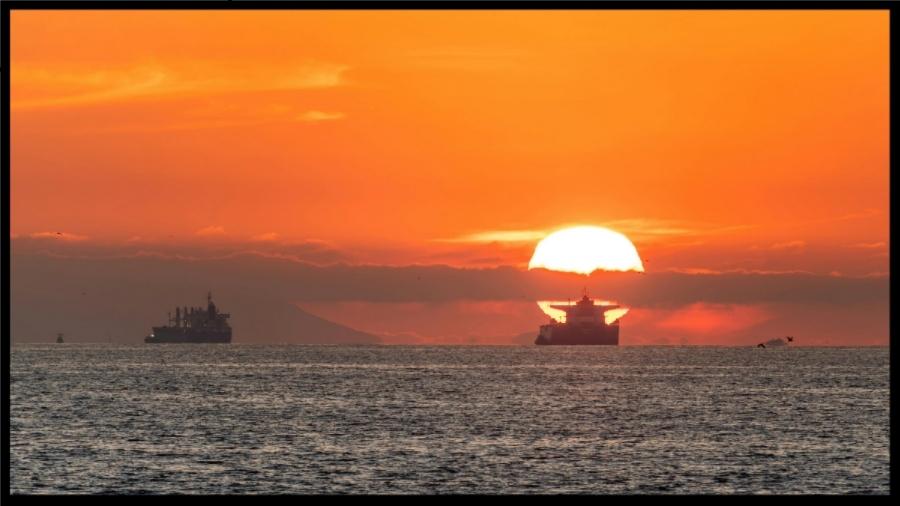
Over the last two weeks, the Gulf threat picture has shifted again: explosive uncrewed surface vessels are now being cited alongside missiles, drones, and projectiles as a practical risk for tankers, especially near chokepoints and terminal approaches. Recent incident reporting describes at least two tankers struck by explosive sea drones, and regional advisories now explicitly flag sea drone risk at or near terminals, on top of heavy electronic interference and sharply reduced commercial traffic.
Subscribe to the Ship Universe Weekly Newsletter
Click here for 30 second summary of the full piece ▶
Sea drones move into the tanker threat stack
Recent reporting describes tankers struck by explosive uncrewed surface craft in Gulf-adjacent waters, while regional advisories now explicitly warn of sea-drone risk near terminals. At the same time, heavy GNSS interference, AIS anomalies, and reduced traffic are amplifying navigational and operational risk in congested holding areas.
- Threat shift: close-range surface attack risk adds a new layer to missile and projectile concerns.
- Exposure zones: terminal approaches, holding areas, and chokepoint transits where maneuvering space is limited.
- First operational symptom: higher reluctance to anchor or loiter, more transit deferrals, and tighter insurance gating.
When explosive sea drones are credible, the cost of time in exposed waters rises sharply, pushing operators toward faster decision cycles, fewer holding patterns, and more conservative port and transit timing.
| Fast reader take | Threat shift | Exposure pattern | Negative shipping consequence | Shows up first | Closest stakeholders |
|---|---|---|---|---|---|
| Close-range surface attack risk moves from theoretical to operational |
Incident reporting describes tankers struck by explosive uncrewed surface craft in Gulf-adjacent waters.
USV strike reports
tanker damage
|
Terminal approaches and coastal transit lanes where ships are constrained by speed, traffic separation, or port control timing. | Higher avoidance behavior, more deferrals, and a faster shift from pricing risk to pausing movement when confidence drops. | Fewer acceptances for short-notice stems, more subject clauses, more last-minute routing revisions. | Tanker owners, charterers, terminal operators, P&I and war-risk teams. |
| Time at anchor becomes a bigger liability |
Advisories describe high vessel concentrations at anchor and note congestion compounded by interference and AIS anomalies.
congestion
AIS anomalies
GNSS interference
|
Holding areas near key junctions and ports where limited maneuvering space increases collision and incident risk. | Rising operational friction: longer waits, higher demurrage risk, and more drift and anchor incidents in crowded waters. | Anchorage time, near-miss reports, and port sequence reshuffles. | Masters, agents, pilots, port coordinators, insurers. |
| Electronic interference makes navigation risk a multiplier |
Advisories describe persistent GNSS issues and recommend cross-checking navigation systems and disciplined bridge management.
GNSS disruption
bridge workload
|
Constrained waterways where safe distances and rapid maneuver decisions matter, especially in high-traffic periods. | Higher probability of navigational incidents, misidentification, and knock-on schedule failure during recovery periods. | Deviations, reduced speed decisions, and expanded safety buffers. | Operators, vetting teams, port state and coastal authorities. |
| Traffic volumes fall when operators treat the corridor as a stop signal |
Advisories report sharply reduced commercial traffic through the Strait of Hormuz compared with historical averages.
traffic reduction
cautious posture
|
Stop-start transit behavior that bunches arrivals and makes re-opening periods unstable. | Capacity shock: fewer effective ship-days available, higher freight, and lower schedule reliability even after partial reopenings. | Prompt tonnage tightness, higher war-risk gating, rerouting cascades. | Freight desks, cargo owners, energy supply planners, ports. |
| Terminal-side risk becomes a central focus |
Advisories explicitly cite the risk of limpet or sea-drone attacks in regional terminals as a significant concern.
terminal-side concern
sea-drone risk cited
|
Approaches, waiting areas, and time alongside when local waters are congested and security posture is elevated. | Higher service friction: tighter berth timing, stricter ISPS posture, and higher refusal risk for non-essential waiting. | Berth allocation volatility and slower turnaround times. | Terminals, port security, ship managers, chartering and operations. |
Turning a sea-drone threat into an operations checklist
Regional advisories emphasize compounding factors: dense anchorage, navigational interference, and terminal-side concern for sea-drone or limpet-style attacks. This scorecard helps operations teams translate those conditions into a simple exposure index for a specific transit or port call.
Signals that increase exposure quickly
- Extended time at anchor: advisories note congestion and reduced maneuvering space in high-risk zones.
- Navigation reliability problems: persistent GNSS disruption and AIS anomalies increase the chance of misjudgment in constrained waters.
- Terminal proximity: advisories explicitly flag sea-drone and limpet-style concern around regional terminals.
- Lower traffic levels: sharply reduced transits can indicate broad operator reluctance and higher perceived risk.
Exposure scorecard
Check what matches your current operating picture. This is not tactical advice. It is a planning lens for deciding whether exposure is rising or falling.
Explosive sea drones increase the penalty for time spent in constrained and predictable operating states, especially near terminals and in congested holding areas. The market reaction tends to be higher reluctance, higher insurance gating, and more stop-start movement, which reduces effective capacity and raises delivered cost.
We welcome your feedback, suggestions, corrections, and ideas for enhancements. Please click here to get in touch.