EU lines up G7 backing for a Russia maritime services ban that would rewrite the oil shipping playbook
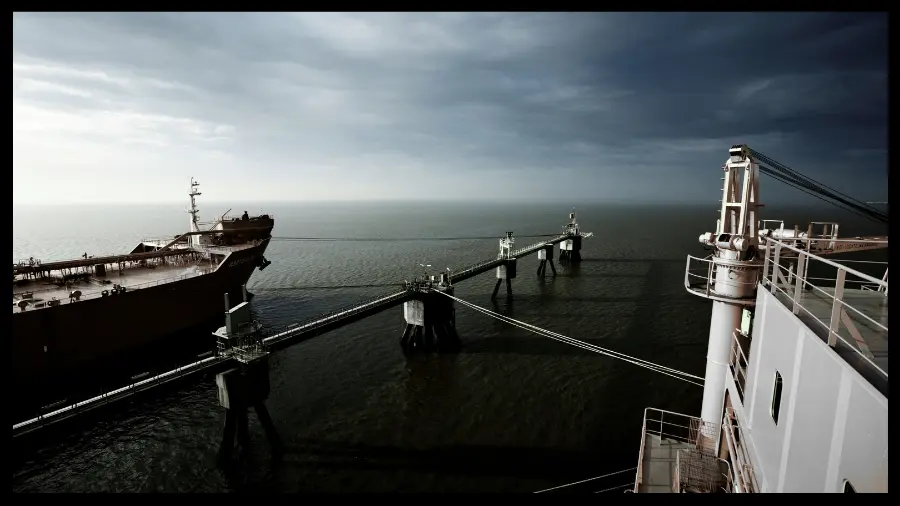
The European Commission is pushing G7 coordination before moving ahead with a proposed ban on maritime services that support Russian seaborne crude exports, with the EU sanctions envoy describing alignment with partners, especially the U.S., as a key gating factor. The proposal is positioned as a step beyond the current price cap approach and could materially change how lawful shipping services can participate in Russian crude movements if adopted.
Subscribe to the Ship Universe Weekly Newsletter
Click here for 30 second summary of the full piece ▶
EU wants G7 alignment before flipping the switch
The European Union is seeking coordination with G7 partners on a proposed ban on maritime services that support Russian seaborne crude exports. The concept would move beyond the current price cap framework by restricting services that make oil shipping possible, with timing tied to partner alignment.
- Status: Coordination effort is underway, with the EU signaling it wants G7 alignment before implementation.
- Step change: A services ban is designed to reduce Western participation in transporting Russian crude, not just condition it on a price test.
- Open questions: Scope details, exemptions, product coverage, and enforcement sequencing remain central to how markets would react.
| Reader shortcut | Case facts that matter | Why it moves the market | Stakeholders most exposed | Next proof points |
|---|---|---|---|---|
| Coordination push is explicit |
EU officials have said the bloc wants coordination with G7 partners before moving to a comprehensive services ban supporting Russian seaborne crude.
Alignment is framed as a key gating factor for timing.
|
A coordinated move reduces substitution pathways between jurisdictions and raises the likelihood that service capacity tightens in a meaningful way. | Chartering and compliance teams, plus insurers and financiers that rely on clear permission rules across major markets. | Public positioning from the U.S. and other G7 members, plus whether the measure is tied to the EU 20th package timetable. |
| Policy design shifts away from the price cap |
The Commission proposed a ban intended to end Western maritime services supporting Russian seaborne crude exports, rather than conditioning support on a price threshold.
This is structurally different from a documentation based price test.
|
Compliance burden changes from verifying a price condition to determining whether services are permitted at all, which can alter fixture velocity and counterparty behavior. | Greek, Cypriot, and Maltese shipping services clusters, plus EU linked broking, management, and marine insurance. | Final legal text and definitions: which services, which cargoes, which geographies, and what exemptions apply. |
| Russia still uses a meaningful share of Western services |
Reporting says Russia continues to move a large portion of crude with Western shipping services, including ships linked to EU maritime hubs.
This is a core rationale behind the proposed step change.
|
If service access is reduced, compliant tonnage and service capacity can tighten, and route economics can reprice quickly. | Owners and charterers active in lawful trades that intersect with sanctions screening, plus insurers managing sanctions clauses and exposure. | Any observed shift in fixture patterns, service provider stance, and whether trades migrate toward non Western service stacks. |
| Scope remains an open variable |
Reporting notes uncertainty over whether coverage would extend to refined products or LNG related services.
Scope is likely to drive the magnitude of market impact.
|
Broader scope increases the number of affected voyages, service contracts, and renewal cycles, and can raise the cost of optionality. | Product tanker operators, LNG adjacent service providers, and banks financing multi segment fleets. | Clarification in the adopted measure, plus any phased implementation language or carve outs. |
| Timeline depends on politics and partner alignment |
The initiative sits inside a wider sanctions package cycle that requires EU unanimity and also seeks G7 coordination before a major services shift.
Two approval tracks can shape timing.
|
Even before adoption, uncertainty can shorten commitment horizons, widen clauses, and slow fixing for exposed business. | Term charter desks, brokers, and service providers writing documentation with sanctions triggers and change in law provisions. | Whether the EU advances independently, or holds for coordinated rollout, and whether a revised package can pass quickly. |
The proposed move is designed to restrict maritime services that support Russian seaborne crude exports, with EU officials emphasizing G7 coordination. In practical terms, the market focus tends to land on the services that enable voyages to be fixed, insured, and financed without friction.
When a coordinated ban is actively discussed, counterparties often shorten decision horizons and tighten clauses while waiting for legal text.
Whether coverage stays crude only or extends further is the difference between a concentrated impact and a broad market reset.
The more aligned the major service jurisdictions are, the harder it becomes to substitute equivalent services across borders for the same trade.
We welcome your feedback, suggestions, corrections, and ideas for enhancements. Please click here to get in touch.