Brindisi detention raises the bar as Italy impounds a bulk carrier over suspected EU Russia-sanctions breach
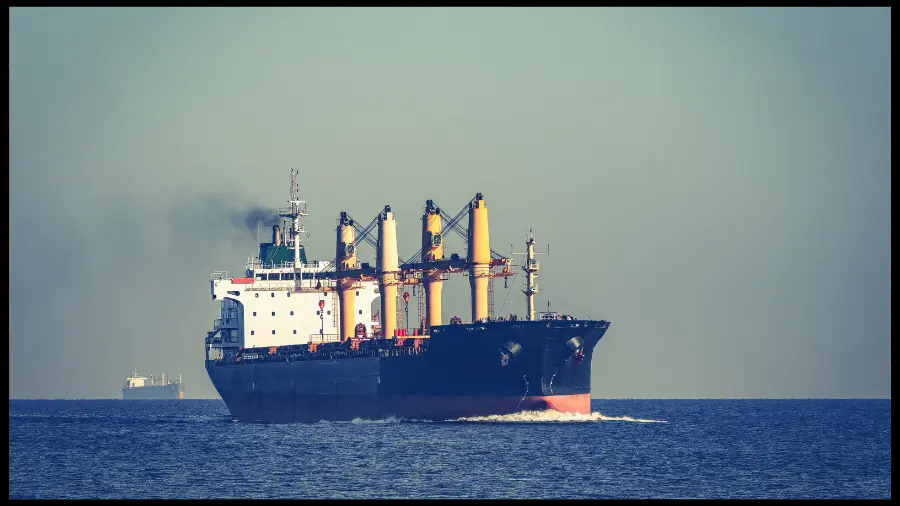
Italy’s financial police and customs authorities detained (and court-authorized the seizure of) a bulk carrier at Brindisi after irregularities in the import declaration triggered checks that pointed to a prior call at Russia’s Novorossiysk and suspected sanctions violations tied to ferrous metal cargo. For bulk and general cargo operators, this is the practical version of “sanctions risk” showing up at the berth: documentation quality, port-call history, and cargo provenance can become the difference between a normal discharge and a vessel held under enforcement scrutiny.
Subscribe to the Ship Universe Weekly Newsletter
Click here for 30 second summary
Italy’s detention shows EU ports can turn documentation gaps into hard stops
Italian authorities report seizing a foreign-flagged bulk carrier and its cargo in Brindisi after checks tied to suspected violations of EU restrictions on Russia-linked trade. The reported case centers on cargo provenance, declared itinerary accuracy, and route reconstruction using onboard records.
-
The immediate shipping effect
A detained ship is removed from effective supply, while similar voyages can face slower turnaround as screening intensity rises. -
The commercial ripple
Counterparties tend to widen the spread between “clean-chain” fixtures and higher-scrutiny fixtures when enforcement is visibly active at arrival. -
The operational takeaway
Once a file is opened, time loss compounds through inspections, record checks, and judicial steps, not just port dues.
The case is a reminder that EU port enforcement can convert weak documentation and cargo provenance questions into real calendar friction, influencing pricing and port-call appetite well beyond a single vessel.
| Trigger | Reported | First Changes | Shipping impact path |
|---|---|---|---|
| Enforcement action | Italian financial police/customs detained a bulk carrier at Brindisi; court validation for seizure of ship and cargo was reported. | Port call shifts from “cargo ops” to “case handling”: holds, document production, interview requests, and restricted movements. | Detention risk becomes a priced variable for voyages with weak provenance or high-risk call histories. |
| Cargo profile | Cargo reported as roughly 33,000 tonnes of ferrous/black metal. | Metal cargoes with disputed origin often trigger deeper checks: bills, certificates, and chain-of-custody detail get stress-tested. | Documentation overhead rises across the trade lane when one case proves enforcement is active at arrival. |
| Port-history flag | Authorities cited suspected prohibited operations tied to a prior call at Novorossiysk (reported mid-Nov 2025). | Vessel history becomes operational: AIS gaps, port-call logs, and onboard system records can be reviewed to reconstruct movements. | Ships with “red-flag” histories see more friction at EU ports, even when today’s cargo looks routine. |
| Paperwork trigger | Inspection was reportedly prompted by irregularities detected in the import declaration and supporting records. | Accuracy standards tighten: small inconsistencies can trigger escalation, not just a correction request. | The cost of sloppy paperwork shows up as delay risk and counterparty caution, not just admin annoyance. |
| Identity detail (reported) | Industry reporting identified the ship as the Tuvalu-flagged bulker Hizir Reis, linked to a Turkish owner. | Flag and ownership are not the only lens: port history, prior names, and management trail can shape how a file is treated. | More “look-through” behavior reduces the usefulness of surface-level flag/history changes for risk optics. |
| Commercial knock-on | One detention is enough to sharpen charter and trading checks on metals and general cargo moves touching Russia-linked flows. | Charter-party language and documentary requirements can tighten quickly after a real port action. | Expect wider spreads between clean-chain fixtures and higher-scrutiny fixtures, even within the same commodity. |
EU port enforcement
When a vessel is detained, “paper risk” turns into day-by-day friction
The shipping impact is rarely one line item. It is a stack: berth disruption, inspection depth, documentation reconstruction, and the commercial knock-on of time lost and counterparties re-screening similar trades.
Case file flow (how these actions typically unfold)
Risk selection can trigger a deeper check on the import declaration and supporting documents. Small inconsistencies can escalate quickly once flagged.
Customs + financial police presence shifts the call from routine discharge to “case handling.” Movement, cargo ops, and documentation often become controlled.
Onboard records (navigation systems and logs) can be checked against declared itineraries. This is where AIS gaps and omitted calls become expensive.
Preventive seizure can be validated by a judge and upheld on review. That extends uncertainty in calendar terms, not just legal terms.
Where the shipping consequences show up
A detained ship is removed from the tradable pool. Even nearby ships can slow down if inspections increase.
Owners and charterers become more selective about legs that bring heightened documentation scrutiny.
“Clean-chain” voyages can command a premium when similar trades are perceived as higher friction.
More document requests and rechecks shift workload shore-side and onboard, adding hidden cost beyond demurrage.
Direct cash burn (USD)
—
Ship cost + port/admin + demurrage + one-off costs.
“All-in” friction estimate (USD)
—
Direct cash burn × network multiplier.
Vessel-days removed
—
Calendar days held, a simple proxy for effective supply reduction.
Scenario bars: 3 / 7 / 14 days held (same cost settings)
Scrutiny drivers (toggle the items most often linked to deeper checks)
We welcome your feedback, suggestions, corrections, and ideas for enhancements. Please click here to get in touch.