Asyad’s VLCC trio at Hanwha as forward supply grows, sentiment shifts
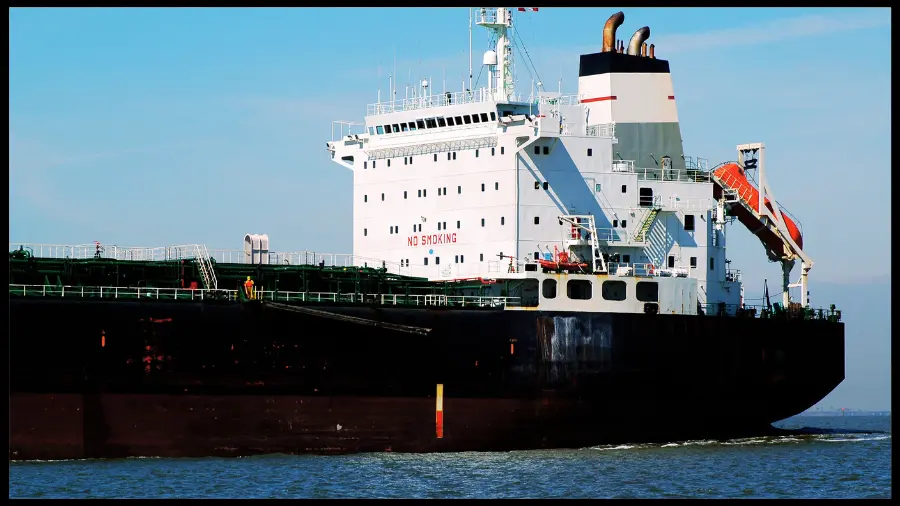
Asyad Shipping has signed contracts for three VLCC newbuilds at Hanwha Ocean, adding another meaningful slug of crude-tanker capacity to the 2028–2029 delivery window. It is still “paper” tonnage today, but orders like this influence how owners, charterers, and investors think about the medium-cycle balance, especially when the spec is positioned as more efficient and upgrade-ready.
Subscribe to the Ship Universe Weekly Newsletter
Click here for 30 second summary
Asyad books three future VLCCs, pushing the late-2020s supply narrative forward
Asyad Shipping confirmed contracts for three ~300,000 dwt VLCC newbuilds at Hanwha Ocean for about $388.5m, with delivery scheduled across 2028–2029 and an efficiency-tilted spec set (dual-fuel ready plus upgrades like shaft generators and scrubbers).
-
Immediate reality
No new ships hit the water now, so spot availability does not change today. -
Forward-balance effect
Orders like this can move sentiment and replacement-cost references before physical supply arrives. -
Spec angle
Modern deliveries tend to strengthen the economics gap versus older units over time, especially when efficiency and compliance readiness are emphasized.
This is a late-2020s capacity add that matters most as a forward-cycle signal: it builds the visible pipeline of VLCC supply, and it adds another modern-spec benchmark for how the segment prices ships and risk.
| Focus | Deal line | Fleet + yard context | Impact path |
|---|---|---|---|
| Order size | Three VLCC newbuild contracts at Hanwha Ocean; reported as ~300,000 dwt each. | Adds weight to the Korean-yard VLCC pipeline; supports the narrative that appetite for scale remains active. | Contributes to “forward supply” sentiment even though delivery is still years away. |
| Price signal | Total price reported at about $388.5m for the trio (headline level, not cost breakdown). | Implied per-ship pricing sits in the range owners use to benchmark replacement cost and asset values. | Higher replacement cost can bolster secondhand value thinking, while also expanding the orderbook. |
| Spec positioning | Reported as dual-fuel ready with efficiency upgrades (shaft generators, scrubbers referenced). | Modern spec can be marketed as lower fuel burn / compliance-ready relative to older trading tonnage. | Over time, modern deliveries tend to widen the “modern vs older” earnings and liquidity gap. |
| Delivery window | Deliveries for the three ships reported for 2028 and 2029. | Places capacity into a mid-cycle window where fleet age, regulations, and demand outlook compete. | Forward deliveries shape expectations for the medium-cycle balance, not next-quarter rates. |
| Asyad’s broader arc | Reported as part of a fleet renewal program and follows earlier VLCC contracting at the same yard. | Builds continuity: repeat ordering can improve yard familiarity, technical standardization, and fleet coherence. | Reinforces that some owners are comfortable underwriting crude-scale exposure into the late 2020s. |
| Near-term takeaway | Immediate physical supply is unchanged; the order influences expectations rather than today’s availability. | Market focus typically shifts to orderbook pace, demolition behavior, and how owners manage older units. | Sentiment can move before fundamentals do, especially when multiple large orders cluster. |
Asyad adds three future VLCCs: the near-term market stays the same, the late-2020s story gets louder
The order does not change today’s available tonnage, but it tightens the narrative around replacement cost, modern-vs-older economics, and how much crude-tanker capacity is scheduled to arrive in the 2028–2029 window.
Deal footprint in clean numbers
Quantity
3 VLCC newbuilds
Reported ~300,000 dwt each, contracted at Hanwha Ocean.
Headline price
~$388.5m total
A mid-to-late-2020s replacement-cost reference point.
Timing
2028–2029 deliveries
Forward supply effect is sentiment first, ships later.
Spec posture (reported)
Dual-fuel ready + efficiency upgrades
Shaft generators and scrubbers referenced alongside other upgrades.
Supply story, translated into market mechanics
The “paper supply” channel
Orders shift expectations about the late-2020s balance, which can influence asset values and confidence well before deliveries.
Modern-vs-older gap widens over time
A modern spec set can gradually re-price older units through earnings dispersion and liquidity preferences.
Yard slot signaling
Repeat ordering at a top-tier yard can be read as conviction around long-run VLCC utilization and earnings durability.
The real “supply” is vessel-days
Even with more hulls on the water later, effective supply still depends on routing length, port time, and operational friction.
Asyad’s broader positioning (as reported)
Fleet renewal framing
Reported commentary links the order to a younger, more fuel-efficient fleet strategy.
Follow-on ordering pattern
Builds on earlier Hanwha VLCC ordering by the same owner, which can standardize fleet economics and operations.
Capital recycling
Reported fleet reshaping includes divestment of older LNG assets, reinforcing a “sell older, buy modern” posture.
Public-market context
Asyad’s IPO and stated investment program provide a visible channel for funding fleet modernization and growth.
Forward Supply Impact Calculator (enter-your-baseline)
Use your own fleet baseline to translate “3 VLCCs in 2028–2029” into a simple share-of-market view. If you leave baselines blank, the tool still gives absolute capacity.
Total capacity added (dwt)
0
Ships × per-ship dwt.
Implied unit price (USD/ship)
$0
Total contract ÷ ships.
Share of baseline (if provided)
Calculated against your baseline (ships or dwt).
Physical capacity impact: now vs delivery window
We welcome your feedback, suggestions, corrections, and ideas for enhancements. Please click here to get in touch.