Antwerp’s Spill Shock Freezes a Key European Gateway
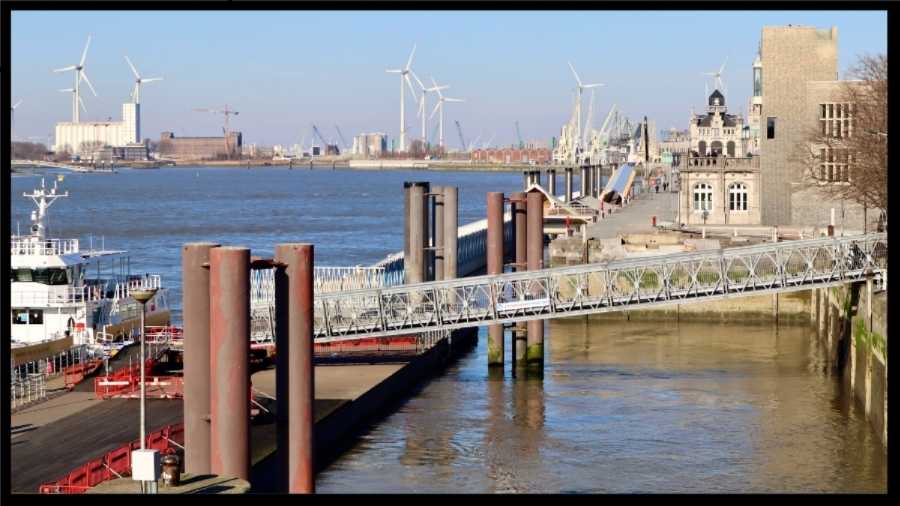
An oil spill during a bunkering operation in Antwerp’s Deurganck Dock has triggered one of the port’s sharpest operational interruptions of the year, spreading from the dock into the Scheldt and forcing a major restriction on vessel traffic at one of Europe’s most important trade hubs. Port of Antwerp-Bruges said the spill source was stopped, but pollution spread overnight, leading authorities to fully close the Scheldt to traffic between buoy 80 and the entrance to Deurganck Dock, while also closing the Zandvliet and Berendrecht locks because of oil slicks. The port said Antwerp was therefore not accessible via the Scheldt at the time of its update, and the port typically handles 60 to 80 ships a day, underscoring how quickly a localized bunkering incident turned into a wider maritime disruption with implications for container traffic, inland shipping, tugs, and nearby nature areas.
Subscribe to the Ship Universe Weekly Newsletter
Click here for 30 second summary of the full piece ▶
A dockside spill became a river-access crisis
The disruption in Antwerp is no longer a simple cleanup story inside one dock. Oil released during a bunkering operation in the Deurganck Dock spread into the Scheldt, forcing closure of a critical access stretch and shutting important locks used by deep-sea shipping. That turned a local marine pollution incident into a broader gateway problem affecting seagoing traffic, inland vessels, tug operations, and environmentally sensitive areas near the river.
- Incident origin: bunkering spill in Deurganck Dock.
- Escalation point: pollution reached the Scheldt and triggered wider traffic restrictions.
- Immediate result: Antwerp access via the Scheldt was cut off while cleanup and containment intensified.
| Fast reader take | Latest confirmed signal | Operational meaning | Negative shipping consequence | Shows up first | Closest stakeholders |
|---|---|---|---|---|---|
| The spill escaped the dock and reached the river system |
Oil from a bunkering spill in Deurganck Dock spread into the Scheldt overnight.
bunkering spill
Scheldt contamination
overnight spread
|
The incident moved from a localized marine operations problem into a shared access-channel disruption. | Traffic restrictions became wider and harder to isolate. | Immediate navigation controls and cleanup prioritization. | Port authority, harbour master, ship operators, emergency responders. |
| Deep-sea access infrastructure was hit directly |
The Scheldt section between buoy 80 and the Deurganck entrance was closed, and the Zandvliet and Berendrecht locks were shut because of oil slicks.
river closure
lock shutdown
deep-sea disruption
|
This affects more than berth activity. It interrupts the main physical system ships use to enter and leave major parts of the port. | Backlogs can build quickly once lock and river access are both constrained. | Inbound delays, outbound holds, berth sequencing stress. | Container terminals, tank terminals, vessel traffic control, pilots. |
| The port was reported inaccessible via the Scheldt |
Port of Antwerp-Bruges said the port was not accessible via the Scheldt in its 07:30 crisis update.
not accessible
07:30 update
|
The disruption should be read as a gateway interruption, not just a dockside operational nuisance. | Cargo schedules, feeder coordination, and inland links all face knock-on disruption when access halts. | Queue growth and replanning across connected services. | Carriers, barge operators, terminals, freight forwarders. |
| Multiple vessel types were already affected |
The port said vessels at the Europaterminal, several inland vessels near Galgenschoor, and a tugboat were affected.
Europaterminal
inland vessels
tug affected
|
The operational impact is spread across port functions rather than confined to one ship or one berth. | Support craft, inland circulation, and terminal-facing operations all become harder to stabilize. | Localized service bottlenecks and slower incident recovery. | Tug operators, inland shipping, terminal operations teams. |
| Environmental sensitivity raises the response threshold |
The port warned of risk to nearby nature areas, while other reporting pointed to tidal marsh and bird-habitat exposure.
nature-area risk
ecological concern
|
Cleanup decisions are being shaped by environmental protection, not only by a desire to restart traffic quickly. | Reopening may depend on ecological risk management as much as on marine operations. | Longer containment windows and more cautious restoration steps. | Environmental agencies, port management, cleanup contractors, nearby communities. |
| The disruption scale matters because Antwerp is a high-throughput hub |
Antwerp typically handles 60 to 80 ships daily and is Europe’s second-largest port by cargo tonnage after Rotterdam.
60–80 ships daily
major European hub
|
Even a short disruption can create outsized ripple effects in regional logistics and industrial supply chains. | Congestion risk can outlast the spill itself if access resumes only gradually. | Schedule knock-ons and delayed cargo flows into downstream networks. | European importers, exporters, refiners, logistics planners. |
Port Disruption Pressure Lab
This tool converts Antwerp’s spill incident into a practical disruption model. It lets readers test whether the situation still looks like a localized cleanup event, a serious river-access interruption, or the start of a wider backlog and terminal-recovery problem across the port system.
Incident inputs
Check the conditions that match the current Antwerp picture, then adjust how much of the disruption is still hitting access, cleanup, and vessel recovery.
Disruption signals
Recovery signals
Fine-tune the port picture
Operational readout
The dashboard separates source containment from full port recovery, because stopping the spill source does not automatically restore access or remove vessel backlog risk.
Antwerp still reads as a serious access disruption rather than a nearly resolved cleanup event.
| Stage | Port picture | Shipping behavior | Main limitation |
|---|---|---|---|
| Stage 1 Acute disruption |
Spill containment and river-access restrictions dominate operations. | Traffic is halted or heavily constrained while emergency response leads. | Safe navigation |
| Stage 2 Controlled reopening |
Some access begins to return, but restrictions and cleanup still shape traffic. | Movements resume selectively with continued caution. | Residual contamination |
| Stage 3 Backlog unwind |
The spill is largely controlled, but queue and berth pressure remain. | Carriers focus on schedule repair and delayed vessel recovery. | Congestion tail |
| Stage 4 Normal throughput |
Navigation and lock access are dependable again and backlog is shrinking. | Service planning starts returning to ordinary operating assumptions. | Residual sequencing |