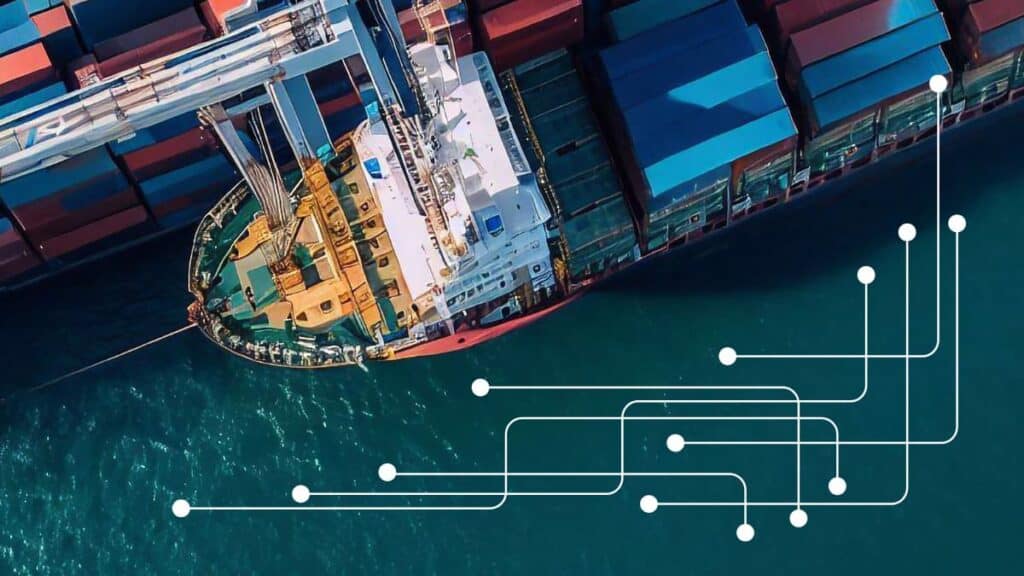
AI is increasingly being adopted across the maritime shipping sector, enhancing navigation, maintenance, and operational efficiency. Recent developments include AI-powered systems for autonomous navigation, predictive maintenance, and optimized port operations, signaling a significant shift in how maritime businesses operate.
The past several weeks have brought a wave of announcements and product launches pointing to one clear trend: AI in maritime is no longer just a future discussion, it's a current reality.
Recent Shifts in Focus:
Navigation: Smarter decision-making on the bridge, with AI reducing close-call incidents and fuel use.
Maintenance: Predictive tools are minimizing downtime by forecasting equipment issues before they happen.
Design & Simulation: Digital twins and AI modeling are replacing costly physical tests in ship design.
Security: AI-powered surveillance systems are redefining how ports monitor threats and anomalies.
Customer Operations: Large carriers are automating back-office functions using custom AI partnerships.
The following table summarizes a sampling of the most impactful AI developments announced or advanced in the maritime industry as of June 2025:
Recent AI Developments Maritime Shipping
Entity
Development
Industry Impact
Orca AI
Raised $72.5M to scale its AI-powered navigation platform, which uses computer vision and machine learning to reduce close encounters and improve fuel efficiency through safer routing.
Could reduce dependence on manual watchkeeping and cut insurance risk premiums. Traditional bridge teams may be augmented—or even replaced—by AI-watch solutions over time.
Viam
Developed a multi-sensor AI system for recreational vessels, combining radar, sonar, and GPS to enable navigation in fog and improve fishing precision.
Although targeted at small boats, the tech has implications for tugboats and pilot vessels. Traditional reliance on visual navigation may decline as AI becomes standard in auxiliary craft.
CMA CGM
Invested €100M in French startup Mistral AI to automate customer service operations, including AI handling of over 1 million weekly client interactions.
Signals a shift in back-office operations, with AI streamlining documentation and communications. Traditional freight forwarding firms may need to digitize or risk losing relevance.
StormGeo + Awake.AI
Integrated advanced port call and turnaround analytics into StormGeo’s s-Insight voyage optimization platform to enhance arrival predictability and port throughput.
Challenges the traditional port agent model by providing predictive, automated insights. Could reduce waiting times and fuel usage, pressuring ports to upgrade digital infrastructure.
Net Feasa
Launched the Agentic Control Tower—an AI-powered visibility platform for container management, booking flows, and disruption alerts across global supply chains.
Traditional manual container tracking systems may become obsolete. Freight operators will be expected to offer real-time visibility or lose competitive advantage.
Hong Kong Polytechnic University
Developed AI tools to predict vessel trajectories and assess real-time port congestion using big data analytics across the South China Sea region.
Could shift port scheduling from manual systems to dynamic traffic control, reducing idle times. May challenge legacy terminal operating systems if adopted widely.
GOST + VIAM
Jointly developed an AI-powered port security platform integrating threat detection, surveillance feeds, and automated alerts for critical infrastructure protection.
Raises the bar for maritime security. Port authorities may increasingly rely on predictive threat detection rather than reactive protocols. Legacy systems could be phased out.
Maritime AI Innovation Lab (Damen, TU Delft, etc.)
Expanded use of AI-powered digital twins to simulate ship design performance, energy use, and maintenance cycles under real-world conditions.
Digital twins could reduce physical testing costs and accelerate vessel certification timelines. Naval architects may need to integrate AI tools into every design phase.
Wärtsilä
Launched the AIM system (AI-based Intelligent Maneuvering), enabling predictive collision avoidance by mapping likely vessel paths and issuing proactive alerts.
Could reduce human error incidents in congested sea lanes. Traditional radar and AIS interpretation roles may shift to AI-assisted monitoring teams on shore.
Short-Sea Operators (Various)
Began deploying autonomous vessel technologies on controlled short-sea shipping routes, including automated docking and remote supervision pilots.
Signals a quiet but important phase shift in vessel operations. As trust in autonomous control grows, crew roles may evolve toward land-based oversight and diagnostics.
Note: Based on AI-related announcements and technology partnerships reported May–June 2025. Impact analysis reflects industry trends and potential disruptiveness.
Global Response to Maritime AI Integration
The global rollout of AI in shipping isn’t happening in a vacuum. National governments are taking sharply different approaches based on their regulatory philosophy, economic priorities, and technological capabilities. For maritime businesses, this means that where you operate or plan to operate, can significantly affect how easily you can deploy AI systems onboard or at port.
While some countries are eager to lead, others are moving cautiously, wary of operational and legal risks. These varied stances are already shaping investment flows, pilot zones, and partnerships across the shipping value chain.
Key points:
AI deployment isn’t just technical—it’s political. National policy determines what’s allowed, where, and how quickly new systems are adopted.
Flag state rules may limit AI-based operations, even if the tech exists and is proven safe.
Funding and incentives vary widely, with some governments offering grants or tax relief for AI modernization, while others offer little or none.
Port competitiveness is being redefined, with AI-readiness becoming a factor in where ships choose to call or where cargo is routed.
Crew training and compliance costs will differ by jurisdiction, depending on how AI oversight is enforced.
The table below offers a snapshot of how major and emerging maritime nations are currently approaching AI regulation, adoption, and innovation in the shipping space.
Country Reactions to AI in Maritime Shipping
Country/Region
Approach
Key Notes
European Union
Regulatory and Cautious
The EU’s AI Act classifies high-risk uses like autonomous ships under strict oversight. Innovation is encouraged, but compliance requirements could slow rollout.
United States
Innovation-Driven with Emerging Oversight
Federal agencies have not yet finalized maritime-specific AI rules. Private sector leads development with state-level guidance and port tech pilots (e.g., CMA CGM, Port of LA).
China
State-Led and Rapid Adoption
China promotes AI in port automation and MASS development. Government policies actively support AI deployment with centralized data governance.
Russia
Supportive and Experimental
Russia has tested autonomous ships on inland and Arctic routes and allows MASS under national flag. Regulatory updates support deployment in controlled zones.
Singapore
Strategic and Security-Focused
Singapore uses AI in maritime surveillance and port optimization. Government is actively funding innovation while maintaining strict safety and threat monitoring protocols.
Canada
Ethical and Research-Oriented
Canada’s Pan-Canadian AI Strategy promotes responsible AI. While not maritime-specific, the framework influences how AI is adopted in ports and shipping logistics.
Australia
Voluntary and Industry-Led
Australia promotes AI safety through voluntary standards and is piloting AI use in ports and fisheries. Maritime-specific regulation remains limited but evolving.
Morocco
Emerging Governance
Morocco is establishing a National AI Agency to guide AI policy across industries. Maritime AI remains in early stages but is included in broader digital transformation plans.
Note: Based on official government strategies, AI regulations, and maritime pilot projects as reported through June 2025.
The pace of AI integration across the maritime industry is accelerating, but the regulatory environment remains fragmented. As countries move forward with vastly different policies, the global shipping sector faces a period of uneven adoption, shaped as much by national agendas as by technological readiness.
While some nations are positioning themselves as hubs for maritime AI development, others are prioritizing caution, oversight, and long-term safety frameworks. The result is a complex and evolving landscape, one that will likely influence where investment, innovation, and strategic deployment take hold in the years ahead.