2026 Collisions, Ship Fires, Groundings and Early Casualty Signals
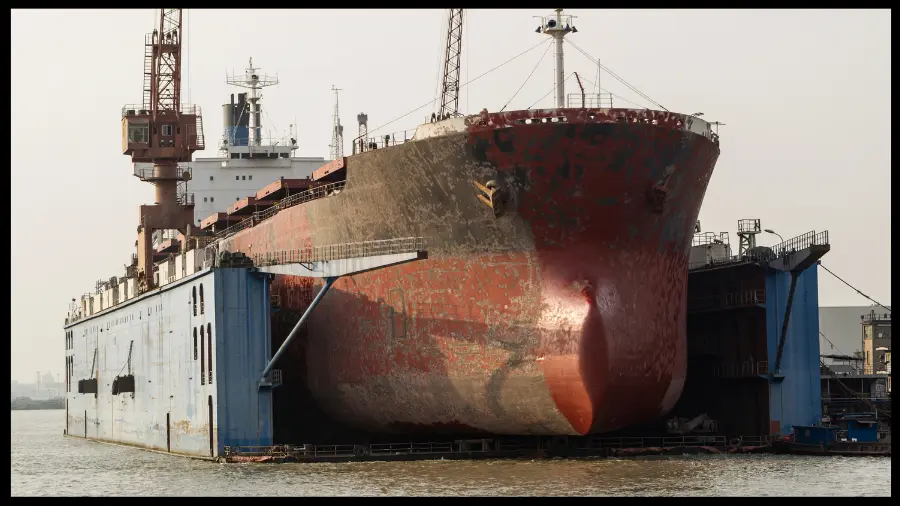
So far in 2026, the accident picture is being shaped by a familiar mix: port contact damage during arrivals, machinery failures that trigger major towing and reef protection posture, engine-room fires that test containment and emergency response, and high-profile collisions that keep bridge resource management and underway operations in focus. The operational consequence is measured in berth disruption, schedule recovery time, cargo handling interruption, and fast-moving insurance and investigation activity.
Subscribe to the Ship Universe Weekly Newsletter
Click here for 30 second summary
2026 accident developments in one read
Early 2026 has already produced a familiar spread of maritime casualties: port contact damage that can disrupt berth capacity even without spills, engine-room fires where rapid containment determines whether an incident stays localized, machinery failures near sensitive routing that trigger towing and environmental protection posture, and collisions during close-quarter operations that move quickly into investigation mode.
-
Port-side damage still hurts even without pollution
The Ust-Luga incident shows how berth and crane damage can become a throughput constraint, creating a schedule knock-on even when initial reporting indicates no spill. -
Fire events are judged by containment and time-to-service
The car-carrier engine-room fire off Germany highlights the operational hinge: early isolation and response keep the incident from escalating, but the vessel can still be disabled and pushed into a repair timeline. -
Loss of propulsion near hazards triggers a different playbook
The Swift Hangzhou response illustrates the immediate shift to towage posture, hazard clearance, and an authority-led incident management structure. -
High-casualty passenger incidents produce rapid system reactions
The Basilan-area ferry sinking drove large-scale rescue and continuing investigation reporting, with broader scrutiny of operator posture and route continuity.
The commercial consequence of 2026 casualties is showing up through berth availability shocks, repair and offhire windows, and faster-moving investigation and liability cycles that can change counterparty confidence and operational planning on impacted routes.
| Event snapshot | Timing and geography | Disruption footprint | Cargo, safety, pollution signals | Investigation and counterparty posture |
|---|---|---|---|---|
| Port contact, berth infrastructure hit tankerport damage |
Ust-Luga, Baltic export hub Feb 2026
|
Berth wall and crane reported damaged.
Immediate question becomes berth availability and repair sequencing in a high-throughput terminal.
|
No injuries and no petroleum spill reported in initial statements.
Incident still matters because port-side damage can create multi-day knock-ons even without pollution.
|
Law enforcement investigation opened.
Early focus: approach control, berthing conduct, and port equipment damage allocation.
|
| Engine-room fire contained early car carrierfire |
German North Sea coast, off Emden area Late Jan 2026
|
Vessel disabled and managed offshore with significant emergency response assets.
Firefighting posture can affect pilotage windows and nearby traffic planning.
|
Crew accounted for; reports indicated no injuries and no pollution in initial updates.
Key operational detail was rapid sealing of the engine room to prevent spread.
|
Incident handled under German maritime emergency coordination.
Repair scope, towage costs, and time-to-service become the commercial hinge.
|
| Machinery failure triggers towing posture bulk carrierloss of power |
Coral Sea, Queensland area, near reef systems Feb 2026
|
Incident management team stood up; multiple emergency towing vessels tasked.
Primary operational aim is keeping the ship clear of hazards while repairs or tow plan stabilizes.
|
Authorities reported the crew safe; environmental protection posture escalated early.
This type of event becomes high sensitivity when reefs or narrow routing are nearby.
|
Formal directions issued to owner and operator in initial response window.
Records and response timeline typically become central in any later claim cycle.
|
| Collision during underway refueling collisionnaval ops |
Waters near South America (reported as Caribbean region reporting) Feb 2026
|
Both vessels reported operational after the incident.
Even without loss of propulsion, operational tempo and inspection schedules can change immediately.
|
Two minor injuries reported in initial accounts.
Underway replenishment remains a complex maneuver with tight tolerances.
|
Investigation ongoing.
Typical focus: procedure compliance, bridge team actions, communications, and station keeping.
|
| High-casualty passenger ferry sinking RoRo ferrymass rescue |
Southern Philippines, off Basilan area Jan 2026
|
Large-scale rescue and recovery operation.
Domestic route disruption followed, with fleet-level scrutiny reported by officials.
|
Significant loss of life reported across multiple updates.
Passenger manifest accuracy and conditions at sea were reported as part of early scrutiny.
|
Investigation and official reviews reported.
This category of incident drives immediate regulatory and operator-facing actions.
|
| Trigger | First operational constraint | Commercial impact channel | Fast indicator |
|---|---|---|---|
| Berth contact port availabilityrepair queue |
Berth or crane constraints, altered vessel sequencing | Congestion ripple, rescheduling, berth productivity loss | Berth outage window |
| Engine-room fire containmenttowage |
Propulsion loss or restricted power, safety perimeter | Offhire, repair yard timing, cargo delivery risk | Tow plan and repair slot |
| Loss of propulsion hazard proximityweather |
Towing assets tasked, drift risk managed | Schedule recovery and potential salvage costs | ETV mobilization |
| Close-quarter collision procedurehuman factors |
Immediate inspections and operational limitations | Operational tempo changes, repair and downtime | Damage assessment |
| Passenger casualty auditroute disruption |
Route suspensions and safety audits | Capacity removal and regulatory action cycle | Fleet-level orders |
A simple exposure view that converts downtime into a gross range using a day rate and disruption duration.
The early-2026 casualty set is a reminder that the cost of an incident is rarely limited to the moment of impact. The real freight effect shows up in berth and equipment availability after port damage, time-to-service after fires and propulsion losses, and the faster-moving investigation and claims cycle that follows serious events. As more findings and timelines are published, owners, charterers, and cargo interests will be watching which incidents stay contained and which ones turn into multi-week disruption windows.
We welcome your feedback, suggestions, corrections, and ideas for enhancements. Please click here to get in touch.