2025 Seaborne Bauxite Volumes Hit a Record as China Pulls More Cargo
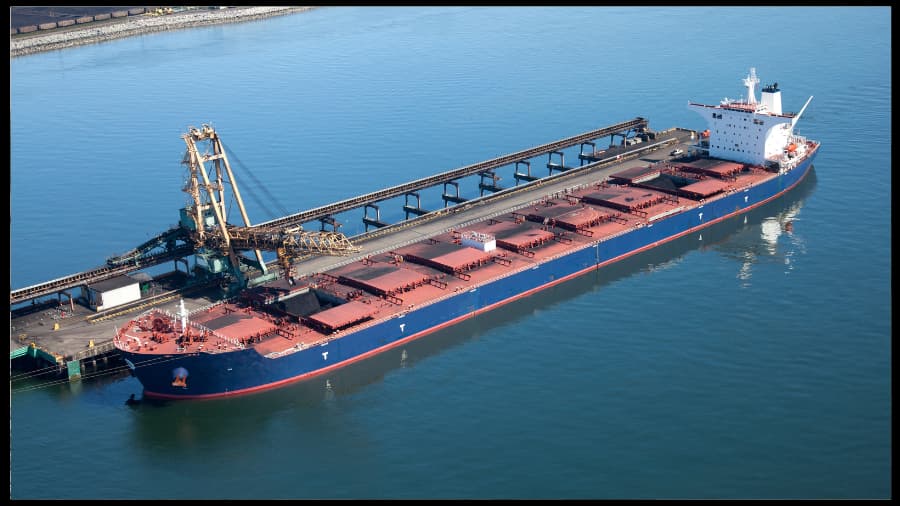
Seaborne bauxite trade hit a new high in 2025, with shipping flow datasets pointing to a record year driven overwhelmingly by China’s aluminum chain. The center of gravity stayed the same but intensified: Guinea expanded its dominance on the water, and China absorbed the bulk of the cargo, turning bauxite into one of the clearest “structural demand” markers inside dry bulk planning rather than a one-day freight headline.
Subscribe to the Ship Universe Weekly Newsletter
Click here for 30 second summary
2025 Bauxite Trade Summary
A 2025 dry bulk flow review flagged seaborne bauxite at a new annual record, with growth reported at 18% to 257 mt. The trade remains highly concentrated, with Guinea reported as the leading origin (68% share) and China the dominant destination (85% share).
- Record volume
Seaborne bauxite reported at 257 mt in 2025, up 18% year on year. - Concentration
Guinea share reported at 68% of origins, and China share reported at 85% of destinations. - Official trade context
Guinea exports were reported at 182.8 mt in 2025, with about 74% shipped to China.
The record year reinforces bauxite as a repeat-lifting, long-haul dry bulk driver where origin and destination throughput rhythm can directly influence effective fleet employment.
| Fast takeaway | 2025 datapoint | Lane and tonne-mile read | Who feels it first | Watch list |
|---|---|---|---|---|
| Record year on the water |
Seaborne bauxite flows reported up about 18% year on year to roughly 257 mt.
A new annual high reported in dry bulk flow datasets.
|
The trade is structurally long haul and volume-driven, so incremental tonnes translate directly into employment and voyage count. | Owners and charterers exposed to Atlantic to Asia positioning, plus ports and agents handling West Africa load programs. | Volume durability through 2026 contract cycles, and whether growth stays concentrated in the same export corridors. |
| Guinea tightens its grip |
Guinea’s share of seaborne bauxite flows reported rising to about 68%.
Guinea also reported 182.8m tons of bauxite exports in 2025.
|
West Africa to China remains the core ton-mile engine, rewarding ships that can stay in the program without long idle gaps. | Capesize and Newcastlemax operators, plus traders and producers running repeat liftings out of Guinea. | Export cadence swings (seasonality, infrastructure, policy enforcement) that can create short bursts of congestion or lull risk. |
| China is the demand anchor |
China’s share of seaborne bauxite imports reported at about 85%.
China also reported 200.5m tons of bauxite imports in 2025.
|
When one destination dominates, routing flexibility is limited, so rates and ton-miles become more sensitive to China-side intake and discharge rhythm. | Chartering desks tied to alumina refineries, and bulk operators planning forward positioning into North China discharge ranges. | China-side inventory behavior and refinery pull, plus any policy moves that cap demand growth even if imports are high. |
| Why it matters for freight | Bauxite is now a repeatable driver rather than a one-off spike, with multiple consecutive record years reported in market coverage. | The main lever is not just tonnes, it is tonne-miles: long-haul loading plus sustained discharge demand supports utilization even when other bulks soften. | Owners who rely on “Capesize plus Atlantic” exposure, and investors watching utilization-driven earnings sensitivity. | Substitution risk (alternative origins) and how much of the trade stays on larger ships versus splitting into smaller parcels. |
| Ceilings and friction points | Research commentary flags China’s aluminum production cap as a potential ceiling on bauxite demand growth. | A ceiling does not kill the trade, but it can shift the story from pure volume growth to stability and cycle-time efficiency. | Operators with heavy bauxite reliance who need predictable backhaul planning and voyage stacking. | Any signs that refinery-side economics slow intake, or that Guinea policy pushes more value-add onshore over time. |
2025 data reviews flagged a record year for seaborne bauxite, with the trade remaining highly concentrated on the Guinea to China corridor.
Enter a distance and click Calculate.
The 2025 record reinforces bauxite as a high-concentration, repeat-lifting bulk lane, which makes origin and destination throughput reliability a direct input into dry bulk employment planning.
We welcome your feedback, suggestions, corrections, and ideas for enhancements. Please click here to get in touch.