Maritime Trade Under Pressure – 10 Cargo Segments Feeling It First
March 12, 2026
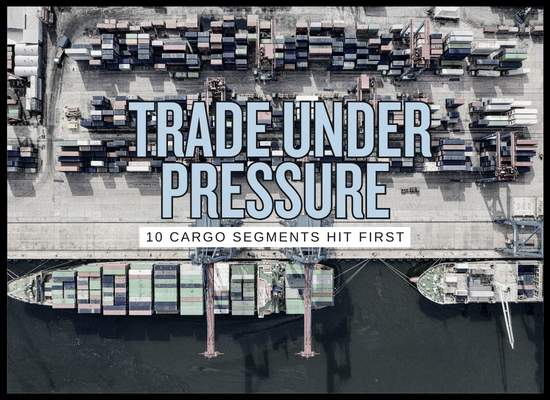
Maritime pressure is not showing up evenly right now. It is concentrating around corridors and cargoes that cannot absorb uncertainty: energy flows tied to Hormuz, time critical supply chains, inputs that feed food production, and goods where even small schedule slips cascade into inventory and pricing stress. UNCTAD’s March 2026 Hormuz update frames the immediate exposure clearly: the Strait carries roughly a quarter of global seaborne oil trade and significant LNG and fertilizer volumes, so disruption transmits quickly into prices and availability.
The pressure is corridor driven in March 2026
UNCTAD warns that Hormuz disruption risk matters because the Strait carries around one quarter of global seaborne oil trade and significant LNG and fertilizer volumes. That combination makes energy and key inputs the first cargoes to tighten when conditions worsen.
Current signals shaping this list
This report is anchored on the March 2026 operating picture. The goal is to identify cargo segments that feel friction first when routing risk, navigational disruption, and fragile growth overlap.
UNCTAD March 2026 Hormuz warning
Open
UNCTAD Hormuz disruptions brief
Open
UNCTAD trade conditions in 2026
Open
JMIC UKMTO March 2026 advisory on heightened risk and interference
Open
- Energy first: crude, products, LNG, and LPG tighten early because exposure is corridor concentrated.
- Inputs next: fertilizers and chemical feedstocks transmit into food and manufacturing costs fast.
- Time critical chains: containers, reefers, and automotive feel schedule slips before volume declines show up in stats.
Recent structural context: UNCTAD’s 2025 maritime review explains how rerouting inflated sailing distances and ton-miles in 2024. That distance inflation is now colliding with a 2026 security shock.
Open
10 cargo segments feeling it first
Each row is written to be operational. It focuses on why the segment tightens early, what signal shows up first on desks, and what usually reduces pain.
| Segment | Why it gets hit early right now | Early pressure signals | Moves that help |
|---|---|---|---|
|
1️⃣ Crude oil
Corridor concentrated
|
Hormuz exposure is high and the freight layer can move faster than the underlying commodity price. When risk rises, insurability, routing approvals, and premium allocation become gating items, not distance. | Premium jumps, fixtures failing on cover timing, more “hold outside” behavior, and sudden tightening of acceptable routing instructions. | Pre-agree war-risk allocation, time-box hold decisions, and keep a clean written decision note for routing and safety rationale. |
|
2️⃣ LNG
High value timing
|
LNG cargoes are high value and schedule sensitive. Extra days or corridor uncertainty changes delivered economics quickly, especially when terminal windows and slot discipline are tight. | More focus on executable slot windows, longer option windows in charters, and greater sensitivity to route reliability over shortest distance. | Lock discharge optionality early, run hold vs divert math before the last 72 hours, and align shipping plan to confirmed terminal slot reality. |
|
3️⃣ Refined petroleum products
Local shortage risk
|
Products markets tighten faster than crude when routes slip. Small disruptions can translate into local supply gaps and bigger prompt spreads. | Urgent MR demand, storage inquiries at alternates, tighter laycan tolerance, and more “nearby barrel” preference. | Build substitute discharge playbooks with pre-vetted storage, and model time to market cost including demurrage sensitivity. |
|
4️⃣ Fertilizers
Food linkage
|
UNCTAD explicitly flags fertilizer exposure tied to Hormuz. When deliveries slip or costs rise, impacts propagate into agricultural input costs quickly. | Demand bunching ahead of seasonal needs, wider delivered-cost swings, and more aggressive procurement behavior by import dependent regions. | Diversify origins where possible, pull forward procurement, and manage delivered-cost dashboards that include corridor risk and freight. |
|
5️⃣ Industrial chemicals and feedstocks
Just in time
|
Many chemical chains run tight. Delays can disrupt plant operations, and haz cargo documentation adds friction when routings change fast. | Longer document checks, stricter terminal acceptance, rising cost of re-handling, and expensive production interruptions when inputs arrive late. | Maintain buffer stocks for critical inputs, pre-clear document packs, and plan alternates that minimize re-handling and compliance resets. |
|
6️⃣ LPG and petrochemical gases
Energy adjacent
|
LPG flows are sensitive to corridor reliability and arbitrage economics. When corridor risk rises, trade flows can re-map quickly. | More route constraints in voyage instructions, higher emphasis on executable discharge, and tighter schedule tolerance for downstream processors. | Use scenario routing options in fixtures, maintain alternate discharge nodes, and re-price delivered economics with explicit risk and time bands. |
|
7️⃣ Containerized retail and consumer goods
Network fragile
|
Liner networks are sensitive to schedule slips. Extra days drive rolling cargo, equipment imbalance, and costly schedule recovery patterns. | Cut-offs pulled forward, higher rolled cargo rates, empties not where exporters need them, and surcharges framed as recovery. | Add buffer into promise dates, reserve space earlier, and treat reliability as a priced service rather than assuming nominal transit times. |
|
8️⃣ Refrigerated food and temperature controlled cargo
Quality risk
|
Extra days raise spoilage risk and claims exposure. Congestion and routing uncertainty amplify dwell-time risk and reefer monitoring demands. | Higher insurance attention, more strict monitoring requirements, and rising sensitivity to port dwell and plug availability. | Prioritize ports with stronger cold-chain reliability, tighten dwell-time controls, and standardize claims evidence and monitoring logs. |
|
9️⃣ Automotive and RoRo finished vehicles
Production rhythm
|
Vehicle logistics is schedule aligned to releases and dealer inventory cycles. Delays can ripple into plant planning and sales timing. | More space competition in peaks, schedule adjustments around model releases, and rising cost of expedited inland repositioning. | Reserve space earlier, prioritize high-value lanes, and tie release dates to realistic transit plus buffer rather than nominal routing. |
|
🔟 Grains and staple food commodities
Seasonal urgency
|
Grain flows are seasonal and price sensitive. Delays collide with storage schedules and domestic policy, especially when importers are already cost stressed. | Higher tender premiums for nearby shipment, stronger interest in alternate origins, and congestion around peak discharge windows. | Lock berth and discharge readiness early, plan alternates before peak weeks, and protect contingency inventory near demand centers. |
The list is designed to match UNCTAD’s current Hormuz risk framing for energy and fertilizers, and the broader 2026 view of fragile growth and reshaped trade patterns.
UNCTAD March 2026
UNCTAD January 2026
Delay economics screener
A quick way to translate added transit time into a directional business impact for cargo owners and commercial teams. It estimates inventory carrying cost of delay and a simple break-even for paying an expedite premium.
Adjust inputs to estimate delay carrying cost and a simple expedite break-even.
Bottom-line effect
In the current cycle, the earliest pressure tends to appear where corridor concentration meets low tolerance for delay: energy, fertilizers, and time critical supply chains. The practical edge is not predicting the headline. It is quantifying delay, keeping routing decisions insurable, and maintaining clean documentation when plans change fast.
- Time-box uncertainty: decision cadence prevents endless drift costs and late premium shocks.
- Protect input cargoes: fertilizer and energy flows transmit quickly into broader price systems.
- Sell reliability: customers will pay for predictability when headlines are forcing constant re-plans.
- Plan for interference: recent UKMTO JMIC notes highlight elevated risk and disruption environment in the Hormuz operating area.
We welcome your feedback, suggestions, corrections, and ideas for enhancements. Please click here to get in touch.