If the Strait of Hormuz Closes, Who Wins?
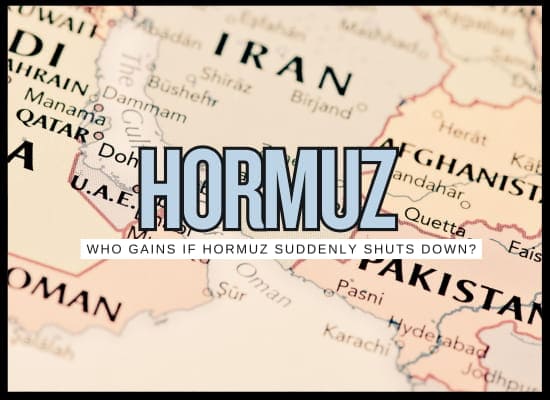
The closure of the Strait of Hormuz would be a completive and destabilizing blow to global trade. The maritime shipping industry, in particular, relies on this narrow passage to move nearly a fifth of the world’s oil. Disruption in this region isn't just bad news. It's a supply shock, a geopolitical trigger, and a direct hit to tanker routes and global fuel markets.
Still, in the midst of crisis, markets move. While most brace for fallout, some actually find themselves in position to benefit.
So in a moment that threatens stability, the question emerges — who actually wins?
We welcome your feedback, suggestions, corrections, and ideas for enhancements. Please click here to get in touch.
- Global oil prices spike amid fears of supply disruption from Gulf states.
- They have stable, direct access to Atlantic Basin buyers or Pacific export terminals.
- Buyers seek alternatives to Gulf-based oil, increasing demand for these sources.
- West Texas Intermediate (WTI) and Brent crude futures surge, boosting revenues.
- U.S. shale producers respond quickly to price increases with new drilling.
- Investment flows into non-Gulf basins accelerate as traders hedge against Gulf instability.
- Geopolitical stability and infrastructure maturity make these exporters reliable.
- Producers like ExxonMobil and ConocoPhillips with global portfolios gain pricing power.
- Lack of dependency on Hormuz boosts confidence among long-term buyers and refiners.
Bottom line: As Gulf supply falters, oil from outside the region becomes a premium product. These countries become go-to suppliers, and producers reap the benefits through higher prices, tighter margins, and strategic energy deals.
- Buyers must urgently replace Qatari LNG cargoes disrupted by a Strait closure.
- Suppliers like the U.S., Australia, and Mozambique already have active LNG trade routes to Asia and Europe.
- Spot prices for LNG can spike dramatically in a tight market, rewarding exporters with flexible contracts.
- Asian LNG spot prices can jump by 30–50% within weeks of disruption, based on past regional shocks.
- U.S. Gulf Coast terminals (like Sabine Pass and Corpus Christi) see volume surges and charter premiums.
- European utilities increase LNG bookings from Australia and Africa to rebalance supply portfolios.
- U.S. LNG offers short-haul Atlantic access to Europe, bypassing Middle East risk entirely.
- Australian LNG is well-positioned to serve East Asian demand, particularly Japan and South Korea.
- Countries with diversified LNG terminals gain geopolitical leverage in renegotiating long-term contracts.
Bottom line: A closure of the Strait of Hormuz would spark a global LNG scramble. Exporters with stable, non-Gulf routes become critical to energy security and their cargoes command premium pricing, especially in Asia and Europe.
- They profit directly from rising oil and gas prices, with large upstream portfolios spread across multiple continents.
- Many already hold long-term sales contracts that become more valuable in a tight supply market.
- They attract capital as investors flee riskier or more volatile sectors.
- Energy stock indexes and ETFs typically surge during Gulf crises. In June 2025, ExxonMobil and Chevron posted gains exceeding 7% following the Iran-Hormuz headlines.
- Higher prices improve earnings outlooks for firms with exposure in the Permian Basin, offshore Brazil, and West Africa.
- Companies with refining and trading arms (e.g., Shell, BP) also profit from volatility in margins and arbitrage opportunities.
- Diversified operations protect against localized disruption, allowing them to continue supplying global markets.
- Capital reserves enable rapid expansion, stock buybacks, or acquisitions during crises.
- Market sentiment often turns defensive, rewarding energy equities in uncertain times.
Bottom line: Oil majors benefit not just from the price spike, but from the capital rotation that moves into energy as a safe haven. As disruption fears rise, these companies often outperform the broader market.
- Energy ETFs rise in value as oil prices surge and energy stocks climb.
- Traders take advantage of volatility, supply gaps, and arbitrage across regions.
- Funds holding oil futures contracts benefit from panic buying and tight forward supply.
- The United States Oil Fund (USO), Energy Select Sector SPDR Fund (XLE), and Invesco DB Oil Fund (DBO) typically rally during Gulf crises.
- Commodity firms like Vitol, Glencore, and Trafigura profit from price swings and physical cargo rerouting.
- Increased options and futures volume boosts earnings for trading desks and brokerage firms.
- They are liquid, fast-moving, and well positioned to profit in short-term market disruptions.
- They do not rely on physical infrastructure in conflict zones, reducing exposure to direct risk.
- Institutional investors often shift portfolios toward commodities during geopolitical shocks, increasing demand.
Bottom line: While traditional supply chains tighten, energy-linked ETFs and trading firms gain from volatility. These financial instruments often outperform in the days and weeks following a regional crisis.
- Naval forces require more surveillance systems, drone platforms, and ship-based defense systems.
- Commercial shipping companies seek armed guards, electronic jamming protection, and convoy escort coordination.
- Ports and energy facilities boost contracts for infrastructure hardening, cybersecurity, and threat monitoring services.
- Firms like Raytheon, Lockheed Martin, and BAE Systems often see increased defense orders during Middle East conflicts.
- Private maritime security companies report demand spikes for services like onboard guards, high-risk zone route planning, and AIS spoofing detection.
- Insurance underwriters require vessels to show active security measures before issuing war risk coverage in conflict zones.
- Defense firms with existing government contracts can rapidly scale regional deployments.
- Private escort providers can respond quickly with flexible coverage in hotspots where navies are overstretched.
- Technology firms offering maritime-specific situational awareness tools and cybersecurity platforms gain relevance quickly.
Bottom line: When a high-risk maritime corridor like Hormuz heats up, security becomes essential. Defense contractors and private maritime security firms benefit from the immediate and long-term demand for protection, technology, and expertise.
- Exporters reroute crude and refined products via pipelines that avoid Hormuz entirely.
- Ports outside the Strait become staging points for bunkering, storage, and shipping transfers.
- Spot storage rates and transit fees rise due to increased regional congestion and urgency.
- The Abu Dhabi Crude Oil Pipeline (ADCOP) to Fujairah can move 1.5 million barrels per day, providing the UAE an active bypass option.
- Saudi Arabia’s East–West Pipeline to Yanbu can carry up to 5 million barrels per day to the Red Sea coast.
- Port operators in Duqm and Fujairah have expanded bunkering, storage, and security capabilities in response to regional demand shifts.
- Hubs that can operate independently of the Strait gain leverage in regional energy logistics.
- Refiners and traders seek mid-point hubs for blending, re-export, and inventory management.
- Ports with lower geopolitical risk become preferred destinations for vessel traffic and energy contracts.
Bottom line: As chokepoints tighten, the value of flexibility increases. Infrastructure that allows exports to bypass Hormuz becomes strategically and financially essential, attracting higher volumes, premiums, and long-term investments.
- Shipping firms with flexible global coverage can reposition assets to capture premium routes.
- Tanker operators outside the Gulf are insulated from immediate risk and war zone premiums.
- Charterers seek reliable tonnage outside high-risk corridors, increasing demand and rates.
- VLCC (Very Large Crude Carrier) spot rates doubled in early 2025 on Hormuz risk headlines.
- LNG tankers repositioned to avoid Gulf exposure see charter premiums and increased utilization.
- Shipowners with modern, dual-fuel or ice-class vessels command a price advantage during reroutes.
- Fleets based in Atlantic or Pacific markets are not delayed or exposed to rising war risk premiums.
- Owners of high-spec ships benefit from flexibility, reduced insurance cost, and rerouting agility.
- Brokers can secure higher margins by connecting rerouted cargoes to available tonnage quickly.
Bottom line: In a crisis-driven shipping market, location and flexibility define profitability. Shipowners with non-Gulf tanker fleets and adaptable operations stand to earn sharply higher returns as global trade lanes shift overnight.
- Gold is widely seen as a hedge against uncertainty, war risk, and inflation.
- Safe-haven demand rises across institutional and retail investor segments during regional military escalations.
- Currencies like the Swiss Franc and Japanese Yen often strengthen in global crisis scenarios.
- Gold prices rose more than 6% in the first half of 2025 as Hormuz tensions increased and Middle East security deteriorated.
- ETFs such as SPDR Gold Shares (GLD) and iShares Gold Trust (IAU) attract new inflows when risk assets fall.
- Investors rotate capital from equities into metals and government-backed debt, stabilizing these sectors.
- Gold and safe-haven assets provide a buffer for portfolios exposed to energy, transportation, and emerging markets.
- Asset managers reposition holdings preemptively during maritime chokepoint crises to preserve capital.
- Precious metals also serve as long-term insurance against extended regional disruption or escalation.
Bottom line: When the risk of global trade shocks rises, investors look for safety. Gold, stable currencies, and government bonds remain critical shelters when maritime hotspots threaten market stability.
- Traders exploit regional price differences by redirecting cargoes and taking leveraged futures positions.
- Volatility increases trading volumes and margins across physical and financial contracts.
- Hedge funds with long energy exposure or short risk assets profit from market swings and capital flight.
- Firms like Vitol, Glencore, Gunvor, and Trafigura actively trade spot crude, LNG, and refined products and benefit from rapid market moves.
- Historical Gulf tensions have driven oil price spikes exceeding 10% in a matter of days, creating profitable opportunities in derivatives markets.
- Traders also profit from freight rate volatility, chartering vessels in advance and re-leasing at elevated premiums.
- Global commodity desks operate with high-speed intelligence, allowing them to act on price dislocations before traditional players react.
- They hold both physical assets and paper contracts, providing flexibility across supply chains and trading books.
- Some firms offer storage, blending, and shipping solutions that increase in value when logistics break down.
Bottom line: In markets shaped by surprise, speed matters. Global commodity traders and speculative firms thrive when others are caught unprepared, and a Strait of Hormuz closure gives them a rare moment of outsized opportunity.
- Risk of cyberattacks targeting port infrastructure, AIS spoofing, and shipboard systems increases during regional conflict.
- Energy firms and shipping lines accelerate investments in cybersecurity audits, response plans, and monitoring tools.
- Crisis response providers are called in to help manage communications, continuity planning, and multi-scenario modeling.
- Cyber incidents targeting maritime assets rose globally by over 200% during major conflicts between 2022 and 2024.
- Port authorities and shipowners have begun requiring cyber risk insurance and third-party validation of digital security measures.
- Companies offering maritime-specific platforms for monitoring vessel spoofing and network intrusion see a rise in contracts.
- Firms already embedded in the maritime, oil, or logistics sectors have a first-mover edge as security budgets expand.
- Software-as-a-service (SaaS) models allow rapid scaling across multiple vessel classes and ports globally.
- Security providers offering both cyber and physical continuity solutions become critical to enterprise planning.
Bottom line: Maritime conflict zones don’t just create fuel and freight volatility — they expose digital weak points. Cybersecurity and crisis response firms gain immediate relevance as operators shift from reactive to preventive strategies.
While these ten sectors may experience short-term gains during a Strait of Hormuz disruption, the broader picture remains grim for global shipping. Trade thrives on predictability, not volatility. When a critical chokepoint like Hormuz is compromised, it forces entire supply chains into reactive mode while increasing costs, risking delays, and eroding confidence across the board.
These “winners” aren’t thriving because of growth, but because of risk. Their gains are often fleeting, tied to instability rather than long-term value creation. Meanwhile, the maritime industry, particularly tanker operators, cargo insurers, and port logistics networks, bears the brunt of cascading disruptions.
In shipping, there are no real victories when the world’s arteries constrict.