Maritime Risk Symposium 2026 Review
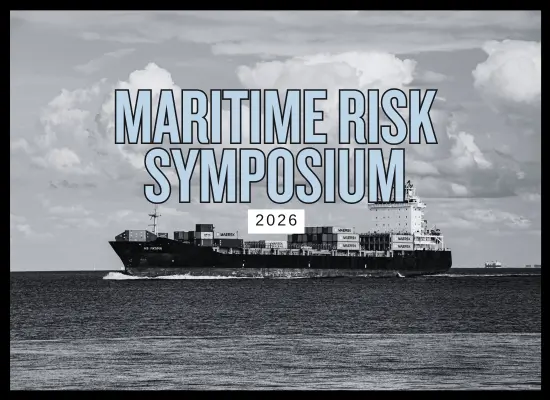
Maritime Risk Symposium 2026 is a risk-first, operations-minded meet up for maritime transportation security. It brings together industry, government, and academic leaders to pressure-test real vulnerabilities, compare mitigation approaches, and share practical lessons from incidents, exercises, and day-to-day security work.

🛡️

Maritime Risk Symposium 2026 — Event Snapshot

June 2–3, 2026
Dates
June 2–3, 2026
City
Pasadena, Texas, USA (Greater Houston area)
Venue
LyondellBasell Center for Petrochemical, Energy and Technology at San Jacinto College
Address
7901 Fairmont Pkwy, Pasadena, TX 77507
Theme
Overcoming Maritime Vulnerabilities Through Private-Public-Academic Partnerships
Official site
Venue map
Organizer travel note: William P. Hobby Airport (HOU) is typically the closer airport for this venue. :contentReference[oaicite:1]{index=1}

What makes MRS different

Security and resilience, not a mega-expo

MRS is positioned as a symposium that targets real-world maritime transportation system risks through private, public, and academic collaboration. The agenda focus is closer to planning, readiness, and operational resilience than product marketing. :contentReference[oaicite:2]{index=2}

🤝
Cross-sector attendance by design
The stated intent is to bring together maritime and port professionals with researchers and government stakeholders, which improves the quality of risk discussions and follow-ups. :contentReference[oaicite:3]{index=3}
🧠
Research pipeline attached to the event
MRS runs a call-for-research program tied to topic areas and paper selection, plus a student poster contest that feeds into the symposium. :contentReference[oaicite:4]{index=4}
🧩
Topic mix maps to current exposures
Event listings describe recurring focus areas such as maritime cybersecurity, supply chain security, and port operations, which keeps sessions aligned with near-term risk work. :contentReference[oaicite:5]{index=5}
Built for actionable takeaways
Registration information and the two-day structure support a practical format: concentrated sessions, peer exchange, and concrete follow-up between organizations. :contentReference[oaicite:6]{index=6}
🎯
Best-fit attendees
Port and terminal security leaders, vessel operators and safety teams, supply chain security managers, maritime cyber and risk professionals, public-sector maritime stakeholders, and researchers working on deployable solutions.
🧭

2026 week game plan

June 2–3 • Pasadena, Texas

MRS is a focused, two-day format. The best results come from arriving with a short risk agenda, using sessions to sharpen priorities, and leaving with a small set of actionable follow-ups, not a long list of ideas.

Suggested time split per day
Designed for a symposium schedule
Sessions and panels
55%
Networking and peer exchange
30%
Targeted meetings and follow-ups
15%
Practical rule: identify the two people you need to leave with, then build your day around catching them between sessions.
🗓️
Two-day structure that converts into action
Before Day 1
Bring a one-page risk list: top 3 threats, current controls, and the one gap you want to close this year. Add any constraints like budget window, staffing, or policy limits.
Day 1 focus
Use sessions to calibrate your threat model. Capture vocabulary and benchmarks you can reuse internally, then book two short meetings with peers who have implemented similar controls.
Day 2 focus
Turn learning into decisions. Ask what failed, what took longer than expected, and what metrics proved value. Leave with an action list that has owners and dates.
End-of-event closeout
Draft a 10-line internal recap the same day: what changed in your risk view, the three recommended actions, and the next step required from leadership.
Ports and terminals
  • Bring your top operational choke points and how incidents propagate through gates, yard, and systems.
  • Ask peers for realistic staffing models and incident escalation workflows.
  • Push for concrete vendor and integration lessons, not feature lists.
Vessel operators and managers
  • Bring one real scenario: a cyber event, a cargo integrity problem, or a port disruption that hit schedule or safety.
  • Validate controls that work with crew workload and connectivity limitations.
  • Ask for measurable outcomes: downtime avoided, audit readiness, and incident response speed.
Risk, cyber, and compliance teams
  • Bring your control map: what you monitor today, where visibility drops, and which decisions are blocked by data quality.
  • Ask about audit artifacts and documentation routines that reduce friction.
  • Leave with a shortlist of controls you can pilot inside 60 days.
📍

Practical notes for Pasadena and the venue

7901 Fairmont Pkwy, Pasadena, TX

Houston has two major airports. The organizer notes that William P. Hobby Airport is typically closer to the venue than George Bush Intercontinental.

Airports and timing
  • HOU is typically the shorter drive to Pasadena for this venue.
  • IAH is typically a longer cross-metro transfer, so add buffer time if you fly there.
  • For morning starts, arrive the night before or choose an early flight with slack.
Ground transport
  • Rideshare is usually the simplest option from either airport.
  • If you have a group, coordinate one pickup time and one meeting point to prevent staggered arrivals.
  • Keep the venue address saved and share it in the team chat before travel day.
Parking and entry
  • San Jacinto College provides parking for campus visitors and has a parking permit process published by the school.
  • If you are driving, arrive early to avoid last-minute entry friction.
  • Exhibitor or speaker check-in tends to go smoother when you arrive before the first session block.
Make it easier for your team to execute
Pick one lodging and transport pattern and keep it consistent both days. The win is fewer missed starts, fewer late arrivals to sessions, and more time for the conversations that turn into follow-ups.
🧾
Night-before checklist
  • Write your top 3 risk questions for the event.
  • Pick 3 sessions you will not miss and block them.
  • Prepare one short incident scenario to discuss with peers.
  • Save the venue address and your arrival time plan.
  • Draft a follow-up email template for same-day recap notes.
  • Agree on one team regroup time each day.
By the ShipUniverse Editorial Team — About Us | Contact