Top 12 Ways the Iran War Impacts the Cruise Industry
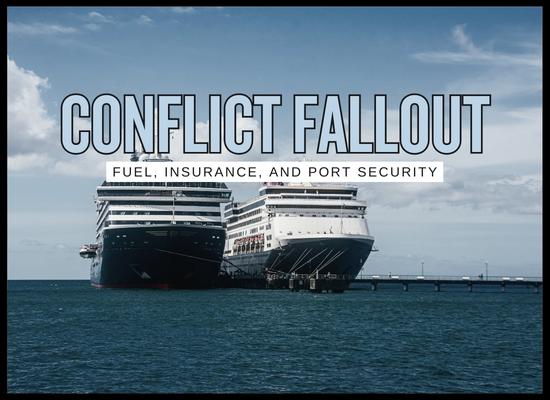
Iran tension does not just hit “Middle East cruises.” It forces itinerary teams, port agents, insurers, fuel buyers, and flight operations to make fast decisions that ripple into schedule integrity, guest satisfaction, and cost per passenger-day. The cruise operators that stay stable are the ones that treat this as a connected system: route risk, port access, insurance capacity, bunkers, and aviation all moving at once.
| # | Impact | Changes fast in real operations | Stakeholder exposure | Early indicators to watch | Impact tags |
|---|---|---|---|---|---|
| 1 |
Arabian Gulf itineraries pause, reroute, or get stranded
When transit risk spikes near Hormuz, the Gulf season can flip from “routine” to “operational stop signal” in hours.
|
Ships already inside the Gulf may face delayed departures, altered port sequences, or extended stays while operators wait for clearance and escort posture.
The commercial hit is not only cancellations. It is schedule breakage that cascades into the next sailing.
|
Revenue management and guest services absorb refunds, re-accommodation, and compensation. Port agents face last-minute berth changes, provisioning pivots, and immigration complexity. | Public operator updates about Gulf sailings, ports limiting marine movements, and security advisories tied to Gulf transits. | Itinerary risk Delay Rebooking |
| 2 |
Ports, shore excursions, and guest movement become “conditional”
Even when a ship can berth, the land-side plan may not be stable.
|
Excursions are cancelled or redesigned around controlled zones, shorter dwell, or convoy style movement. Some ports remain open while attractions, roads, or air movements tighten.
The guest perception is usually driven by what gets removed, not what remains.
|
Shorex operators and DMCs eat last-minute cancellations. Cruise lines face NPS damage if substitutes feel like “filler.” Local authorities face sudden crowd-control and security load. | Embassies and foreign offices tightening travel guidance, local event cancellations, and security re-routing around key areas. | Experience Shorex Security |
| 3 |
War-risk insurance pricing spikes, clauses tighten, or cover pauses
This can change the cost of operating a routing decision immediately.
|
Underwriters may re-price additional premiums, shorten validity windows, demand tighter routing declarations, or restrict cover in certain waters.
Even when cover exists, the paperwork and approval cycle becomes a schedule risk.
|
Finance and legal teams face direct cost increases and broader liability posture. Itinerary planning becomes constrained by what is insurable at an acceptable price, not only what is navigable. | Reports of war-risk cover cancellations or rapid repricing, plus new “war surcharge” behavior in adjacent shipping markets that signals risk pricing is moving. | Insurance Premiums Clauses |
| 4 |
Fuel volatility hits cost per passenger-day and schedule flexibility
Energy shocks travel through bunker markets fast, then into onboard budgets.
|
Bunker prices can jump quickly when Hormuz risk climbs, and availability planning becomes more defensive. Operators may adjust speed, optimize hotel load, or change bunkering ports to manage exposure.
Fuel cost does not only change the P&L. It changes the feasibility of “save the itinerary by steaming harder later.”
|
Procurement teams face volatile pricing and supplier constraints. Itinerary planning loses buffer because high-speed recovery costs more. Hotel operations face pressure to cut energy load without guest backlash. | Rapid oil and gas shipping cost spikes and broader energy price jumps linked to Gulf disruption, which tend to feed bunker sentiment. | Bunkers Volatility Schedule |
| 5 |
Airspace and flight disruption breaks embarkation and crew-change plans
Cruise continuity depends on aviation more than most people realize.
|
When airlines reroute, cancel, or avoid corridors, guests miss departures, inbound charters slip, and crew rotations become unreliable. That creates last-minute hotel nights, transfer costs, and manning stress.
This is one of the fastest ways a regional shock becomes a global cruise disruption.
|
Guest services and port ops deal with late arrivals and missed sailings. Crewing teams face higher costs, visa timing issues, and fatigue management. Vendors get hit by rescheduling chaos. | Airline suspension notices, sudden fare spikes into regional hubs, and government-wide caution advisories that often accompany conflict escalation. | Aviation Crew change Embark |
| 6 |
Security posture onboard tightens, raising visible friction and hidden cost
Higher alert levels change the feel of a voyage and the workload of the ship.
|
More restricted deck access in sensitive areas, changes to AIS or external lighting posture where advised, increased watchkeeping and drills, and tighter gangway controls in port.
Guests notice the symptom: more rules and less freedom, even when the ship remains safe.
|
Ship operations and hotel teams manage increased labor and fatigue. Legal and comms teams manage messaging risk. Port security partners may impose new protocols that slow turnaround. | Operator advisories to guests, changes in port security procedures, and reports of broader merchant shipping reroutes that usually signal heightened threat environment. | Security Ops load Guest comms |
| 7 |
Fuel cost spike plus bunkering uncertainty
Oil and refined product risk reprices fast when Hormuz and regional terminals look exposed.
|
Cruise economics take the hit through higher bunker prices and more conservative fuel planning. Even if ships are not sailing in the Gulf, global bunker benchmarks can move quickly, and some ports tighten product availability or delivery windows.
Ops effect: higher voyage cost variance, more conservative speed plans, and fewer “late recovery” sprints that burn extra fuel.
|
Finance and itinerary planning get squeezed first. Hotel and marine teams feel it next when cost pressure triggers energy-saving enforcement onboard. | Bunker quotes widening by port, sudden changes in availability, increased use of premium grades, last-minute delivery reschedules. | Lock bunker strategy earlier for exposed regions, pre-approve alternates, tighten speed recovery rules, and run weekly fuel variance reporting per itinerary. |
| 8 |
War-risk cover and liability terms tighten
Insurers can reprice, restrict, or pause cover for specific waters and port calls.
|
Even when a cruise line self-insures certain layers, the broader insurance stack can shift quickly. That changes route approvals, port-call viability, and the minimum security posture needed for operations and excursions.
Ops effect: approvals slow down, more legal review, tighter navigation and port-entry constraints.
|
Legal, risk, and treasury get immediate workload spikes. Shore excursions and port ops see cancellations when coverage or approvals are unclear. | New exclusions, “additional premium” notices, route restrictions, and rapidly changing broker guidance for named waterways. | Keep pre-cleared alternate routing, maintain a live matrix of “approved waters and ports,” and build decision windows into itineraries so changes are not last-minute. |
| 9 |
Gulf and nearby itineraries get pulled or reshaped
Dubai, Doha, Abu Dhabi seasons become fragile when transit and regional security posture changes.
|
Lines shift ships out earlier, reduce port intensity, or replace Gulf port calls with safer substitutes. Repositioning voyages can be altered if high-risk transit corridors face heightened threat or restrictions.
Ops effect: mass re-accommodation, port cost changes, and ripple impacts on deployed capacity.
|
Revenue management, guest services, and port partners absorb the churn. Airports, hotels, and ground handlers feel it through disrupted fly-cruise flows. | Short-notice itinerary amendments, port agents advising security constraints, berthing windows changing, higher security fees and requirements. | Maintain “plan B port bundles” by region, pre-negotiate substitution terms with agents, and keep guest comms templated for fast deployment. |
| 10 |
Airspace and flight disruption hits fly-cruise reliability
Regional closures and reroutes can break embarkation waves and crew rotations.
|
When flights get rerouted or canceled, the impact shows up as missed embarkations, late luggage arrival, and crew change failures. Cruise lines then carry extra hotel nights, transport, and rebooking costs, and ships may hold departure or sail with lower load.
Ops effect: terminal exceptions surge and call centers spike.
|
Guest services, air teams, and crewing are hit first. Finance sees the comp and re-accommodation cost stack fast. | Airline schedule instability, route diversions, higher no-show rates, delayed baggage, crew unable to reach joining ports. | Expand protected embarkation windows, tighten “fly in day before” incentives, and pre-contract hotel capacity near terminals for surge accommodation. |
| 11 |
Port security posture changes reduce shore-time value
Harder access control and tighter movement rules can cut excursion throughput.
|
Ports under elevated threat posture may impose more screening, restrict waterside movement, limit bus staging, or reduce shore access to controlled corridors. That lowers excursion capacity, changes tour mix, and increases missed-return risk if crowding slows movement.
Ops effect: fewer sellable tours and more last-minute swaps and refunds.
|
Shore excursions, port operations, and onboard revenue teams feel this directly, especially on high-attach itineraries. | New perimeter rules, higher security charges, reduced tour permits, longer egress times, and shortened all-aboard windows. | Rebuild excursion portfolio toward lower-movement options, add time buffers, and tighten guest tracking and return verification workflows. |
| 12 |
Crew welfare and retention pressure rises
Safety concerns, family anxiety, and rotation disruption stress the crewing system.
|
Conflict-linked disruptions can strand crew, delay rotations, and raise anxiety for crew with family in affected regions. That can drive higher attrition, more sick leave, and performance degradation, especially in safety-critical roles.
Ops effect: overtime increases and service consistency becomes harder to hold.
|
Crewing, HR, and onboard department heads see the strain first, then hotel delivery and safety compliance. | Missed crew joins, rotation delays, higher overtime, increased medical and fatigue flags, higher resignation requests. | Add rotation redundancy, strengthen welfare comms and support, tighten fatigue monitoring, and pre-stage relief pools in safe hub ports. |
The near-term cruise impact of an Iran war scenario is less about a single route map and more about fast-moving second-order effects: fuel volatility, insurance and security posture shifts, air travel disruption, and customer hesitation that can flip demand in specific regions. The operators that handle it best treat this as a weekly operating cycle with clear triggers, pre-cleared alternates, and rapid guest communication, so itinerary changes do not become brand damage or uncontrolled compensation leakage.
- Lead with optionality: keep pre-cleared alternate port bundles and substitution terms ready before the first disruption wave hits.
- Run fuel variance like a core KPI: lock assumptions earlier, tighten speed recovery rules, and track per-itinerary variance weekly.
- Keep insurance and route approvals “live”: maintain an approved waters and ports matrix, with decision windows that avoid last-minute changes.
- Design for fly-cruise disruption: expand protected embarkation windows, incentivize arrival the day before, and pre-contract surge hotel capacity.
- Assume port security posture can tighten overnight: shift excursion mix toward lower movement options and build extra return buffers.
- Control compensation leakage: define escalation rules for refunds, FCC, and re-accommodation so guest care stays consistent without runaway cost.
- Protect crew rotation stability: stage relief pools in safe hubs, strengthen welfare comms, and tighten fatigue monitoring under disruption.
- Align leadership on the dominant driver: demand shock, operating cost, or risk friction. Pick the lever first, then message it consistently across teams.
We welcome your feedback, suggestions, corrections, and ideas for enhancements. Please click here to get in touch.