Record Demand New Pressures 10 Cruise Trends Reshaping 2026
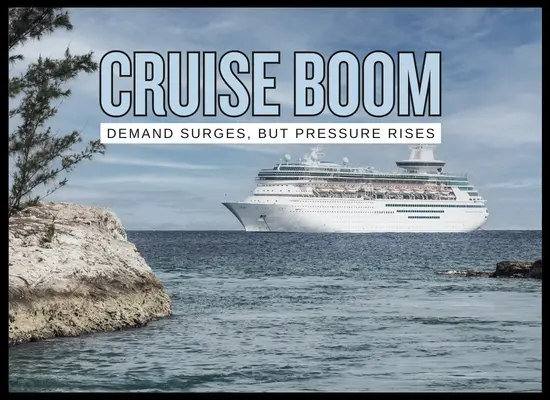
Cruise is heading into 2026 with unusually strong underlying demand, but the easy headline is only half the story. CLIA’s 2025 outlook points to global ocean-going passengers rising from 34.6 million in 2024 to 37.7 million in 2025 and 39.6 million in 2026, while major operators are still talking about historically high pricing and unusually strong forward booking trends. At the same time, the product mix is shifting: more controlled destination experiences, more premium and luxury spend, more first-time and younger guests, and more pressure on fuel, port execution, and itinerary design. In other words, demand is setting records, but the operating job is getting harder too.
| # | 2026 cruise trend | Why it is growing stronger | New pressure it creates | What operators need to watch | Impact tags |
|---|---|---|---|---|---|
| 1 |
Record demand is colliding with a tighter premium-capacity market
The industry is not just filling ships. It is filling a large share of future inventory at stronger price points than many expected.
|
Global cruise volumes are still on a steep upward path, and leading operators continue to describe 2026 demand as unusually resilient. That matters because cruise lines are now selling into a market that still wants the product even after multiple fare increases.
The strongest performers are not simply discounting to fill cabins. They are holding pricing power while moving a meaningful share of future capacity.
|
High demand raises the stakes for execution. Once more inventory is sold further out and at firmer prices, the cost of itinerary disruption, service misses, or product under-delivery becomes larger. Refund pressure, onboard compensation, and brand damage all become more expensive when guests have paid up for a premium vacation. | Load-factor quality, not just occupancy. Operators need to watch whether 2026 bookings are coming in at healthy yields, which brands are still pushing price, and whether supply additions are landing in destinations that can absorb them without weakening guest experience. | Demand Pricing Capacity mix |
| 2 |
The booking curve is stretching further out
Guests and travel advisors are locking in sailings earlier, especially when the ship, cabin type, or destination is capacity-constrained.
|
Cruise lines are increasingly benefiting from travelers who want first choice on itinerary, suite inventory, family cabins, and peak-week departures. That favors brands with differentiated hardware, private destinations, or premium shore product that gives guests a reason to commit earlier.
Earlier bookings also help operators manage revenue better across the whole sailing instead of relying only on last-minute fill.
|
The upside is visibility. The downside is expectation risk. The more a line sells 12 months or more in advance, the more exposed it becomes to later itinerary changes, destination substitutions, shifting air costs, and guest frustration if the promised product slips. | Booking pace by cabin category, cancellation patterns, reprice risk, and how much of the curve is being filled by repeat cruisers versus first-timers. Cruise lines also need to balance early-booking strength with enough flexibility to monetize close-in demand. | Booking curve Revenue visibility Repricing risk |
| 3 |
Private destinations are becoming core product, not side attractions
Controlled beach clubs, private islands, and line-owned destination zones are moving closer to the center of the cruise value proposition.
|
Operators increasingly want shore experiences they can control, monetize, and market as part of the headline vacation. That improves consistency, supports higher guest spend, and gives cruise lines more insulation from the variability of third-party port experiences.
In the Caribbean especially, destination ownership and exclusive access are becoming a bigger competitive lever.
|
This trend carries real capital and operating pressure. If a new private destination feature opens late, underdelivers, or does not align with deployed capacity, the line can create its own itinerary bottleneck. It also increases exposure to weather, local politics, and infrastructure timing. | Guest throughput, pier and tender reliability, food-and-beverage execution ashore, excursion capture rates, and whether destination investments are being matched correctly to ship deployment. Controlled destinations only work if the logistics feel effortless to the guest. | Destination capex Shore spend Execution risk |
| 4 |
The customer base is getting younger, broader, and less purely legacy-cruise
Cruise is no longer relying only on older repeat guests. The funnel now includes more Gen-X, Millennials, solo travelers, and first-time buyers.
|
A younger and more mixed customer base helps explain why cruise demand has remained strong even as pricing has risen. New-to-cruise demand creates incremental growth, while younger repeat intent gives operators a deeper long-term customer pipeline than the old stereotype suggested.
This is also changing onboard product decisions, cabin mix, entertainment priorities, and digital expectations.
|
A broader audience raises product-complexity pressure. Cruise lines now have to satisfy families, first-timers, premium upgraders, solo travelers, and multigenerational groups at once. That complicates pricing, app design, dining flow, shore programming, and onboard segmentation. | Conversion of first-time guests into repeat guests, digital engagement before sailing, solo and family cabin utilization, and whether onboard spending models fit a guest mix that is less predictable than before. | First-time demand Younger mix Product complexity |
| 5 |
Premium, luxury, and exploration product is taking a bigger share of attention and spend
Higher-end cruise demand is not just surviving. In several segments it is expanding faster than many mainstream travel categories.
|
Travelers with more spending power continue to prioritize experience-rich travel, and cruise lines have responded with more upscale ships, longer itineraries, expedition product, and more all-inclusive positioning. This gives the sector a stronger pricing umbrella even when entry-level consumers become more price sensitive.
Luxury and exploration now matter beyond their direct size because they influence the whole industry’s margin story and product design.
|
Premium growth raises expectations around destination access, service consistency, culinary standards, cabin design, and itinerary uniqueness. It also intensifies competition for limited berths, distinctive ports, expedition talent, and technically specialized ships. | Occupancy quality at top price tiers, suite and villa mix, premium shore-excursion attachment rates, and whether high-end expansion is being paced sensibly against global economic volatility and operating complexity. | Luxury Exploration Margin stakes |
| 6 |
Sustainability is shifting from brand language to operating reality
By 2026, environmental performance matters less as a brochure statement and more as a live operating constraint tied to fuel, port access, and future competitiveness.
|
Cruise lines are investing in shore power capability, fuel-flexible engines, LNG-linked newbuilds, wastewater systems, and a broader mix of emissions-reduction technologies because the commercial direction is now clear. The industry can still grow, but it has to grow while showing that ships are becoming more port-compatible and more adaptable to lower-emission fuel pathways.
That makes sustainability less of a side topic and more of a design, deployment, and capital-allocation issue.
|
The pressure is that capability onboard does not automatically solve the problem ashore. A ship may be shore-power ready, fuel-flexible, or equipped with advanced treatment systems, but the line still depends on infrastructure availability, local rules, fuel economics, and practical deployment choices. That creates a new mismatch risk between what the fleet can do and what ports can actually support. | Shore-power connection rates where infrastructure exists, fuel cost exposure, retrofit timing, wastewater and emissions compliance readiness, and whether new ships are being deployed into regions that can support the environmental hardware they carry. | Shore power Fuel flexibility Compliance cost |
| 7 |
Destination crowding and local resistance are becoming harder to manage
As cruise demand rises, some of the most desirable ports and old-city destinations are feeling more strain, not less.
|
The stronger the industry becomes, the more visible its footprint becomes in destination communities. More guests, larger ships, compressed port windows, and social-media-sensitive tourism hotspots are pushing destination management much higher on the cruise operator priority list.
In 2026, itinerary value increasingly depends on whether a line can deliver access smoothly without overwhelming the place it sells so heavily in marketing.
|
This creates political and commercial pressure at the same time. Operators face berth limitations, staggered arrival controls, changing local rules, and a higher chance that a popular port becomes operationally fragile even when demand from guests remains very strong. That makes destination access less predictable and raises substitution risk. | Port-capacity constraints, berth allocation changes, local tourism caps, tender reliability, excursion flow, and whether guest satisfaction starts weakening in destinations that are being pushed too hard relative to infrastructure and community tolerance. | Port friction Crowding Itinerary risk |
| 8 |
Big-ship concentration is raising infrastructure and turnaround pressure
Some of the industry’s most commercially powerful ships also put the most stress on terminals, transport links, baggage flow, provisioning, and destination timing.
|
The economics of large modern ships remain compelling because they can spread fixed costs, support broader onboard spending, and create destination ecosystems around high guest volume. That helps explain why mega-ship deployment remains such an important part of the mainstream cruise growth story.
But scale only works cleanly when landside systems are ready for it.
|
The pressure point is operational density. One delayed turnaround, one transport bottleneck, one provisioning miss, or one weather-related port change can ripple across thousands of guests very quickly. In other words, hardware scale improves revenue potential but also increases the penalty when the operating chain slips. | Terminal throughput, embarkation timing, airport and transfer resilience, baggage handling, stores logistics, gangway flow, and whether ports used by the newest ships are keeping pace with the real guest-volume load being deployed into them. | Mega ships Turnarounds Infrastructure strain |
| 9 |
Digital selling is moving further upstream into the guest journey
Cruise lines increasingly want to monetize the vacation before the ship even sails, not just after the guest boards.
|
Stronger apps, better guest data, bundled packages, reservation systems, and more disciplined pre-cruise merchandising are allowing operators to lock in spend earlier across dining, drinks, Wi-Fi, excursions, and premium experiences. That improves revenue visibility and can lift total vacation yield without relying only on base fare.
The product is becoming more layered, and more of that layering is now sold before departure.
|
The new pressure is complexity. The more cruise lines sell in advance, the more they need apps, inventory systems, call centers, and onboard execution to stay synchronized. If reservation logic breaks, onboard availability disappoints, or guests feel over-sold before sailing, the digital revenue strategy can backfire into service friction. | Pre-cruise attachment rates, app usability, package uptake by guest segment, onboard fulfillment quality, refund friction, and whether digital upsell is improving guest satisfaction or simply shifting congestion into dining rooms, shore programs, and high-demand onboard venues. | Pre-cruise sales Personalization Execution complexity |
| 10 |
Strong demand is not removing cost discipline from the story
2026 may look like a demand year from the outside, but operators still have to protect margins against fuel, labor, maintenance, financing, and itinerary volatility.
|
Cruise lines have benefited from firm pricing and solid booking trends, but that does not mean the cost side has become easy. Higher operating expectations, tighter guest-service standards, more complex destination strategies, and the need to maintain large modern fleets mean the margin story still depends on disciplined execution, not just full ships.
The winners are likely to be the brands that convert demand strength into cleaner, steadier earnings rather than assuming record occupancy solves everything.
|
The pressure comes from cost stacking. Fuel moves, drydock timing, hotel and entertainment labor, food inflation, air-disruption spillover, geopolitical rerouting, and maintenance intensity can all erode the benefit of strong ticket demand. That is especially true when guests have paid more and therefore expect fewer service misses. | Net yield versus cost growth, fuel sensitivity, onboard labor efficiency, maintenance scheduling, guest-compensation trends, and how often itinerary changes are forcing lines to absorb avoidable costs or dilute the product they originally sold. | Cost pressure Margin discipline Itinerary volatility |
Cruise 2026 Pressure Dashboard
A closing snapshot that turns the article into something practical: the demand arc is still rising, but the operating environment is getting tighter. The forecast bars below show the volume story. The sliders let readers test how fast strong demand can turn into execution pressure once fuel, crowding, and itinerary friction climb.
Volume is still climbing
The forecast path remains constructive into 2026 and beyond, which is why the sector still looks like a growth story even after several years of recovery and yield improvement.
Bookings remain unusually firm
Major operators have entered 2026 with strong booked positions and healthy pricing, which supports the article’s core point that demand is real, not just promotional noise.
The next problem is operational
As the market gets fuller and more premium, the cost of congestion, port friction, service misses, and itinerary substitutions rises. That is where the 2026 pressure story becomes more interesting than the simple volume story.
We welcome your feedback, suggestions, corrections, and ideas for enhancements. Please click here to get in touch.