Passenger Health Operations 2026: Screening, Outbreak Playbooks, and Medical Cost Control
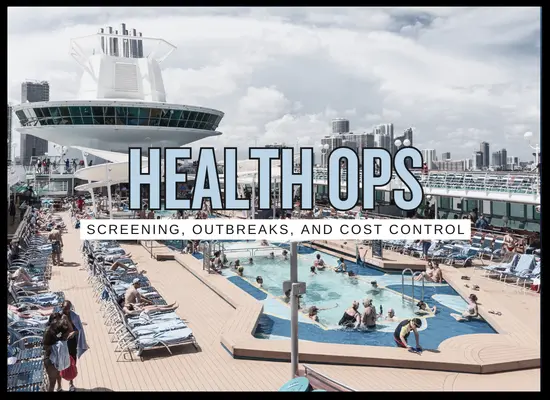
Passenger health ops in 2026 is a margin and continuity discipline as much as a medical one. The operators that stay stable are the ones who treat screening as a layered control system that reduces onboard case load early, protects the medical center from being overwhelmed, and triggers faster containment when the first cluster appears. The reality is that you cannot screen your way out of every outbreak, but you can prevent a lot of “avoidable spread” by tightening the handoffs between pre-boarding checks, embarkation flow, and early reporting onboard.
Screening policy builder
Toggle layers and see a practical “screening tightness” score plus what operational burden rises first.
Operational triggers that matter
A simple “if this happens, action starts” reference that aligns with public health reporting language.
| Layer | Screening layer | When it actually helps | Where it fails in practice | Operational cost pressure | Ownership |
|---|---|---|---|---|---|
| 1 |
Pre-travel health attestation plus “do not board” rules
The first gate: reduce obvious symptomatic boarding.
|
Helps when messaging is clear and consistent and when rebooking options reduce the incentive to hide symptoms.
Highest impact is on early voyage case counts and fewer medical-center spikes on Day 1–2.
|
Fails when guests fear losing the trip and under-report symptoms. Also fails when rules are unclear or inconsistently enforced across terminals. | Call center load, rebooking operations, and terminal exception handling. | Commercial + Guest Services |
| 2 |
Embarkation flow design that reduces crowding
Appointments, staged boarding, queue control, ventilation focus.
|
Helps when it reduces long dwell time in dense indoor spaces and keeps the terminal from becoming a transmission amplifier before guests even board. | Fails when peak-day surges blow through appointment systems or when security and check-in bottlenecks create long indoor queues. | Staffing and terminal coordination. Potential slower throughput if not designed well. | Port Ops + Terminal Partner |
| 3 |
Targeted “high-risk” crew onboarding checks
Focus on the intake points where illness can enter repeatedly.
|
Helps when crew rotations are frequent and when early detection prevents shipwide spread in crew quarters and back-of-house. | Fails when rotations are rushed due to flight disruption or manning pressure and the program becomes a paperwork exercise. | Shore-side coordination, clinic capacity, and schedule disruption when replacements are delayed. | Crewing + Medical |
| 4 |
Early symptom reporting incentives onboard
Reduce “late reporting” that turns one case into many.
|
Helps when guests understand that early reporting protects the voyage and when the experience of reporting is not punitive. | Fails when guests fear missing excursions or specialty dining, or when reporting creates long waits and poor communication. | Medical center load management and isolation logistics. | Medical + Guest Services |
| 5 |
Sanitation “first 48 hours” surge plan
Front-load high-touch disinfection and monitoring.
|
Helps when combined with early reporting and isolation, especially during known seasonal GI risk periods. | Fails when surge cleaning is done without targeting actual risk nodes, or when it is abandoned after Day 2 while cases are still emerging. | Labor hours and chemical use. Opportunity cost on other housekeeping tasks. | Housekeeping + Sanitation |
| 6 |
Data discipline that catches clusters early
Simple dashboards: symptom logs, clinic visits, isolation counts.
|
Helps when trends are reviewed daily and trigger action before the ship crosses outbreak thresholds. | Fails when data quality is poor or delayed, or when no one has authority to act on early signals. | Staff time for logging and reviews. Minimal capex if done simply. | Medical + Ops Control |
Threshold tracker and response posture
Enter current counts and see the posture plus the first actions that usually reduce spread.
Percent of passengers reporting symptoms to medical.
Percent of crew reporting symptoms to medical.
-
First 12 hours action set
A practical list that matches the way ships actually contain spread early.
Actions update based on your posture. The highest payoff is isolation compliance plus fast environmental sanitation escalation on high-touch spaces.
| Phase | Trigger pattern | Containment moves that scale | Comms and reporting discipline | Medical load control | Ownership |
|---|---|---|---|---|---|
| Detect |
First cluster appears
A small number of cases with a common timing or exposure pattern.
|
Start targeted sanitation surge on known high-touch nodes, tighten food-service and restroom cleaning cadence, and focus on early isolation compliance.
Containment is faster when the ship uses a repeatable checklist instead of ad hoc meetings.
|
Increase symptom-reporting prompts and reduce barriers to reporting. Move comms into a consistent rhythm so rumor does not beat official updates. | Add a triage lane and remote check-ins for mild cases to reduce clinic crowding while still capturing reports. | Medical + Housekeeping |
| Contain |
Case counts trend upward
Daily new cases do not flatten and appear across multiple decks.
|
Expand sanitation zones, increase isolation enforcement, pause or modify high-contact activities where needed, and lock in crew back-of-house controls. | Maintain frequent updates that are consistent across app, cabin TV, and guest services. Keep logs clean because reporting quality impacts external scrutiny. | Pre-position supplies, protect staff rest cycles, and avoid clinic crowding that creates additional exposure. | Ops Control + Medical |
| Stabilize |
New cases flatten
Isolation compliance rises and sanitation surge reduces new transmissions.
|
Keep enhanced cleaning on the highest-yield nodes, continue isolation protocol until cleared, and prevent premature relaxation that causes a second wave. | Shift comms to clarity and confidence: what is changing, what stays, and what guests should do if symptoms begin. | Reduce unnecessary visits via remote follow-up, while maintaining reporting discipline so “silent cases” do not rebuild spread. | Hotel + Medical |
| Reset |
Voyage closeout and turnover
Turnaround is a risk moment for spread and reputational impact.
|
Deep clean where warranted, verify sanitation completion, and correct the structural issue that created late reporting or weak compliance. | Close the voyage reporting loop, document actions taken, and preserve lessons learned so the next sailing does not repeat the same failure mode. | Replenish medical and sanitation stocks, debrief staffing and triage flow, and update the trigger thresholds used onboard. | Medical + Shoreside HSE |
Medical cost estimator
Estimate per-sailing medical cost, then see which levers move the result most.
Outputs
Per sailing totals, per passenger-day normalization, and top pressure points.
Clinic visits plus pharmacy, diagnostics, and expected evacuation cost.
Normalizes by passengers times voyage days.
Probability times average cost, per sailing.
Ranked drivers based on your inputs.
When the expected evacuation cost dominates, the most valuable controls are early escalation protocols, shore-side telemedicine support, and faster diagnostics and decision discipline.
| # | Cost control lever | Where savings actually appear | Where it breaks in practice | KPIs that reveal drift | Ownership |
|---|---|---|---|---|---|
| 1 |
Tele-triage and nurse line
Deflect low acuity visits while keeping documentation clean.
|
Fewer unnecessary clinic visits, better prioritization of clinician time, and faster early guidance that reduces late escalations. | Over-deflection that misses true acuity, or a process that frustrates guests and drives repeat contacts. | Visit volume per 1,000 pax, return visits within 24 hours, adverse follow-ups. | Medical |
| 2 |
Early escalation rules for high-risk symptoms
Reduce the probability of a costly diversion or evacuation.
|
Shortens time to treatment decisions and reduces “wait too long” escalations that trigger off-ship interventions. | Rules exist but are inconsistently followed, especially when the ship is busy or the medical center is crowded. | Time to provider, time to escalation decision, diversion and medevac rate. | Medical + Bridge |
| 3 |
Inventory discipline for critical meds and consumables
Prevent expensive emergency sourcing in port.
|
Lower premium procurement and fewer clinic interruptions due to stock-outs. | Stock-outs during peak demand periods, causing last-minute procurement and operational compromises. | Stock-out events, emergency orders, expired inventory rate. | Medical + Supply |
| 4 |
Formulary and prescribing standards
Keep treatment consistent and cost predictable.
|
Less variance in medication usage and fewer expensive “one-off” orders. | Provider preference drift and inconsistent adherence across ships. | Pharmacy cost per passenger-day, top medication outliers by voyage. | Medical Director |
| 5 |
Diagnostics that support faster decisions
The goal is fewer unnecessary off-ship escalations.
|
Better confidence in treat onboard vs escalate decisions, reducing precautionary diversions. | Diagnostics exist but are underused or results are slow due to workflow gaps. | Time to result, percent of cases with diagnostic confirmation, escalation reversals. | Medical |
| 6 |
Billing and documentation discipline
Reduce revenue leakage and disputes.
|
Higher capture of billable services, fewer chargebacks, and faster claims processing for insured travelers. | Documentation gaps or unclear charge communication leading to disputes and write-offs. | Collection rate, dispute rate, write-offs, time to close. | Medical + Guest Services |
| 7 |
Pre-arranged shoreside provider network
Lower chaos cost when a guest needs off-ship care.
|
Faster referral, better pricing predictability, and fewer last-minute agent markups. | Network exists but is not maintained, or ports change and relationships drift. | Off-ship case cost variance by port, time to appointment, patient satisfaction. | Shoreside Medical Ops |
| 8 |
Clinic flow design that avoids crowding
Crowding creates secondary exposure and inefficiency.
|
Lower staff burnout and better throughput, plus reduced cross-exposure during outbreaks. | Peak surges overwhelm triage and the clinic becomes a bottleneck. | Wait times, percent of cases triaged remotely, staff overtime. | Medical |
| 9 |
Crew health containment in back-of-house
Crew clusters are operationally expensive.
|
Fewer staffing disruptions, less overtime, and fewer service degradations that trigger compensation. | Under-reporting and delayed isolation in crew quarters. | Crew illness rate, overtime hours, backfill cost. | HR + Medical |
| 10 |
Outbreak prevention reduces medical surge cost
Prevention and early containment are medical cost control.
|
Lower visit spikes and fewer supply burn rates during GI or respiratory waves. | Prevention exists on paper but enforcement collapses during high guest activity periods. | Symptom reporting time lag, isolation compliance, sanitation completion rates. | Hotel + Medical |
| 11 |
Evacuation decision discipline
Avoid precautionary escalations that could be treated onboard.
|
Lower diversion and helicopter spend plus fewer schedule and guest compensation impacts. | Risk aversion without decision structure, or unclear escalation authority. | Evacuation and diversion rate, review outcomes, near-miss audit findings. | Medical Director + Master |
| 12 |
Guest communication that reduces late presentation
Late reporting is expensive.
|
More early presentation, fewer complications, and fewer high acuity events. | Guests avoid reporting due to fear of missing activities, then escalate later. | Time from symptom onset to report, severity at first visit, repeat visits. | Guest Services + Medical |
In 2026, strong passenger health operations comes down to one discipline across all three areas: consistency under pressure. Screening reduces preventable onboard load, the outbreak playbook stops small clusters from turning into voyage-wide disruption, and medical cost control prevents escalation from becoming a financial and reputational event. The operators that do this well treat health as an operational system with clear triggers, owned metrics, and repeatable workflows, so the ship stays stable even when illness pressure rises.
We welcome your feedback, suggestions, corrections, and ideas for enhancements. Please click here to get in touch.