Alternative Fuels in Cruise 2026: LNG, Methanol, Bio Blends, and the Retrofit Paths That Pencil Out
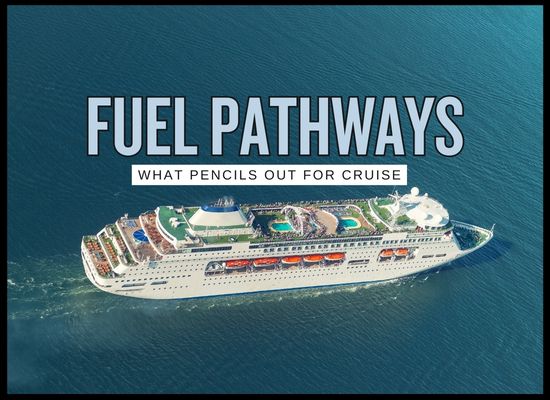
Cruise is now far enough into the decarbonization cycle that “fuel choice” is really three choices at once: (1) what you can burn safely on a hotel-heavy vessel, (2) what ports can bunker at scale, and (3) what the life-cycle emissions math looks like once regulators and financiers stop accepting tailpipe-only claims. In 2026, most cruise fuel decisions are about practical pathways that protect itinerary reliability and brand risk while still moving the emissions needle.
LNG
LNG is the most operationally proven alternative fuel in the cruise fleet today because it solves the local air pollutant problem cleanly and has a mature bunkering ecosystem in many regions. The trade in 2026 is that LNG’s climate value depends heavily on engine choice, methane slip management, and how quickly the sector can access bio-LNG or synthetic LNG options that improve life-cycle intensity.
| Decision area | Impact | Upside | Trade-offs | Retrofit path that pencils out | 2026 outlook |
|---|---|---|---|---|---|
|
Local air emissions
SOx, PM, and NOx profile that shows up in ports and near cities.
|
Cruise has high hotel loads in port, so visible air quality performance matters at the pier and in permitting discussions. |
Very strong SOx and particulate profile versus conventional fuels, helpful in high-scrutiny ports and during port stays.
Often an easier story for communities than incremental exhaust improvements.
|
Does not automatically solve climate scrutiny. The air-quality win can be offset by methane emissions debate if not managed. |
Hard to do as a small retrofit on most existing ships because of tanking, systems integration, and safety zones.
Most “pencils out” LNG moves are tied to newbuilds or major conversions.
|
Strong Port optics |
|
GHG performance and methane slip
Life-cycle intensity and unburned methane emissions.
|
Stakeholders increasingly evaluate life-cycle GHG, not only stack emissions, especially under emerging rules and financing screens. |
Depending on engine technology and operations, methane slip can be lower than conservative default assumptions.
Technical tuning and operating profiles matter more than many commercial teams assume.
|
Methane slip is a central risk to the climate narrative. If unmanaged, it can erase much of the GHG benefit. | Best lever is often engine selection and upgrades during planned major works, plus methane monitoring and operational controls. | Scrutiny Methane risk |
|
Fuel price, supply, and contracts
Cost stability and the ability to secure fuel reliably on itineraries.
|
Cruise itineraries punish fuel supply surprises. A good fuel on paper can still fail if bunkering is not dependable across ports. | LNG has a relatively mature global supply chain compared with newer alternatives. Long-term supply structures are more established. | Price advantage can swing by region and season. Some ports have LNG, others do not. Operational flexibility can be constrained. | Where it pencils out: fleets already committed to LNG can optimize bunkering plans and contracts, rather than changing ships. | Availability Basis risk |
|
Bunkering and itinerary fit
Port readiness, safety plans, and time impact.
|
LNG bunkering can add procedural steps. Cruise needs predictable turnaround and minimal disruption to guest-facing operations. | In mature LNG cruise ports, procedures can be routinized with tight turnaround integration. | Ports vary in readiness and permissioning. Bunkering windows and safety zones can collide with peak guest movements if poorly planned. | Operational lever: align bunkering windows with low-guest-movement periods and embed terminal process design early. | Manageable Port-dependent |
|
Space, weight, and architecture
Tank volume and safety zones competing with revenue space.
|
Cryogenic storage is volumetrically demanding and can take prime real estate. That is a core cruise penalty versus cargo ships. | Newbuild integration can be clean, especially when design is optimized around LNG from day one. | Retrofits can be brutal: tank location, stability, fire safety separation, and lost revenue space can kill the business case. | Most viable conversion cases are limited to ships with clear structural options and long remaining life, often tied to major refits. | Retrofit drag Design-led |
|
Safety, training, and compliance
IGF-style risk management, crew readiness, drills, and audits.
|
Alternative fuels add a training and procedure layer. Cruise staffing churn makes consistent competency a real KPI. | LNG safety regimes are well developed and supported by class, yards, and vendors with deep experience. | Competency drift is a risk. Any major incident would carry large reputation and regulatory consequences for cruise. | Best value is continuous training cadence and embedded procedures, not one-time training pushes. | Mature Discipline |
|
Path to lower-carbon LNG
Bio-LNG, synthetic LNG, and life-cycle accounting.
|
The LNG bet is stronger if the operator has a credible path to lower life-cycle intensity fuels over time. | Drop-in concept is attractive: lower-carbon molecules can improve life-cycle numbers without changing the ship. | Supply is limited and can be expensive. Proof and accounting frameworks matter, especially with life-cycle standards tightening. | Where it pencils out: supply contracts that lock in certified volumes over time and align with reporting rules. | Supply limited Best lever |
Methanol
Methanol is getting real traction in cruise because it is a liquid fuel that can be handled at near-ambient conditions, and the “methanol-ready” path lets owners avoid a full fuel commitment while still designing in a credible future option. In 2026 the business case usually hinges on two things: whether the operator can secure certified low-carbon methanol volumes on the intended deployment, and whether the ship’s design (or retrofit scope) can absorb the tank-volume penalty without sacrificing too much revenue space.
| Decision area | Impact | Upside | Trade-offs | Retrofit path that pencils out | 2026 outlook |
|---|---|---|---|---|---|
|
Fuel handling and bunkering practicality
Liquid fuel at near-ambient conditions.
|
Easier operational integration than cryogenic fuels, but still a low-flashpoint fuel with stricter safety design, procedures, and training. |
Bunkering concept can be built into port routines with less extreme thermal management than LNG.
A strong fit where ports are building multi-fuel hubs.
|
Requires robust safety systems and crew competency discipline. Any incident has outsized reputational cost in cruise. | Most “ready now” progress is methanol-ready design plus procedural readiness and port planning, not full conversion on older ships. | Momentum Port buildout |
|
Engine and conversion options
Dual-fuel architectures and practical retrofit scope.
|
Conversion feasibility depends on space for fuel systems, integration with automation and controls, and the powerplant type already onboard. | Multiple engine makers offer methanol-capable paths, and conversion programs exist for certain engine classes. | Retrofit scope is not only the engine: it is tanks, piping, ventilation, detection, controls, and hazardous area design. | Where it pencils out: planned midlife refit window with long remaining service life, and clear space for tanks and systems. | Available Project-led |
|
Tank volume and revenue-space penalty
Lower energy density means more volume for the same range.
|
Cruise is uniquely sensitive to lost revenue space. More tank volume can mean fewer cabins, less venue space, or tighter service areas. | Newbuild integration can hide the penalty better than a retrofit, especially if the vessel is designed methanol-ready from the start. | Range and itinerary flexibility can tighten if tank volume is constrained, or if the operator avoids giving up revenue space. | Methanol-ready is often the “pencil-out” compromise: design in the option and protect commercial layout today. | Design trade Itinerary fit |
|
Life-cycle emissions and certification
The carbon story depends on the molecule, not the name.
|
Stakeholders increasingly ask for well-to-wake accounting and credible certification, not tailpipe claims. | Green methanol can materially improve life-cycle intensity when sourced and certified properly. | Fossil methanol does not solve the long-term climate problem. Certified low-carbon supply can be limited and premium-priced. | Pencil-out path: staged procurement, starting with certified volumes on specific itineraries, then scaling as supply contracts mature. | Supply limited High leverage |
|
Port availability and forward supply signals
Can you actually bunker on the deployment you sell.
|
Cruise needs dependable bunkering across a network of ports, not a single flagship hub. | Several major hubs are actively building methanol bunkering capability, improving the practical map over time. | Availability can be uneven by region. Without reliable bunkering, the ship is forced back to conventional fuel or constrained routing. | Pencil-out tactic: match early methanol usage to corridors and hub ports with planned scale, then expand. | Improving Uneven |
|
Safety regime and training discipline
Low-flashpoint fuel controls, drills, and inspection readiness.
|
The operational reality is constant training, maintenance of detection and ventilation systems, and strict procedural compliance. | Clear rule frameworks exist for low-flashpoint fuels and industry guidance keeps maturing as more projects go live. | Cruise crew turnover can erode competency. Stakeholders will watch leading indicators like drill performance and near-miss reporting. | Pencil-out approach: harden the safety management system and training cadence first, then scale fuel use. | Critical Reputation |
|
The methanol-ready bridge strategy
Design now, fuel later.
|
Methanol-ready ships can operate on conventional low-sulfur fuels today while preserving an upgrade pathway when fuel and ports are ready. | Limits stranded-asset risk and lets owners time the fuel switch to real-world supply, pricing, and regulatory clarity. | “Ready” is not “running.” Stakeholders will still demand credible conversion schedules, capex plans, and supply contracts. | Pencil-out case: newbuilds and select major refit projects where design choices already anticipate methanol storage and systems. | Most common Pragmatic |
Bio Blends
Bio blends are the fastest “move now” option in cruise because they can often be used as drop-in or near drop-in fuels on existing engines and bunkering systems, which means the retrofit path is frequently a procurement and assurance project rather than a shipyard conversion. In 2026 the fuel decision shifts from “can we burn it” to “can we prove it”: consistent quality, credible sustainability certification, and life-cycle accounting that holds up under the IMO life-cycle GHG framework and other stakeholder screens. Trials in cruise and expedition cruising keep reinforcing the same point: bio blends can work operationally, but availability, price, and documentation decide whether they scale
| Decision area | Impact | Upside | Trade-offs | Retrofit path that pencils out | 2026 outlook |
|---|---|---|---|---|---|
|
Drop-in practicality
Can the fleet use it without major shipyard work.
|
For many fleets, the quickest decarbonization move is fuel substitution on existing engines, which makes this a procurement, QA, and compliance execution problem. |
Trials in cruise and expedition operations have shown biofuels like HVO can run smoothly with no reported engine performance impact in the trial context.
That matters because cruise cannot accept reliability surprises mid-itinerary.
|
“Drop-in” still needs guardrails: vendor approvals, handling procedures, and monitoring for the specific blend and engine context. | Start with defined trial corridors and a repeatable acceptance protocol: sampling plan, storage checks, and performance monitoring. | Most deployable Fleet-wide potential |
|
GHG claims and life-cycle accounting
Well-to-wake is becoming the common language.
|
Stakeholders are increasingly looking for life-cycle intensity and sustainability criteria, not just “we burned a biofuel.” | Biofuels can deliver large life-cycle reductions when certified and traced correctly, which makes them attractive for near-term progress stories. | Claims can collapse without credible documentation, chain-of-custody, and consistent accounting assumptions. | Build the “proof pack” into the bunkering workflow: sustainability certification, batch traceability, and reporting aligned to the IMO life-cycle GHG guidelines. | Proof matters Lifecycle |
|
Supply availability and price reality
The biggest limiter for cruise scale-up.
|
Cruise needs dependable multi-port supply. Even if one port can deliver, an itinerary network may not. | Operators can target regions where supply exists and design repeatable uplift programs around those ports. | Multiple cruise sources have pointed to limited biofuel availability and high costs as obstacles to wide deployment. | Pencil-out path: corridor-based contracting, then scale in phases as supply expands, rather than promising fleet-wide substitution at once. | Constraint Cost premium |
|
Fuel quality and handling risk
Stability, storage, and “hotel load” operational patterns.
|
Cruise ships spend meaningful time in port with high auxiliary demand. Fuel storage, turnover, and housekeeping discipline affects reliability. | With strong QA, fuels can be integrated into standard bunkering controls and monitored like any other high-consequence input. | Poorly managed blends can introduce operational risk: filter loading, storage stability issues, and water management challenges. | Pencil-out lever is process: tighter sampling, tank management, and trending key engine and purifier indicators during early adoption. | Manageable Process-led |
|
Bio-LNG and mass balance pathways
Renewable molecules delivered through accounting methods.
|
For LNG cruise ships, a key near-term lever is renewable LNG via mass balance, which can improve life-cycle intensity without changing ship hardware. | Cruise examples have highlighted bio-LNG usage with mass-balance approaches and sustainability certification as a pragmatic bridge. | Mass balance can be misunderstood by non-technical audiences, so communication and documentation must be precise. | Pencil-out path: lock certified volumes in supply agreements and pair the procurement story with transparent accounting language. | High leverage Explainability |
|
Regulatory and destination constraints
Where bio blends become an access tool.
|
Some destinations and regions are tightening expectations for emissions, and operators have noted constraints like limited biofuel supply when meeting such rules. | Bio blends can function as an access enabler for sensitive areas when paired with other measures like shore power or speed control. | The risk is overpromising availability. If supply is thin, itinerary and marketing claims become fragile. | Pencil-out move: match biofuel usage to the highest-scrutiny itineraries first, then widen as supply grows. | Targeted use Scarcity |
|
What “pencils out” for existing fleets
The practical retrofit is usually non-structural.
|
Most cruise fleets get the best ROI from scaling procurement and QA systems, not ripping out tanks and engines. | Rapid adoption is possible via trials, repeatable acceptance protocols, and contracted supply where available. | Scaling remains constrained by supply, price, and documentation requirements. | The core retrofit path is a “fuel readiness stack”: supplier qualification, onboard handling procedures, and reporting alignment to life-cycle frameworks. | Near-term Pragmatic |
This tool compares fuels using simple, editable assumptions. The most common outcome in cruise is that a “best fuel” does not exist; the best pathway depends on fuel availability on the itinerary, space constraints, and what proof package stakeholders will accept for life-cycle claims.
Scenario inputs
Energy demand is the anchor. Everything else is an assumption you can tune.
Fuel assumptions (edit)
Results
Voyage totals plus a simple “pencils out” score based on cost, carbon, space, and availability.
Total energy delivered over the voyage.
Baseline for comparison (not an alternative fuel).
Fuel cost plus optional carbon cost.
Based on editable life-cycle assumptions.
| Fuel | Fuel cost | CO2e total | Carbon add-on | All-in cost | Pencils-out score | Deal-break flags |
|---|---|---|---|---|---|---|
| LNG | $0 | 0 t | $0 | $0 |
0 / 100
|
|
| Methanol | $0 | 0 t | $0 | $0 |
0 / 100
|
|
| Bio blends | $0 | 0 t | $0 | $0 |
0 / 100
|
What the score is doing
The score blends four things that usually decide whether a cruise pathway survives stakeholder review:
If a fuel wins on emissions but loses on availability, it often stays a pilot. If it wins on cost but has a fragile life-cycle story, it becomes a reputation risk. Cruise tends to prefer the path that repeats across the itinerary network, not the one that wins a single-voyage spreadsheet.
We welcome your feedback, suggestions, corrections, and ideas for enhancements. Please click here to get in touch.