STAX Review: At-berth compliance, without shore power dependency
February 18, 2026
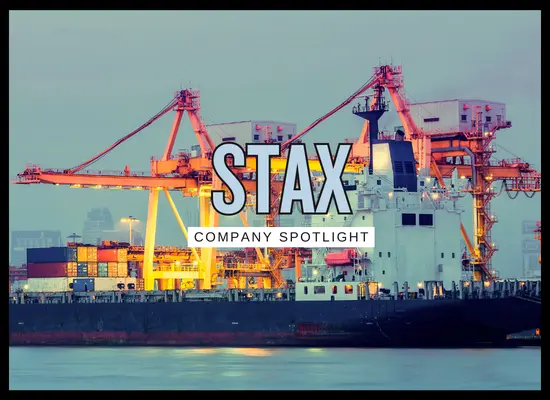
STAX is built for a very specific pain point in ports: the gap between “cleaner operations” goals and what vessels can realistically do at berth today. Instead of waiting on full shore power coverage or major onboard retrofits, STAX shows up as a service, connects to the ship’s exhaust stack while it is alongside, and treats the exhaust in real time so operators can hit California air rules without rewriting the port call plan.
STAX • Headquarters (Long Beach)
65 Pine Avenue, PMB 943
Long Beach, CA 90802, United States
Long Beach, CA 90802, United States
Website:
staxengineering.com
Operators benefit by:
STAX provides emissions capture and control as a port-side service for vessels at berth, aimed at meeting California air requirements without waiting on full shore power coverage.
The practical edge: plug-in compliance at berth
Barge-based or mobile systems
Connects to exhaust stack
CARB pathway focus
Container and ro-ro coverage
Expanding vessel classes
STAX’s positioning is not a long-horizon fleet renewal story. It is a near-term port call lever: treat exhaust while alongside, reduce local pollutants in real time, and keep schedules intact where shoreside electrical upgrades or vessel retrofits would take longer.
- A compliance option that travels with the berth: Mobile deployment can reduce dependency on which exact berth has shore power available, which matters when terminals are congested.
- Less disruption than major onboard modification cycles: The approach is structured as a service layer at berth, so the operational impact is concentrated around port calls instead of long retrofit windows.
- Cleaner air impacts where stakeholders feel it first: Ports get judged on local NOx and particulate outcomes, not only annual fleet averages. Treating at-berth exhaust targets that visible community pressure point.
- Expandable across terminals with repeatable playbooks: Once a terminal operating pattern is proven, it becomes easier to replicate in additional ports with similar berth profiles and vessel mixes.
- Clearer commercial math for ro-ro and container calls: When compliance is tied to time at berth and service hours, teams can translate it into per-call cost planning rather than abstract annual programs.
- Regulatory alignment as the product boundary: The service is framed around California requirements, including CARB executive order pathways and vessel-class applicability as it evolves.
Notes: Vessel eligibility, terminal procedures, and service availability vary by port and vessel class. Validate applicability against the current CARB executive order and the terminal plan for the specific berth.
Source:
STAX Engineering site
Notable mentions and external references
External coverage and regulatory documents tied to STAX capture and control approvals, deployments, and vessel-class expansion.
-
CARB executive order: container vessel approval (EO G-23-294) California Air Resources Board Dec 2023CARB executive order document for STAX’s barge-based capture and control strategy used for compliance with the Ocean-Going Vessels At Berth control measure. Open document.
-
CARB executive order: tanker vessels authorization (EO G-25-200) California Air Resources Board Jul 2025CARB executive order granting authorization for STAXbox as a barge-based capture and control system for auxiliary engines on ocean-going tanker vessels at berth. Open document.
-
Trade press: CARB approval expands to tankers WorkBoat 05 Aug 2025WorkBoat reported on CARB’s executive order authorizing tanker servicing and described the barge-based capture approach as an alternative control pathway. Open article.
-
Port deployment: second emissions capture barge at Port of Hueneme Port of Hueneme 16 Jul 2025The Port of Hueneme published details on deploying a second STAX capture and control barge and described the connection to vessel exhaust and treatment while alongside. Open release.
-
Operations and tech overview: “delivering immediate emissions reductions at the port” The Digital Ship 2025The Digital Ship described the at-berth operating concept and filtering chain used in the capture and control approach, with a focus on port-side execution. Open article.
-
Vessel review: emissions capture barge details (STAX 7) Baird Maritime 22 Aug 2025Baird Maritime profiled an emissions capture barge build and summarized how the system connects to the exhaust stacks of docked vessels in port environments. Open article.
-
Policy context: expansion to tankers under California at-berth rules The Maritime Executive 04 Aug 2025Maritime Executive covered CARB’s executive order expansion and connected it to the phasing of California’s Ocean-Going Vessels At Berth requirements for tankers. Open coverage.
This list is illustrative, not exhaustive. It highlights verifiable third-party references tied to approvals, deployments, and how at-berth capture is being positioned in California port operations.
At-berth capture planning screener
Directional math for port calls. Estimate at-berth NOx and PM2.5 mass, a capture scenario, and a simple cost per kg removed.
Adjust inputs to estimate at-berth pollutant mass and a capture scenario.
How to use this:
• Put in your average at-berth kW and hours for the call, then apply a capture effectiveness assumption.
• Emission rates vary by engine, fuel, after-treatment, and operating profile. Use your own factors where possible.
• Cost per kg is a commercial sanity check, not a regulatory determination.
• Put in your average at-berth kW and hours for the call, then apply a capture effectiveness assumption.
• Emission rates vary by engine, fuel, after-treatment, and operating profile. Use your own factors where possible.
• Cost per kg is a commercial sanity check, not a regulatory determination.
We welcome your feedback, suggestions, corrections, and ideas for enhancements. Please click here to get in touch.