RightShip Review: Screening ship risk before it hits your book
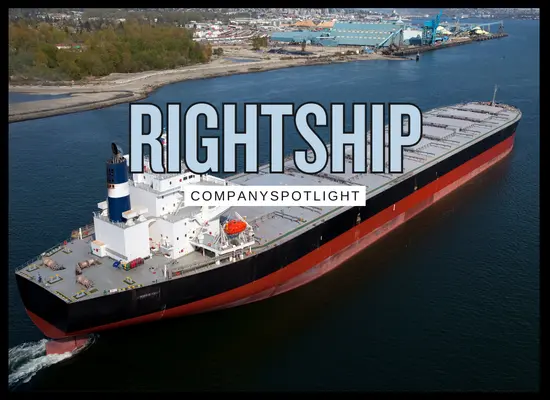
RightShip sits in the “risk and reputation plumbing” of global shipping: it’s the background platform that scores vessels, vets nominations and flags safety and environmental issues before they turn into casualties, detentions or ESG headaches. From a Melbourne head office and a network of regional offices, the offer to charterers, cargo owners and owners is simple: fewer bad surprises in the fleet you fix your name to, and a clearer way to prove you are taking safety and emissions risk seriously.
- Screening out weak vessels before they hit your shortlist: RightShip’s Safety Score and GHG Rating give you a fast filter on safety performance and emissions profile, so commercial teams can remove obvious outliers before time is spent on vetting or negotiations.
- Turning vetting into a repeatable, documented process: The platform’s vetting engine and superintendent review create a timestamped recommendation trail for each nominated vessel and voyage, making it easier to show boards, customers and regulators how decisions were made if something later goes wrong.
- Reducing the odds of casualties, delays and detentions: By combining PSC performance, incident history, inspections and peer benchmarking, RightShip aims to lower the probability that a nominated vessel brings with it avoidable safety issues, cargo damage, port problems or off-hire-style disruption.
- Aligning vessel choices with your ESG and zero-harm story: Because the tools integrate safety, environmental and social indicators, you can show how chartering and procurement choices support internal ESG policies and external expectations around “zero harm” shipping rather than treating safety and emissions as separate conversations.
- Using data to benchmark managers, flags and trades: Safety Score components and inspection outcomes give owners and charterers a way to compare performance across fleets, managers, flag states and trading patterns, and then direct improvement work where the gaps are biggest instead of working from anecdotes.
- Feeding terminal requirements straight into vessel choice: Terminal Questionnaires, feedback reports and berth-specific criteria live inside the same platform, helping you avoid nominating vessels that look fine on paper but are poor terminal fits in practice.
- Keeping one risk language across internal teams: Commercial, technical, HSQE and sustainability teams can all look at the same scores, inspection history and recommendations rather than maintaining parallel spreadsheets and local views of “acceptable” versus “too risky.”
-
Safety Score explained for P&I clients NorthStandard • 2022NorthStandard gave a client-facing explainer on the Safety Score as a way to benchmark likely vessel performance and compare ships against similar tonnage, putting a third-party lens on operational history and PSC outcomes. Read the NorthStandard overview .
-
Disconnect between ESG talk and vessel choice Sea & Job • 2025Sea & Job covered a RightShip report showing how public ESG commitments can diverge from actual vessel selection, using Safety Scores and GHG data to illustrate gaps between policy and day-to-day chartering decisions. See the Sea & Job news item .
-
GHG Emissions Rating with Carbon War Room RMI / Carbon War RoomRocky Mountain Institute describes the GHG Emissions Rating, developed with Carbon War Room, as a way for charterers to compare design efficiency and surface potential fuel savings via an A–G style scale. View the RMI explainer .
-
Zero Harm Innovation Partners in ESG coverage Thetius • 2025A Thetius piece on ESG at sea highlighted RightShip’s Zero Harm Innovation Partners programme as one of the signals that owners and OEMs are investing in safer, cleaner and better-managed vessels. Read the Thetius article .
-
Zero Harm Innovation Partners launch Container News • 2024Container News reported on the launch of the Zero Harm Innovation Partners program, framed as a way to support technologies aimed at a “zero harm” maritime industry and plug them into RightShip’s user base. See the Container News coverage .
| Category | Calculated value (per year) |
|---|---|
| Serious incidents before stronger screening | 0 |
| Serious incidents after stronger screening | 0 |
| Serious incidents avoided | 0 |
| Gross serious-incident cost avoided | $0 |
| Voyages under GHG filter | 0 |
| CO₂ avoided on filtered voyages | 0 t |
| Value of avoided CO₂ (if priced) | $0 |
| Annual screening cost | $0 |
| Total indicative benefit (incidents + CO₂ − screening) | $0 |
| Total benefit per voyage | $0 |
For most charterers, cargo owners and owners, RightShip is really a question of discipline: how much of your voyage book do you want to run through a consistent third-party filter, and how far are you willing to go in tying commercial freedom to minimum safety and GHG rules. A sketch like the one above will not replace a full internal business case, but it does force the right conversations: if you plug in your own loss history, screening costs and CO₂ assumptions, does a tighter, score-backed shortlist process pay for itself in fewer serious incidents and a cleaner emissions story that you can defend to boards, customers and financiers?