Orca AI Review: A Digital Lookout for Real-world Risk
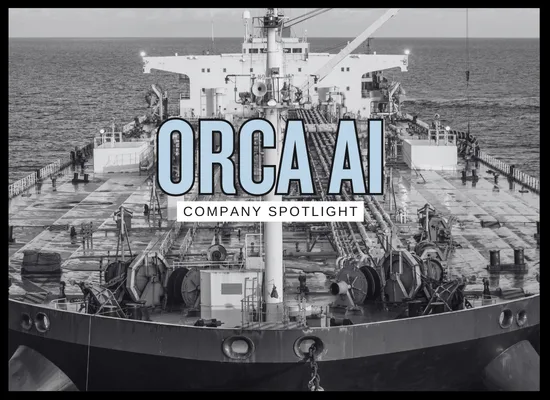
Orca AI sits in the “digital watchkeeper” slot on a modern bridge: cameras, sensors and AI algorithms watching 24/7, flagging the targets that matter and feeding shore teams with hard data on how voyages are actually being sailed. From its base in Tel Aviv and offices in other hubs, the platform promises fewer close encounters, calmer COLREGs decisions and measurable fuel savings by cutting last-second avoidance manoeuvres.
Tel Aviv, Israel
- Adding a tireless digital lookout to the bridge: SeaPod units combine HD and thermal cameras with AI to monitor congested waters and low-visibility situations, flagging only the targets that matter so bridge teams can focus on decisions instead of staring at noisy radar and AIS screens.
- Reducing close encounters and collision risk: Case studies with major owners report steep cuts in “close encounter” and safety events after deployment, which translates directly into a lower probability of high-cost collisions, near-misses and associated claims.
- Cutting fuel burn from cleaner manoeuvring: Earlier, clearer warnings reduce last-second hard rudder and speed changes; Orca AI positions this as up to six-figure annual fuel savings per vessel in some fleets, driven by fewer aggressive avoidance manoeuvres and smoother execution of passage plans.
- Giving shore teams a replay of how voyages are sailed: Fleet dashboards aggregate sensor and video data so operations, safety and training teams can review high-risk transits, benchmark vessels and masters, and target coaching where it has the most impact instead of relying only on noon reports and narrative logs.
- Tackling fatigue and human-factor risk head-on: By taking some of the observation and prioritisation load off watchkeepers, the system is marketed as a way to support tired crews, reduce cognitive overload and provide a “second set of eyes” when people are most likely to make mistakes.
- Building a better story for insurers and charterers: With documented reductions in safety events and a rich trail of navigational data, owners can have sharper conversations with P&I clubs, hull insurers and charterers about risk, training and uptime rather than relying on generic statements about “enhanced safety culture.”
- Preparing for more autonomous operations later: Orca AI’s role in highly automated trial voyages is a signal that the same stack can support today’s manned ships while keeping a pathway open toward higher levels of bridge automation in future projects.
-
Study on reduced close encounters at sea The Maritime ExecutiveThe Maritime Executive reported that ships using Orca AI saw a 27% drop in close encounters and a 22% reduction in sharp manoeuvres, positioning the system as evidence that situational-awareness tools can move the needle on real-world risk. Read the Maritime Executive piece .
-
Near-miss reduction case study IBI NewsIBI News highlighted analysis showing Orca AI cutting near misses at sea by 74%, tying AI-assisted lookout capability directly to fewer risky encounters and smoother navigation behaviour. See the IBI coverage .
-
Series B funding for autonomous navigation Ship TechnologyShip Technology covered Orca AI’s $72.5 million funding round, framed as fuel to accelerate its autonomous shipping solutions and expand across more fleets and use cases. Read the Ship Technology article .
-
Financing for semi-autonomous navigation Sea TechnologySea Technology described Orca AI’s multi-million dollar financing as capital to advance semi-autonomous navigation and accident-risk reduction, placing the company in the broader push toward higher automation at sea. View the Sea Technology note .
-
NYK adoption and autonomous trials in Japan Riviera / Ship TechnologyCoverage of the MEGURI 2040 programme and NYK’s trials off Japan highlighted Orca AI as the automated watchkeeper on shortsea containerships, supporting fully autonomous voyages in congested waters under human supervision. Learn more in the Riviera article .
| Category | Calculated value (per year) |
|---|---|
| Close encounters before | 0 |
| Close encounters after | 0 |
| Close encounters avoided | 0 |
| Cost-bearing incidents before | 0 |
| Cost-bearing incidents after | 0 |
| Cost-bearing incidents avoided | 0 |
| Incident cost avoided | $0 |
| Fuel saved (mt) | 0 mt |
| Fuel cost saved | $0 |
| CO₂ avoided (t) | 0 t |
| CO₂ cost / value saved | $0 |
| Total indicative benefit (incidents + fuel + CO₂) | $0 |
| Total benefit per vessel | $0 |
For many owners, Orca AI is really about deciding how much unmanaged collision and near-miss risk you are willing to carry across the fleet. If your current picture of “close encounters” comes from incident reports and word of mouth, the combination of a digital lookout and a structured data trail gives you a way to quantify that risk, act on it and show your insurers and charterers what has changed. The sketch above won’t replace a full business case, but it does force a useful question: once you plug in your own near-miss rates, incident costs and fuel assumptions, does the value of calmer voyages and fewer bad nights on the bridge justify making an AI watchkeeper part of your next safety and efficiency upgrade cycle?
We welcome your feedback, suggestions, corrections, and ideas for enhancements. Please click here to get in touch.