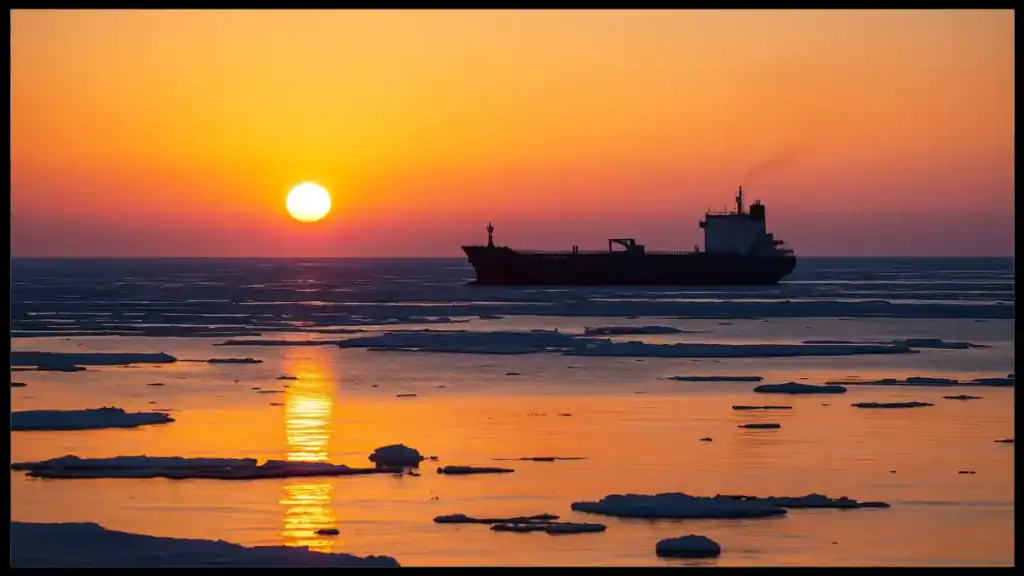
Recent developments in the Arctic maritime arena highlight a surge of strategic activity, not just in ship movement, but also in icebreaker expansion, route planning innovations, and coastal monitoring. From record transit volumes through Russia’s Northern Sea Route to billions in U.S. icebreaker investments and automated navigation tools, the Arctic is fast emerging as a critical node in global shipping and geopolitical strategy.
Arctic Shipping Trends
Trend / Event
Details
Location / Region
Significance
Record Permit Applications for NSR
Russia issued a record number of transit permits ahead of the summer season.
Northern Sea Route
Indicative of rising commercial interest despite seasonal limits.
First NSR Convoy of 2025
Nuclear icebreakers Yamal and Vaigach escort LNG tanker and cargo ships across Vilkitsky Strait.
Russia Arctic
Demonstrates strategic use of icebreakers amid persistent ice conditions.
China‑Russia Container Ship Project
Joint venture to build five ARC7-class container ships to run year‑round NSR logistics by 2027.
NSR / Eurasian Arctic
Signals ambition to overcome seasonal limitations.
ICE Pact & U.S. Icebreaker Funding
$8.6B allocated for U.S. icebreaker acquisition; alliance with Canada & Finland to expand fleet to 70–90 vessels.
U.S., Canada, Finland
U.S. seeks to close icebreaker gap with Russia's dominant fleet.
Canada Builds New Polar Icebreakers
Construction underway on two heavy icebreakers under National Strategy with first due 2030.
Canada
Enables Arctic resupply and territorial presence; addresses aging fleet.
New U.S. Cutter *Storis* En Route
Former AHTS *Aiviq* now USCGC Storis deployed to Arctic, commissioning in August 2025.
USA (Alaska operations)
Replenishes medium icebreaker equipped for Arctic missions.
Expanded Vessel Monitoring in Alaska
Marine Exchange and Arctic Watch extend VHF/AIS capability across remote coastal zones.
Alaska Coast
Supports maritime safety and situational awareness amid traffic rise.
Note: All data based on publicly verified transit records, official fleet-building announcements, and operational observations.
Industry Impact Overview:
Arctic shipping is transitioning from experimental voyages to a zone of strategic competition. Increased commercial use of the Northern Sea Route, expanded icebreaking fleets, and winter-ready shipping infrastructure are reshaping logistics corridors, bolstering sovereignty posture, and accelerating climate‑adapted maritime strategies.
Key Impacts:
Northern Sea Route (NSR) Use Climbs: Record application requests and cargo volume growth signal rising commercial interest, though constraints remain.
Icebreaker Fleet Race Intensifies: U.S., Canada, and Finland moving fast to build dozens of new vessels to counter Russia's dominance.
Real-time Vessel Tracking Expands: Coastal Arctic zones, especially Alaska, are deploying expanded VHF and AIS infrastructure to track increased traffic.
Route Optimization Goes Digital: Automated, satellite-fed sea ice routing tools are making Arctic navigation safer and more efficient.
Container Shipping Ambitions Grow: Joint Russian‑Chinese plans call for ice-class container vessels to enable year‑round transit by 2027.
Commercial Implications of Arctic Maritime Expansion
Commercial Factor
Current Shift
Impacted Stakeholders
Forecast / Risk
Transit Time Reduction
NSR reduces Asia–Europe transit by 8–12 days compared to Suez