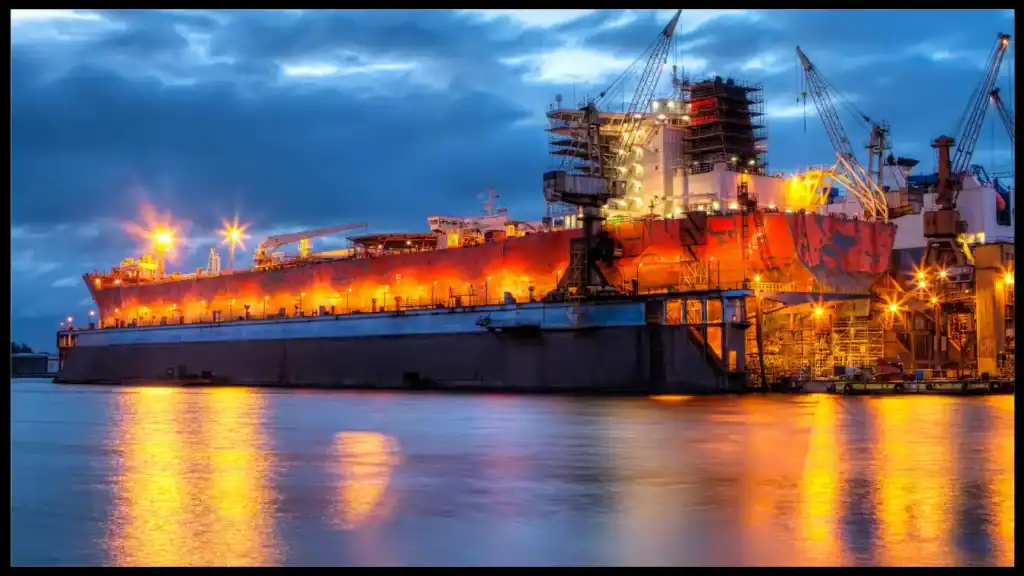
As global trade dynamics shift and political tensions rise, shipyards across the U.S., Europe, and Asia are making key strategic moves. From long-awaited U.S.-built LNG vessels to revitalized funding for small shipyards, the shipbuilding landscape is evolving in ways that reflect economic priorities, military readiness, and climate-era logistics.
Recent Shipbuilding Developments
Initiative
Location
Details
Ferguson Marine secures BAE Systems module order
Scotland (UK)
Ferguson Marine will fabricate steel modules for the HMS Birmingham, part of the Royal Navy’s Type 26 program. This order follows quality improvements at the yard and signals a return of naval trust amid ongoing ferry delays.
EU yards continue servicing Russian LNG carriers
France, Spain, Croatia
Despite sanctions, EU-based shipyards such as Chantier Naval and Brodosplit continue repair and maintenance of Russia-linked LNG tankers, citing regulatory loopholes tied to ownership structures and third-party operators.
South Korea leverages shipbuilding in U.S. tariff talks
South Korea / U.S.
Seoul proposes cooperative investment in U.S. yards and repair bases as a strategic bargaining chip in avoiding further U.S. tariffs on Korean exports. The plan includes naval and civilian infrastructure partnerships.
New U.S. Small Shipyard Grant Program
United States
17 small- and mid-sized yards received funds for equipment upgrades, new dry docks, welding systems, and safety improvements. part of MARAD’s long-term modernization push to boost domestic capabilities.
U.S. shipbuilding strategy advances to OMB
United States
The National Maritime Strategy has moved to the Office of Management and Budget, including provisions for fleet expansion, workforce training, and the use of U.S. yards in energy and defense priorities. Budget approval expected this fall.
Hanwha Philly Shipyard to build U.S.-based LNG carrier
United States
Hanwha Shipping commissioned the first export-grade LNG carrier to be built in the U.S. in nearly five decades. The vessel will be constructed at Philly Shipyard with design and component support from Hanwha Ocean in South Korea.
Note: All entries are based on verified reporting and official press statements.
Industry Impact Overview:
Global shipbuilding is experiencing a surge of politically and strategically motivated investment. While traditional naval orders and LNG projects remain strong, national security priorities, U.S.–South Korea trade dynamics, and regional repair capacity gaps are reshaping how and where ships are built or maintained. This blend of geopolitical leverage and targeted funding is increasing pressure on underperforming yards while elevating the role of mid-tier and specialized facilities.
Key Impacts:
U.S. small yard grants and LNG build orders indicate a renewed focus on domestic industrial shipbuilding capacity.
South Korea is using shipbuilding collaboration as leverage in U.S. tariff negotiations, showing the industry's role in broader trade policy.
Ferguson Marine’s new contract shows a comeback path for once-troubled yards through modular support in naval programs.
EU yards servicing Russian-linked LNG ships highlight enforcement gaps in the sanctions regime, raising questions of compliance and enforcement clarity.
The move of the U.S. National Maritime Strategy to OMB signals potential for long-term structural investment, including commercial and defense yard expansion.
LNG vessel orders in both Europe and the U.S. reflect continued bullishness on gas shipping despite decarbonization pressures.
Global Shipyard Trends by Type
Shipyard Type
Notable Trend
Strategic Outlook
Naval & Defense Yards
Experiencing modular subcontracting growth (e.g., Ferguson–BAE); U.S. funding rises for Coast Guard and Navy needs.
Backlogs remain strong; geopolitical tensions driving long-term contracts, especially for Arctic and Indo-Pacific readiness.
LNG-Capable Yards
Demand remains high despite green transition; U.S. and Korea investing in new LNG-capable builds.
Expected to remain busy through 2028; hybrid LNG + ammonia ship orders likely to grow.
Mid-Sized Commercial Yards
Receiving grants and contracts for modernization (U.S., Eastern Europe); used for modular builds and retrofits.
Poised to grow if national strategies prioritize distributed shipbuilding capacity.
Repair & Service Yards
EU yards under scrutiny for servicing sanctioned vessels; global drydock shortages persist.
Compliance enforcement and transparency expected to increase; drydock expansions likely in Asia and Gulf regions.
Note: Based on verified shipyard activity and publicly available information.