Green Growth and Smart Ports Drive Global Maritime Investment Momentum
Subscribe to the Ship Universe Weekly Newsletter
The surge in capital commitments is not limited to traditional port expansions or new vessel orders but includes greener fuel networks, smart port automation, and long-term public-private partnerships across regions. With the IMO's evolving carbon pricing frameworks and regional policy shifts, new opportunities are opening across developing and developed maritime nations alike.
(view news summary)
Rising Investment in Port Infrastructure
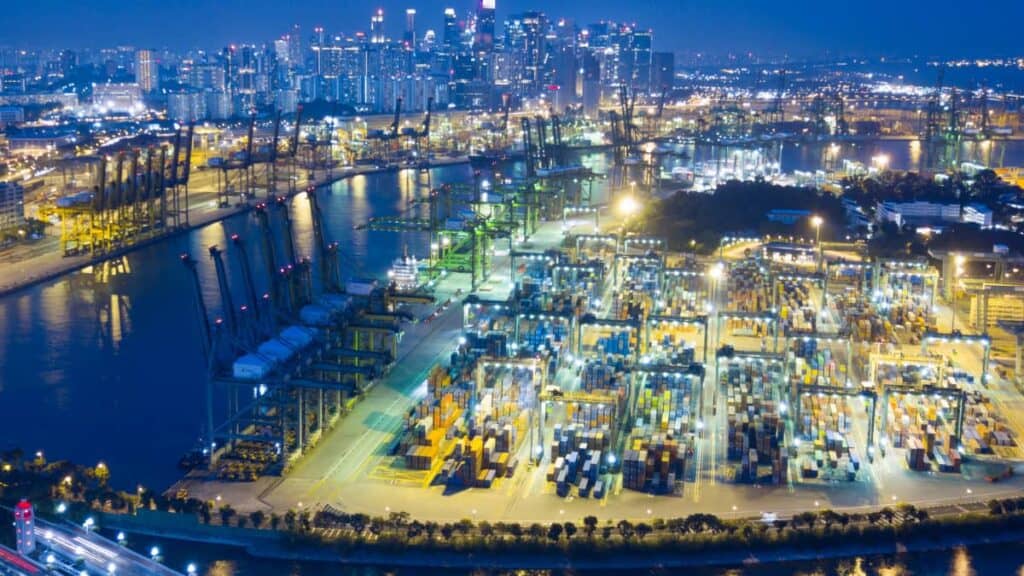
Governments and private operators are prioritizing next-generation port infrastructure with deeper berths, digital tracking, and intermodal capabilities.
- India launched a $3 billion maritime development fund to improve domestic shipbuilding, port efficiency, and trade corridors.
- In Australia, DP World's $400 million investment into Port Botany’s rail connections is expected to double rail throughput to 1 million TEUs annually.
- Morocco’s Tanger Med Port continues its capacity expansion to serve as a transshipment hub between Europe and Africa.
- New projects like Grand Faw Port (Iraq) and Kyaukphyu Port (Myanmar) are attracting regional attention for their potential to connect oil, gas, and container networks.
These infrastructure upgrades aim to support larger container vessels and integrate last-mile logistics via rail and road.
Acceleration of Green Bunkering and Fuel Flexibility
As pressure mounts to decarbonize global shipping, ports and shipbuilders are preparing for widespread adoption of low-emission fuels.
- Shipyards have reported increased orders for dual-fuel vessels running on LNG, ammonia, and methanol.
- Over 200 ships are now operating on zero or near-zero emission fuels globally.
- New green bunkering stations are being installed in Asia, the Middle East, and Europe to accommodate early movers in the fuel transition.
India’s Vizhinjam Port recently gained attention after handling the MSC Irina, one of the world’s largest container vessels, with full LNG readiness. Analysts expect ports with bunkering infrastructure to gain a competitive edge as more fleets are retrofitted or built to comply with emerging IMO emissions rules.
Technology Upgrades at Major Ports
Automation, cybersecurity, and AI-enhanced logistics are now core areas of maritime investment.
- Singapore’s Tuas Mega Port is leading the automation shift with over 1,000 autonomous guided vehicles (AGVs) and a growing fleet of automated cranes.
- Europe and Japan have committed to digital twin models and AI-powered terminal control to increase ship turnaround efficiency.
- Increased spending is also going toward port cybersecurity, especially after a rise in ransomware threats in the logistics space.
Ports seeking to remain relevant in global trade lanes are pursuing digitization not only to cut costs but also to meet customer expectations around real-time cargo visibility and disruption alerts.
Investment Opportunities Linked to Regulation
The changing regulatory environment is steering capital toward future-proof technologies and assets.
- The IMO has proposed a carbon pricing model to begin by 2027, which will reward vessels running on compliant fuels and penalize carbon-intensive ones.
- The EU’s emissions trading system (ETS) is now active for shipping, further increasing the financial case for low-carbon transitions.
- These frameworks are creating investment opportunities in carbon-neutral ships, fleet modernization, and emissions reporting tools.
Meanwhile, discussions are underway around container liability frameworks and insurance reform that could shift capital toward compliance-ready port infrastructure and digital tracking.
Private Sector Capital on the Rise
Private equity and infrastructure funds are showing increasing interest in maritime assets, especially those tied to automation or sustainability.
- Investors are targeting smart ports, clean ship tech, and logistics hubs in emerging markets.
- Sovereign wealth funds in the Middle East are backing port construction and green fuel terminal development.
- Tech companies are forming joint ventures with shipping lines and ports to develop AI logistics solutions.
This new wave of investment has broadened beyond traditional operators and national infrastructure plans, drawing interest from climate funds and digital transformation capital alike.
The current landscape for maritime investment suggests a multi-decade transformation. Green fuel systems, AI-driven port networks, and intermodal connectivity are no longer theoretical ideas but active areas of deployment. Nations positioning their ports as clean, automated, and globally connected are attracting significant funding and rerouted trade volumes. As carbon regulations take firmer hold, the direction of investment will likely favor operators that adapt early and invest strategically.