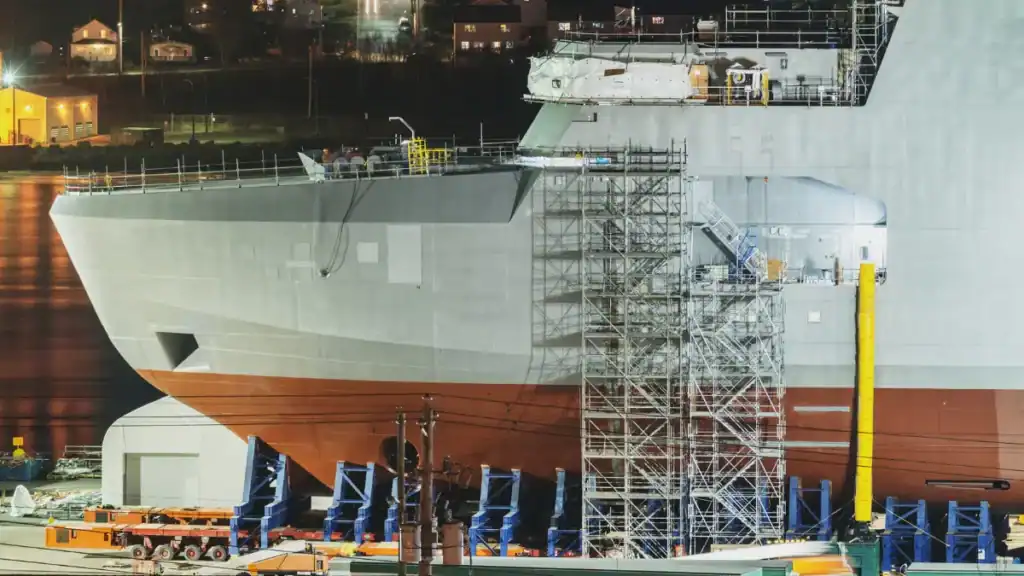
HomeMomentum Builds in Shipbuilding as Nations Double Down on Maritime Power
Momentum Builds in Shipbuilding as Nations Double Down on Maritime Power
June 3, 2025
ShipUniverse Weekly
Get the maritime stories operators are watching.
Stay ahead of vessel markets, port disruption, maritime technology, and more.
Subscribe to the NewsletterFree weekly maritime insights for owners, operators, brokers, suppliers, and decision makers.
From Brazil’s multibillion-dollar fleet renewal to India’s mega yard ambitions and renewed U.S. efforts to reclaim shipbuilding dominance, the global maritime industry is witnessing a surge of strategic investments and design innovation. A wave of new contracts, defense upgrades, and tech-driven advances has reshaped the outlook for commercial and naval shipbuilding alike, signaling not just a recovery, but a competitive acceleration among key players worldwide.
Strategic Investments Reshape Maritime Industry
Nations are making substantial investments to bolster their maritime capabilities, driven by economic ambitions, national security concerns, and the desire to reduce reliance on foreign-built vessels. From Brazil's massive fleet expansion to India's collaborative ventures and the United States' policy shifts, these developments signal a new era in global shipbuilding.
Current Strategic Shipbuilding Initiatives
Country
Initiative
Details
Brazil
Petrobras Fleet Expansion
Petrobras announced plans to commission 52 new vessels by the end of 2026, investing approximately $5.12 billion. This initiative aims to bolster Brazil's shipbuilding industry with up to 65% local content in construction.
India
Mega Shipyard Project
India is advancing a ₹10,000 crore shipyard project in Tamil Nadu, with HD Hyundai and Cochin Shipyard Limited in discussions to collaborate. The project is part of India's broader strategy to enhance its shipbuilding capabilities.
United States
Executive Order on Shipbuilding
President Trump signed an executive order to rejuvenate the U.S. shipbuilding industry, aiming to reduce reliance on foreign-built vessels and strengthen domestic maritime capabilities.
United States
SHIPS for America Act Reintroduction
Bipartisan legislation was reintroduced to expand the U.S.-flag international fleet by 250 ships over 10 years, enhance competitiveness, and invest in the maritime workforce.
Note: Information compiled from publicly available sources.
Defense and Naval Shipbuilding Initiatives
In response to escalating global threats and the need to modernize naval capabilities, several nations have embarked on ambitious shipbuilding programs. From South Korea's proposal to assist the U.S. Navy with Aegis destroyers to the UK's extensive defense overhaul and Canada's investment in River-class destroyers, these initiatives reflect a strategic shift towards enhancing maritime strength and readiness.
Defense and Naval Shipbuilding Initiatives (April–June 2025)
Country
Initiative
Details
South Korea
Hyundai Heavy Industries' U.S. Proposal
HD Hyundai Heavy Industries offered to build up to five Aegis-equipped destroyers annually for the U.S. Navy, aiming to support U.S. naval expansion amid increasing demand for surface combatants. The proposal includes collaboration with U.S. shipbuilder Huntington Ingalls Industries to enhance shipbuilding productivity and delivery timelines.
United Kingdom
Strategic Defence Review and Warship Construction
Prime Minister Keir Starmer unveiled a comprehensive Strategic Defence Review, committing to build up to 12 nuclear-powered attack submarines, six new munitions factories, and expanding the Royal Navy's escort fleet from 14 to 25 ships. The plan includes constructing warships in Scottish shipyards, aiming to boost local employment and reinforce national defense capabilities.
United Kingdom
Type 31 Frigate Program
The Royal Navy's Type 31 frigate program achieved a significant milestone with the rollout of HMS Venturer, the first of five planned vessels. Assembled in Rosyth, Scotland, these 5,700-tonne general-purpose warships are designed for roles such as counter-piracy, humanitarian aid, and disaster relief. The program represents a £1.25 billion investment in enhancing the UK's naval capabilities.
Canada
River-Class Destroyers Program
The Canadian government awarded an $8 billion initial contract to Irving Shipbuilding Inc. for the construction of three River-class destroyers, based on BAE Systems' Type 26 design. These vessels will replace aging Halifax-class frigates and Iroquois-class destroyers, enhancing the Royal Canadian Navy's capabilities in anti-submarine warfare, air defense, and general-purpose operations.
Note: Information compiled from publicly available sources.
Technological Innovations and Collaborations
New technologies and international partnerships are accelerating the transformation of ship design, construction, and icebreaking capabilities. From AI-optimized hull forms to smart pipe tracking in shipyards, the maritime industry is rapidly evolving through innovation and strategic collaboration.
Technological Innovations and Collaborations
Initiative
Description
Impact
Finland-U.S. Icebreaker Collaboration
Finland is partnering with the United States to co-develop a new fleet of Arctic-capable icebreaking ships, drawing on Finland’s deep expertise in cold-weather vessel design and construction.
Enhanced Arctic readiness and strategic mobility
Generative AI in Ship Design
Generative AI tools are being adopted in naval architecture to automatically generate hull forms optimized for hydrodynamics, reducing drag and improving overall vessel efficiency.
Lower fuel consumption and design cycle time
Smart Pipe Systems in Shipyards
Shipbuilders are implementing RFID-enabled pipe systems that track each component in real time, helping reduce material loss, speed up installations, and improve build accuracy.
Improved construction speed and resource tracking
Note: These innovations signal a shift toward data-driven design and international collaboration in the maritime sector.
The pace of technological advancement in shipbuilding and maritime operations is accelerating through strategic collaboration and innovation. From AI-driven design processes to real-time material tracking in shipyards, these developments are not just incremental improvements, they represent a shift in how vessels are conceived, built, and maintained. As nations and companies align their capabilities, the maritime industry stands to gain in efficiency, resilience, and global competitiveness.