Russia Plans 10 New Icebreakers and 46 Rescue Vessels to Push Northern Sea Route Growth to 2035
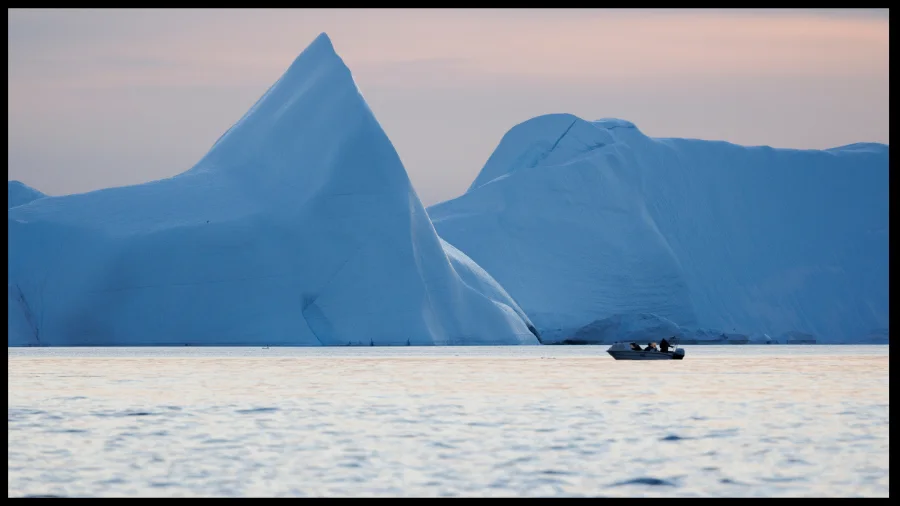
Russia has outlined another major buildout step for the Northern Sea Route through 2035, pairing additional icebreaker capacity with a much larger emergency response and salvage footprint. The plan is framed around enabling more consistent Arctic navigation and scaling cargo ambitions, with officials pointing to continued re-routing of freight toward the NSR and a heavier emphasis on safety coverage and support infrastructure along the corridor.
Click here for 30 second summary
Northern Sea Route buildout in one read
Russia has outlined a corridor support plan through 2035 that pairs additional icebreaker capacity with a much larger rescue and salvage fleet and dedicated bases along the route. The package is framed as a way to make Arctic navigation more scalable and less dependent on thin emergency coverage across remote legs.
- Fleet targets through 2035
Ten additional icebreakers, 46 rescue and salvage vessels, and three rescue fleet bases are cited as the core deliverables. - Near-term signal
Officials referenced 11 search-and-rescue vessels planned throughout 2026 and a 2026 completion target for the nuclear icebreaker Chukotka. - Cargo ambition backdrop
A 2035 cargo objective of 170 million tons is referenced alongside recent transit and container growth commentary.
| Reader shortcut | Build targets | Timing markers | Operating unlock | Planning read-through |
|---|---|---|---|---|
| Icebreaker expansion |
Ten additional icebreakers are included in the development plan through 2035.
Announced by Deputy Prime Minister Yury Trutnev in connection with the NSR plan.
|
Plan horizon runs through 2035. | More escort availability and tighter convoy scheduling capacity during heavier ice periods. | Supports a longer season operating model and reduces the risk that single-asset outages reshape corridor throughput. |
| Rescue and salvage scale | Forty-six search-and-rescue, emergency response, and salvage vessels are included in the plan. |
An initial tranche of 11 search-and-rescue vessels is described for 2026, supplementing five completed in 2024 to 2025.
This is positioned as immediate capacity-building alongside the longer plan.
|
Shortens response gaps for towing, fire, medical evacuation, and incident control along remote legs. | Improves the corridor’s insurability narrative by shifting risk discussions from “no help nearby” to “defined coverage.” |
| Three rescue fleet bases | Three rescue fleet bases are planned along the route to deploy the rescue and salvage fleet. | Base buildout is framed as part of enabling more consistent navigation through the Arctic. | Better staging, spares, crews, and response positioning along long-distance operating legs. | Adds infrastructure depth that matters when operators model schedule reliability and contingency buffers. |
| Near-term fleet milestone | The Project 22220 nuclear icebreaker Chukotka is described as scheduled for completion in 2026. | 2026 milestone provides a visible “next escort” addition rather than a purely out-year promise. | More escort capacity supports higher utilization of ice-class cargo ships and reduces peak-season bottlenecks. | A tangible datapoint for near-term corridor planning in addition to the 2035 end-state targets. |
| Throughput ambition backdrop |
NSR planners have paired fleet expansion with cargo growth targets, including a stated objective of 170 million tons by 2035.
Officials also referenced 2025 transit shipments reaching 3.2 million tons and reported container growth.
|
2025 throughput is used as an anchor point for the next decade buildout narrative. | Higher throughput requires both escort coverage and credible emergency response capability. | The market relevance is less about a single season and more about corridor permanence and support depth for repeat operations. |
| Implementation footprint | The development plan is described as covering 155 measures across fleet, infrastructure, safety, and navigation management. | Multi-workstream plan implies staged execution rather than a single procurement wave. | A larger “systems” approach can reduce weak-link failures that interrupt navigation windows. | Helps stakeholders track deliverables beyond ship counts, including bases, traffic management, and port support elements. |
The announced plan targets a larger icebreaker fleet and a scaled emergency response network along the Northern Sea Route through 2035, with an initial near-term push in search-and-rescue deliveries described for 2026 and additional escort capacity milestones referenced for the nuclear fleet program.
We welcome your feedback, suggestions, corrections, and ideas for enhancements. Please click here to get in touch.