Panama Supreme Court Voids CK Hutchison Panama Canal Port Concession
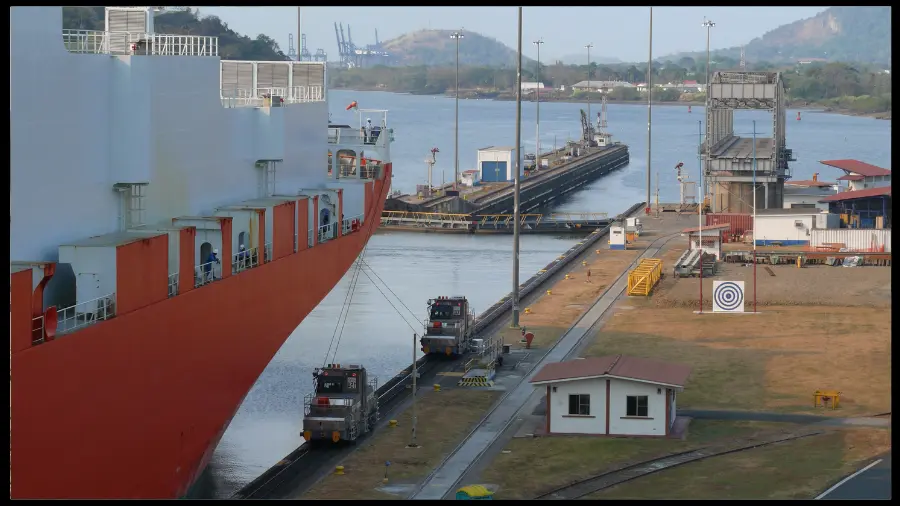
Panama’s Supreme Court has ruled the concession framework for Panama Ports Company (CK Hutchison) unconstitutional, throwing the long-running contracts for the Balboa (Pacific) and Cristóbal (Atlantic) container terminals into uncertainty. The decision lands while a proposed sale package for CK Hutchison’s ports business (including the Panama terminals) has been under scrutiny, and it now forces a reset on what legal structure will govern these canal-end terminals and who can operate them going forward.
Click here for 30 second summary
Panama canal-end port contracts summary
Panama’s Supreme Court has ruled the legal basis supporting Panama Ports Company’s long-running concession unconstitutional, putting the operating arrangement for the Balboa and Cristóbal terminals into uncertainty. The decision lands while the terminals have been discussed as part of a wider global ports sale plan, and it shifts attention to the government’s next-step pathway for interim authority and a replacement framework.
- The ruling targets the concession’s supporting laws and acts and annuls the framework underpinning the contracts.
- Balboa and Cristóbal are the terminals at the Pacific and Atlantic entrances to the canal that are affected.
- Key near-term variables are interim operating authority and whether the state moves toward a retender or revised public-private structure.
This is a governance and control-risk reset at a global chokepoint-adjacent terminal pair, and it creates uncertainty around operator continuity and the mechanics and timing of any related asset-transfer process.
| Fast reader take | Court Actions | Impact | Changes | Closest stakeholders |
|---|---|---|---|---|
| Concession legal footing breaks |
The Supreme Court annulled the laws and acts supporting the PPC concession as unconstitutional.
The ruling is framed as a legal reset, not a performance review.
|
PPC’s authority to operate the two canal-end terminals under the prior concession framework.
Balboa
Cristóbal
|
The “next structure” becomes the gating item: interim governance, potential retender, or a revised public-private model. | Terminal operator, Panama state agencies, carriers using Panama as a network hinge. |
| Chokepoint adjacency | The contracts relate to terminals at the Pacific and Atlantic entrances to the canal. | Canal-end box terminal infrastructure that supports transshipment, repositioning, and schedule recovery options. | Any shift in operator or terms can reprice port-side economics even if canal tolls are unchanged. | Liner network planners, feeder operators, beneficial cargo owners with Panama-dependent routings. |
| Deal and valuation risk spikes |
The ruling clouds the port-asset transferability under CK Hutchison’s wider ports divestment plan.
Legal clarity becomes a prerequisite for closing mechanics.
|
The Panama component inside a proposed global ports sale package discussed publicly.
BlackRock-led consortium
MSC involvement reported
|
Timelines can stretch: lenders, buyers, and advisers typically re-price for legal and political execution risk. | Investors, buyers, financing banks, port M&A advisers. |
| Operations likely continue, but with friction | Court decisions rarely stop cranes overnight; the near-term question is interim authority while the state sets the new pathway. | Capex approvals, vendor contracting, and multi-year service commitments tied to concession certainty. | Expect higher internal sign-off thresholds, slower investment decisions, and tighter contract language until governance is clarified. | Terminal suppliers, stevedoring labor planning, carriers negotiating windows and service levels. |
| Watchpoints that will move the story |
The government’s execution choice will define the commercial outcome.
The ruling shifts attention to policy and tender mechanics.
|
Path options: revised concession law, retender, or restructuring under a public-private partnership approach. | The first concrete signals will be in: interim operator mandate, tender timetable, and any guidance on tariff and investment obligations. | Operators that could bid, shipping lines with Panama-heavy rotations, insurers and risk teams. |
-
Step 1 Court ruling landsThe legal foundation supporting the port concession is ruled unconstitutional.
-
Step 2 Interim operating authorityGovernment designates who holds day-to-day authority while the replacement structure is set.
-
Step 3 Replacement framework chosenThe state defines whether this resolves via revised concession law, a retender, or a revised public private model.
-
Step 4 Transferability and sale mechanicsAny asset sale or operator change is priced and timed off the new framework and its transition rules.
Watch for interim operator notices, any changes to berth allocation practice, published tariff adjustments, and capex or productivity signals at Balboa and Cristóbal.
This ruling is a control and governance reset at the Panama Canal’s terminal endpoints. It injects uncertainty into who holds interim authority, what legal structure replaces the annulled concession basis, and how any related port-asset sale or operator transition can be executed.
We welcome your feedback, suggestions, corrections, and ideas for enhancements. Please click here to get in touch.