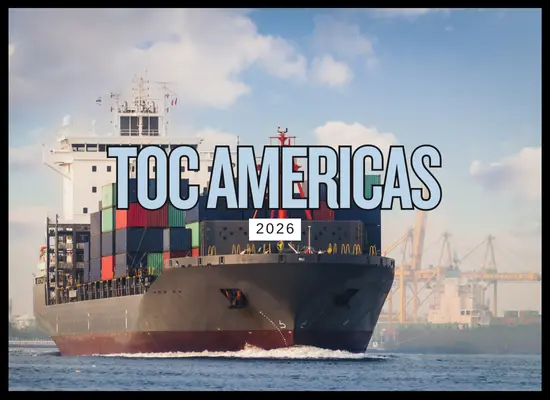
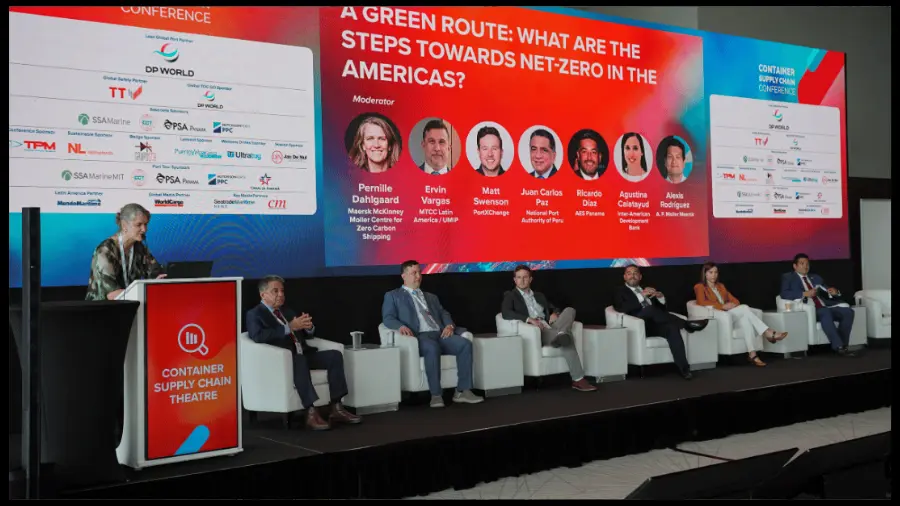
TOC Americas 2026 shifts the conversation to the Caribbean gateway of Cartagena. If you work in ports, terminals, or the container supply chain, this is the kind of event where practical operator pain points meet real tech and equipment discussions, and where regional trade realities (congestion, resilience, productivity, security, decarbonization) get debated with people who can actually change outcomes.
⚓
TOC Americas 2026 — Event Snapshot
20–22 October 2026
Dates
20–22 October 2026
City
Cartagena, Colombia
Format
Conference and exhibition focused on ports, terminals, and container supply chain operations across the Americas
Core audience
Terminal operators, port authorities, shipping lines, logistics providers, equipment and automation suppliers, digital platform teams, safety and sustainability specialists
Content lanes
Container supply chain strategy and operations plus port technology and innovation programming
Note: The official TOC Americas 2026 site currently confirms the city and dates. Venue specifics are sometimes published closer to the event. The map above points to Cartagena’s main convention center area used for large conferences.
What makes TOC Americas a high-signal week
This is an operator-forward ports and terminals event. You get the mix of strategic container supply chain conversation plus very practical tech, equipment, and automation discussions that translate into projects.
🧠
Operations-first content
Expect discussions anchored in throughput, yard and gate performance, berth planning, labor realities, safety, and service reliability across the Americas.
Use it to pressure-test
What will change your vessel and truck turn times
What is measurable in 90 days versus 12 months
What breaks integration in real terminals
🛠️
Port tech and equipment in one circuit
The exhibition focus is built for terminals: automation, TOS ecosystems, sensors, cranes and handling, safety systems, power and electrification, and data platforms.
Bring to meetings
Your top 3 bottlenecks by hour and location
Current stack: TOS, planning tools, telemetry
Constraints: power, footprint, labor, permits
🔄
Supply chain view, not just port view
TOC’s container supply chain framing keeps the focus on upstream and downstream impacts: network planning, inland connections, shipper expectations, and disruption resilience.
Good questions to ask
How do projects change total dwell time
Which KPIs carriers actually care about
Where visibility fails across handoffs
🤝
Networking that is role-aligned
This is built for operator-to-supplier conversations and peer benchmarking. If you come with a short decision list, it becomes a productive buying and validation week.
Simple approach
Pre-book 6–10 meetings, then protect two daily windows
Do one “integration reality check” meeting per vendor
End each day with a short next-step decision
🧭
TOC Americas 2026 week game plan
20 to 22 October • Cartagena
Make the week pay off by arriving with a short list of operational priorities, then using the conference to narrow options and the expo floor to verify what is deployable in a real terminal.
Suggested time split for a high-ROI week
Tune for your role below
Conference sessions
35%
Expo floor demos
45%
Target meetings
20%
Keep one protected block each day for comparison shopping. That is where you validate integration effort, timelines, and the real KPI impact.
Choose a track
Day 0 prep
Pick one priority KPI: berth productivity, yard moves, truck turn time, dwell, safety incidents, energy use.
Write down your current system map and where data quality breaks.
Set three meeting windows and protect them.
Days 1 and 2 on-site
Spend the first hour on the expo floor to locate the top 6 vendors for your KPI.
Ask every vendor the same three questions: integration burden, timeline to first measurable result, what fails in live operations.
Capture one reference site per vendor with a comparable throughput profile.
Day 3 closeout
Convert conversations into pilots, not purchases.
Leave with a shortlist of 2 to 3 options and a clear success metric for each.
Schedule follow-up calls within 7 to 10 days while details are fresh.
Day 0 prep
List 5 ports that matter most to your schedule reliability in 2026.
Bring the operational pain points you see: berth delays, crane intensity, gate queues, data gaps.
Define what you want from terminals: predictable windows, better visibility, fewer exceptions.
Days 1 and 2 on-site
Talk with operators about what improves berth and yard predictability fastest.
Compare terminal digital approaches across the region and note what is actually shared with carriers.
Shortlist partners for joint improvement projects and data alignment.
Day 3 closeout
Leave with two concrete next steps per port: a meeting date and an operational topic.
Capture which KPIs terminals are willing to publish or share.
Decide what you will test next on one service string.
Day 0 prep
Arrive with one measurable case study and one simple pilot package.
Know your integration story: what data you need, what systems you touch, typical deployment timeline.
Pre-book meetings with operators who match your ideal profile.
Days 1 and 2 on-site
Qualify quickly: KPI target, site constraints, approval path, decision timing.
Offer references early and explain what success looks like in 90 days.
Capture exact next steps and schedule them before the lead cools.
Day 3 closeout
Send same-day recaps with three bullets and one clear ask.
Tag leads by readiness and assign owners internally.
Line up a post-event demo week so momentum continues.
✅
Leave with these 6 outcomes
2 to 3 shortlisted solutions for your top KPI
1 pilot scope per shortlisted option
1 reference site per vendor with similar scale
Integration notes: systems touched and data needed
Timeline to first measurable result
Follow-up meetings booked within 7 to 10 days
🏙️
Cartagena practical notes for TOC week
Quick logistics that save time
Cartagena is compact. The airport is close, and the main visitor districts concentrate hotels, dining, and meeting spots, which helps you keep the week efficient.
Arrivals and transfers
CTG airport sits in the Crespo area and is typically a short drive to the historic center.
For teams, use pre-booked cars or app-based rides for predictable pickup and fewer negotiations.
Build buffer time in the late afternoon when the city feels busiest.
Where to stay for a smoother week
Walled City for walkable dinners and easy client hosting.
Getsemaní for a busy evening scene and fast access to the historic core.
Bocagrande for modern hotels and straightforward car access.
Daily rhythm that reduces friction
Put your highest-priority meetings in the morning when everyone is on time.
Plan dinners in one district per night so the group does not scatter.
Use short debriefs right after sessions to capture actions and owners.
📍
Venue check that saves a wasted morning
Confirm the venue name from your badge email or the official event site before you book hotels.
If your materials reference the Cartagena de Indias Convention Center area in Getsemaní, it is right by the historic core,
which makes the Walled City and Getsemaní especially efficient bases for the week.
Meeting hygiene in a tourism-heavy city
Use the hotel lobby, venue cafés, and well-known restaurants for first meetings.
Agree pickup points and times in writing for group dinners.
Keep receipts and notes in one shared channel so nothing is lost.
Heat and comfort planning
Cartagena is typically hot and humid, so schedule outdoor walks early or after sunset.
For multiple meetings, pick air-conditioned venues and keep transfers short.
Carry water and a backup shirt if you are on the floor all day.