Maersk puts MECL back through Suez in a structural Red Sea return with real network consequences
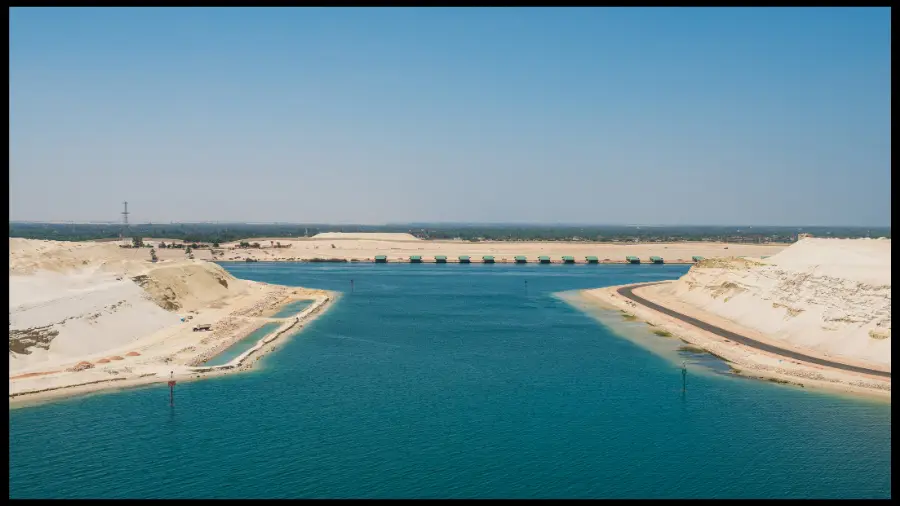
Maersk has decided to route its MECL service (Middle East/India ↔ U.S. East Coast) back through the Suez Canal and Red Sea as a structural change rather than isolated test transits. That matters because the MECL loop is long-haul and equipment-sensitive: the moment a full string shifts from Cape diversions back to Suez, the impact shows up in transit-time math, schedule buffers, and container positioning before any headline rate moves.
Get the maritime stories operators are watching.
Stay ahead of vessel markets, port disruption, maritime technology, and more.
Click here for 30 second summary
Maersk converts Red Sea transits into a full MECL routing design
After successful MECL test transits (including Maersk Denver in mid-January), Maersk has now confirmed a structural return of the MECL service through Suez/Red Sea for all subsequent sailings. The immediate effect is a shorter network loop and a different equipment rhythm.
-
Network math changes fast
Cutting Cape distance releases vessel-days and can reduce “extra ship” requirements needed to hold weekly frequency. -
Reliability becomes more sensitive
Less buffer time can mean delays cascade quicker if port windows slip, even if transit time improves on paper. -
Terms can stay strict
Routing can switch faster than insurance and contractual language normalizes; corridor conditionality remains part of planning.
This is a real network move, not a headline voyage: it changes MECL’s loop timing, container positioning, and operational playbooks, with early rotations acting as the stress test for schedule integrity under a shorter, faster design.
| Move | Confirmed plan (high-level) | Operational mechanics that change first | Commercial knock-on |
|---|---|---|---|
| Structural route switch | Maersk decided MECL sailings will route via the Suez Canal/Red Sea again, moving beyond one-off transits. | Shorter sailing distance compresses schedule buffers and changes where “catch-up time” can be found. | Shippers see different ETAs, cutoff times, and rollover risk as the string recalibrates. |
| First voyages in the change | Initial MECL sailings are scheduled to begin around mid-to-late January (eastbound and westbound legs staged into the new routing). | Network control focuses on port-window integrity: one missed berth cascades faster when buffers shrink. | Transit-time improvements can reduce inventory days, but reliability depends on how smooth the first rotation runs. |
| Security posture stays “conditional” | Return is framed as stepwise, with safety measures applied on transits and decisions tied to security thresholds. | Voyage instructions and onboard routines tighten; routing can still pivot quickly if conditions deteriorate. | Insurance terms, clause language, and shipper risk reviews often remain conservative for longer than headlines suggest. |
| Equipment positioning shifts | MECL’s Middle East/India–U.S. East Coast trade is equipment-sensitive and timing-sensitive on empties and export boxes. | Shorter loop time alters container turn rates and where empty pools build or drain across calls. | Booking acceptance, allocation, and premium space behavior can change as the box cycle tightens. |
| Capacity math changes via vessel-days | Same ships, different route: switching from Cape to Suez typically reduces voyage duration for the loop. | Fewer vessel-days per round trip can free slack elsewhere or reduce the need for “extra” ships to hold frequency. | This is one of the cleaner pathways for softening tightness without adding physical tonnage. |
| Knock-on beyond containers | The headline is container routing, but corridor confidence influences Gulf-area port operations, inspections tempo, and service providers. | Higher scrutiny periods often show up as waiting time and paperwork friction around specific nodes. | Even if the string runs, friction costs can persist through added checks, contingencies, and tighter contractual terms. |
MECL goes back through Suez: the network gets shorter, but the corridor adds conditionality
A structural routing switch does two things at once: it reduces the “Cape distance penalty” that has been soaking up vessel-days, and it reintroduces a corridor where security thresholds can change quickly. The operational story is the trade-off between faster loops and tighter contingency planning.
Rotation milestones to watch
Maersk Sebarok completed an earlier MECL transit via Bab el-Mandeb/Red Sea. Proof-of-execution.
Maersk Denver (552W) completed another MECL transit into the Red Sea. Repeatability test.
MECL moves to trans-Suez for all sailings, with named first westbound/eastbound voyages in Maersk’s advisory. From “tests” to “routing design.”
Early weeks matter most for schedule integrity. One missed berth ripples faster when Cape buffers disappear.
Network mechanics that shift first
Vessel-days: the quiet supply lever
Shorter route means fewer sailing days per loop, which can reduce the number of ships needed to hold weekly frequency.
Buffer compression changes delay behavior
When the loop is shorter, “catch-up time” is scarcer. Reliability becomes more sensitive to port productivity and weather windows.
Equipment positioning re-optimizes
Faster rotations can tighten container turn times, shifting where empty pools build and where shortages appear.
Corridor conditionality persists
Even with structural routing, voyage instructions and contractual discretion tend to stay conservative until confidence compounds.
Early cycle watchlist (practical)
Schedule integrity
Did the first trans-Suez rotations hold port windows?
The first 2–3 loops are the “stress test” for whether buffers were resized correctly.
Blanking behavior
Are omissions used to protect the string?
If port time runs long, carriers often protect reliability by trimming calls or rephasing.
Empty container pattern
Do empties re-accumulate where exports need them?
A shorter loop can solve one shortage while creating another if the cadence shifts unevenly.
Term discipline
Do underwriters/charterparty terms loosen slowly?
Terms often normalize later than routing decisions; paperwork and clauses can remain strict.
Cape vs Suez Network Math Tool (vessel-days + frequency)
Plug in your assumptions to translate a routing switch into loop time, ships required for weekly frequency, and vessel-days freed. Defaults are placeholders; replace with your own planning numbers.
Loop days saved (Cape → Suez)
0
Difference after optional buffer is applied to both.
Ships required (weekly frequency)
—
Approx: loop_days ÷ (7 / sailings_per_week).
Vessel-days freed (over horizon)
—
Saved days × number of sailings.
Loop duration comparison (visual)
We welcome your feedback, suggestions, corrections, and ideas for enhancements. Please click here to get in touch.