Top 8 Ways EU ETS Changes Voyage Economics in 2026
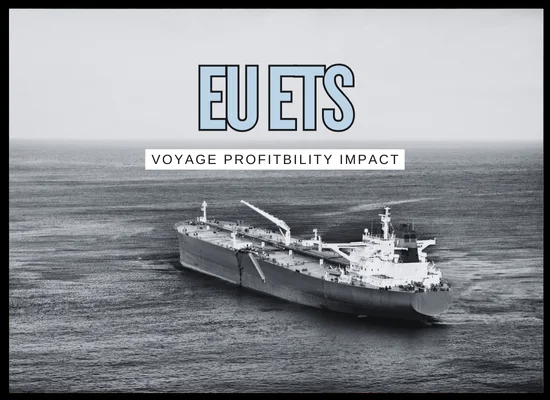
EU ETS gets more “real-money” in 2026: operators are settling a larger surrender obligation (70% of 2025 verified emissions) on a hard deadline, while the scope expands to additional greenhouse gases and the rules keep rewarding some routes and port-call patterns more than others. The result is that ETS stops being a compliance footnote and starts behaving like a planning variable you can feel in fixtures, routing, working capital, and contract language.
1️⃣ Bigger bill in the 2026 compliance cycle
In 2026, shipping companies must surrender allowances covering 70% of their 2025 verified emissions, due by 30 September 2026. That single step-up is why many teams feel ETS “arrive” in the P&L, because the payable portion jumps while the reporting burden stays.
| Lever | Changes in 2026 | Economic impact | Who feels it | Fast action |
|---|---|---|---|---|
| 70% surrender | 2026 surrender covers 70% of 2025 verified emissions. | Higher payable share increases cash need and makes cost-pass-through more visible. | Owners, DoC holders, chartering teams. | Run a 2025 emissions estimate early and plan allowance buying windows. |
| CH₄ & N₂O | CH₄ and N₂O added to ETS scope. | Higher CO2e exposure for some fuel/engine profiles; “same CO₂” can still cost more. | Gas-fuelled operators, technical managers. | Quantify CO2e (not just CO₂) for key trades and revisit fuel strategy assumptions. |
| 100% vs 50% | 100% intra-EEA + at-berth; 50% EEA to non-EEA. | Route and port choice changes ETS exposure per voyage. | Network planners, liner ops, tramp chartering. | Model ETS as a voyage line item alongside bunkers and canal dues. |
| Transshipment rule | Certain nearby non-EU transshipment stops are treated differently in port-of-call logic. | Reduces “detour” options that would otherwise trim exposure on paper. | Container alliances, terminal planners. | Check whether your common hubs fall under the neighboring port criteria. |
| Procurement risk | Allowance buying becomes recurring cash and price management. | EUA price swings and purchase timing affect P&L and working capital. | Finance, treasury, chartering. | Set an allowance policy: staged buying, limits, and responsibility owners. |
| Penalty exposure | Short positions trigger €100/tCO2e penalty plus make-up surrender. | “Underbuying” can be dramatically more expensive than “overbuying.” | Compliance owners, management. | Track coverage weekly near deadline and define escalation thresholds. |
| Contract allocation | Responsible entity is fixed by rules; cost allocation is a contract decision. | Disputes can delay recovery, distort voyage P&L, and create counterparty friction. | Owners, charterers, brokers, legal. | Use clear ETS clauses: payer, index, timing, evidence pack, dispute steps. |
| MRV discipline | Verified emissions drive the bill; annual deadlines force operational readiness. | Bad data becomes money leakage; verification delays can compress buying windows. | Operations, technical, compliance. | Audit bunker data flow now, and pre-clear verifier expectations before peak season. |
2️⃣ Methane and nitrous oxide enter the cost base
From 1 January 2026, EU ETS maritime expands beyond CO₂ to include methane (CH₄) and nitrous oxide (N₂O). For certain propulsion and fuel profiles, this can change which voyages and vessel types carry higher CO₂e exposure even if CO₂ alone looks unchanged.
| Topic | Changes in 2026 | Why it moves cost | Where it hits hardest | What you need to quantify |
|---|---|---|---|---|
| Additions | CH₄ and N₂O emissions are included (priced as CO₂e) alongside CO₂. | You now buy allowances for non-CO₂ tonnes converted into CO₂e, not just CO₂ tonnes. | Any operator with measurable CH₄/N₂O emissions, especially where non-CO₂ is non-trivial. | Annual CH₄ and N₂O quantities (or a defensible estimate) plus the conversion factors used. |
| CO₂e conversion | Non-CO₂ emissions are converted to CO₂e using GWP100 multipliers. | Small physical emissions can become large CO₂e numbers after multiplication. | Profiles with methane slip concerns or processes that drive N₂O formation. | GWP basis (defaults are often 28 for CH₄ and 265 for N₂O; confirm for your framework). |
| Voyage exposure | The same geographic scope logic applies (intra-EEA + at-berth vs EEA/non-EEA split). | Non-CO₂ tonnes are pulled through the same scope share, so route choice can amplify or reduce the priced share. | Trades with frequent EEA port calls or long EEA legs. | Share of emissions that fall into 100% vs 50% scope for your trading pattern. |
| Commercial pass-through | ETS clauses must reflect that “emissions” now means CO₂e, not CO₂ only. | Invoicing disputes can appear if one party assumed CO₂-only while the other prices CO₂e. | Time charters and COA structures with variable ETS mechanisms. | Clause language: metric definition (CO₂e), evidence pack, timing, adjustment logic. |
| Operational controls | Measurement discipline becomes more valuable because non-CO₂ adds new uncertainty. | Bad assumptions on CH₄/N₂O can inflate priced tonnes or create last-minute allowance shortfalls. | Fleets where CH₄/N₂O is small but uncertain, or where data pipelines are immature. | Data flow, verification readiness, and a “most-likely / worst-case” emissions band. |
3️⃣ The 100% vs 50% route split keeps shaping routing math
The economics remain structurally different depending on voyage pattern: 100% of emissions are covered for EEA-to-EEA voyages and at-berth in EEA ports, while 50% applies for voyages between an EEA port and a non-EEA port. That split is why port choice, transshipment, and “last non-EEA stop” decisions can move real money.
| Voyage pattern | Scope share applied | Economic Changes | Where teams usually optimize | Common watchouts |
|---|---|---|---|---|
| EEA ↔ EEA (intra-EEA) | 100% of voyage emissions | ETS behaves like a direct variable cost on the full leg, similar to a fuel surcharge that tracks CO₂e. | Speed and fuel choice; port rotation; avoiding unnecessary intra-EEA repositioning legs. | “Short” legs can still be expensive if they sit entirely in the 100% bucket. |
| At-berth in an EEA port | 100% of at-berth emissions | Idle time becomes priced CO₂e, so delays at berth are no longer “free” from a compliance cost perspective. | Berth productivity, shore power where feasible, minimizing waiting-at-berth patterns. | Don’t confuse “waiting outside” vs “at-berth” behavior; track which bucket your delays land in. |
| EEA ↔ Non-EEA (import/export leg) | 50% of voyage emissions | ETS cost per nautical mile is lower than intra-EEA, so the same ship-day can price differently depending on port sequence. | Last/first port selection and network design; combining calls to reduce full-scope time. | Route changes that “look cheaper” can create operational or commercial downsides elsewhere. |
| Mixed itinerary (multiple legs) | Weighted blend (some 100%, some 50%, plus at-berth) | Two similar itineraries can have different ETS bills depending on how much emissions land in each bucket. | Port rotation planning and how transshipment/relay calls are structured. | Small rotation tweaks can move a large share of emissions into or out of the 100% bucket. |
4️⃣ “Neighboring transshipment port” rules reduce easy avoidance plays
For containerships, some non-EU transshipment stops close to the EU can be treated differently in “port of call” logic. The criteria include being outside the EU, within 300 nautical miles of an EU port, and having >65% transshipment share, among other conditions. This narrows the list of “cheap detour” options for network design.
| Concept | Changes in 2026 | How it blocks “easy avoidance” | When it matters most | Verify |
|---|---|---|---|---|
| Stop doesn’t “reset” the voyage | Detour calls at listed neighboring transshipment ports are ignored for voyage boundary logic. | You can’t split an EEA↔non-EEA voyage into a smaller priced leg plus a large non-priced non-EEA leg. | Container loops that rely on a nearby hub to relay EU cargo. | Whether the intermediate hub is on the official list and whether your call qualifies as a port-of-call stop. |
| Eligibility is objective | Only ports meeting criteria (e.g., high transshipment share and proximity) are designated. | Prevents “port shopping” among nearby hubs that function mainly as transshipment relays. | Networks near the EU perimeter (Mediterranean, Atlantic approaches). | Current list, update cycle, and whether “equivalent measures” apply for that port/country. |
| It’s a pricing model change | Emissions across the detour remain priced as part of the EEA↔non-EEA voyage slice. | The second leg is no longer a free ride from an ETS standpoint if it exists only because of the hub stop. | When the post-hub leg is long (big emissions that would otherwise sit outside scope). | Use CO₂e for the full “effective voyage” (EEA port to next true port of call). |
| Commercial knock-on | Cost pass-through assumptions should align with the “ignored stop” rule. | Reduces incentives for costly network changes that don’t deliver ETS savings. | Alliance re-optimizations, feeder strategy, contract renewals. | Charterparty/contract language defines which legs are priced and what evidence supports invoices. |
5️⃣ Allowances become a working-capital and price-risk problem
Because allowances must be surrendered for the previous year’s verified emissions by 30 September, operators often end up managing EUA purchases like procurement and hedging, not just compliance. The bigger the obligation, the more timing and price exposure show up in cash planning.
| Finance lever | In practice | Costs | What good looks like | Fast check |
|---|---|---|---|---|
| Price exposure | You must buy EUAs against verified emissions, and the price moves independently of freight and bunkers. | When the obligation is large, even small EUR/t changes swing the total cost. | Defined buying strategy with limits, responsibility, and escalation rules. | What is your “max pain” if EUA moves ±€10/t on your expected allowance need? |
| Timing exposure | Most companies end up buying in tranches through the year to avoid a single bad window. | Late buying can coincide with compressed deadlines and market volatility. | Staged procurement plan aligned with emissions tracking and verification milestones. | How many months of “allowance coverage” do you maintain as the year progresses? |
| Working capital | Buying earlier ties up cash (or credit) months before the surrender deadline. | Cash sits in inventory-like assets instead of ops, capex, or debt reduction. | Budgeted WC line and treasury plan that treats EUAs as a managed position. | What’s the peak cash outlay if you hold 50% coverage by mid-year? |
| Forecast accuracy | Emissions estimates drift; route mix and speed decisions change the final bill. | Under-forecast creates last-minute buying risk; over-forecast ties up extra cash. | Monthly forecast updates with scenario bands (base/high) and a defined buffer policy. | Do you track “forecast error” vs verified emissions and learn from it? |
| Counterparty recovery | If cost is passed through (charter/contract), cash recovery can lag or be disputed. | You carry the working capital even when someone else is ultimately paying. | Clear invoicing mechanics and evidence pack that reduces disputes. | What is your average days-to-recover ETS charges, and what’s the dispute rate? |
6️⃣ The non-compliance economics are punitive
If you do not surrender enough allowances, the EU ETS framework includes an excess emissions penalty of €100 per tCO₂e (and you still must surrender the missing allowances). As coverage ramps, “short” positions become far more expensive to carry.
| Negative Implications | Happenings | Direct money impact | Second-order impact | Fast prevention step |
|---|---|---|---|---|
| Short on allowances | You fail to surrender enough EUAs by the deadline. | Penalty of €100 per tCO₂e short (screen value), plus you still owe the missing EUAs. | Compliance escalation, audit attention, and potential operational restrictions under enforcement measures. | Maintain a buffer and trigger thresholds when coverage drops below target. |
| Bad emissions forecast | Verified emissions come in higher than your buy plan. | Last-minute buying at whatever the market gives you, plus risk of falling short. | Cash squeeze and internal blame loop between ops, compliance, and finance. | Run base/high scenarios and refresh the forecast monthly (or per voyage for key trades). |
| Late verification | MRV data or verifier timeline compresses your buying window. | Concentrated buying can worsen average price and increases short risk. | Operational distraction and rushed documentation. | Pre-align verifier expectations and lock internal cutoffs well before deadline. |
| Disputed cost recovery | Charterer/shipper disputes ETS invoices or methodology. | You still must buy and surrender EUAs even if recovery is delayed. | Working-capital strain and commercial friction. | Use clear clause language and provide a standard evidence pack. |
7️⃣ “Who pays” is a contract problem, not a vibes problem
The shipping company remains the responsible entity for surrendering allowances (often the shipowner by default, unless responsibility is properly taken over under the rules). That’s why 2026 is pushing clearer charterparty language on ETS cost allocation, invoicing mechanics, and what happens during company changes mid-year.
| Clause decision | To define | Why disputes happen | Clean, practical wording concept | Evidence pack (tight) |
|---|---|---|---|---|
| Payer vs responsible entity | Who reimburses ETS costs, even though the shipping company must surrender allowances. | Parties conflate legal responsibility with commercial payment. | “Owner remains responsible for compliance; Charterer reimburses ETS costs as set out herein.” | Voyage list, scoped tonnes, phase factor, price basis. |
| Metric definition | Whether the charge is based on CO₂ or CO₂e (and whether CH₄/N₂O is included). | One side prices CO₂e, the other assumed CO₂-only. | “Emissions means CO₂e for all ETS-covered GHGs within scope.” | CO₂e calculation summary and verifier-ready data fields. |
| Scope share & voyage boundary | How 100% vs 50% legs and at-berth emissions are treated for invoicing. | Port-sequence edge cases and disagreements on which leg is “covered.” | “Charges reflect ETS scope rules for the relevant itinerary and port-of-call treatment.” | Itinerary, port-of-call assumptions, scoped emissions table. |
| Price basis | Which EUA price is used (spot, average, purchase price, index) and when it’s set. | “You bought at a bad time” becomes an argument unless the basis is defined. | “Price = [index/average] for [window], plus [admin] if agreed.” | Index reference or purchase ledger summary (as agreed). |
| Timing & cashflow | When invoices are issued, payment terms, and whether interim billing is allowed. | Owner carries working capital while waiting to recover costs. | “Interim ETS invoices may be issued monthly/quarterly; true-up after verification.” | Interim estimate method and true-up reconciliation format. |
| Mid-year changes | What happens if the ship changes ownership, DoC holder, manager, or charterer mid-year. | Everyone agrees ETS exists, but not who pays for which period. | “Charges prorated by time/voyages under the charter; settlement on redelivery.” | Handover statement: dates, voyages, emissions estimates, reconciliation plan. |
| Dispute path | How disputes are raised, what gets paid undisputed, and how corrections flow. | Invoices get stalled entirely because there’s no partial-pay mechanism. | “Pay undisputed portion; disputed items resolved within X days.” | Issue log template + correction mechanism. |
8️⃣ MRV/verification quality turns into direct money control
The ETS bill is based on verified emissions. The annual cycle includes submitting verified emissions data (often referenced around 31 March) and surrendering allowances by 30 September, so the quality of MRV workflows, bunker documentation, and verification readiness has a direct economic consequence.
| MRV control point | What “good” looks like | Negative Implications | Direct money consequence | Fast fix |
|---|---|---|---|---|
| Bunker evidence chain | BDNs, delivery notes, samples, and ROB logs reconcile cleanly voyage-to-voyage. | Missing BDNs, inconsistent densities, or unexplainable ROB deltas. | Verifier questions, late final emissions, and risk of over/under-buying EUAs. | Standardize onboard documentation and reconcile ROB weekly, not annually. |
| Emission factor discipline | Fuel types mapped correctly, with consistent factors and CO₂e treatment. | Wrong fuel mapping, mixed factors across fleets, or CO₂ vs CO₂e confusion. | Inflated CO₂e or back-and-forth corrections that compress buying windows. | Single fleet-wide factor library controlled by compliance, not ad hoc spreadsheets. |
| Voyage/port classification | Port-of-call logic and 100%/50% splits are consistent and audit-ready. | Edge cases cause rework (transshipment treatment, mixed itineraries, berth timing). | Invoice disputes and changes in scoped tonnes after you already bought EUAs. | Pre-agree classification rules with the verifier for your core trades. |
| Cutoff dates & close process | Clean monthly close with a year-end runbook and defined owners. | Everything is left to Q1, then the verifier requests extra evidence. | Forced “late buying” at the worst time, or conservative overbuy that ties up cash. | Lock an internal close date and run a Q4 pre-audit before the final cycle. |
| Verifier readiness | Evidence packs and reconciliation schedules are ready before review starts. | Verifier has to chase missing items, re-check calculations, and rerun samples. | Higher internal labor cost and higher risk of deadline compression. | Maintain a standard verifier pack per vessel and update it continuously. |