Pascal Technologies Review: Air lubrication and AirHull tech for real-world savings
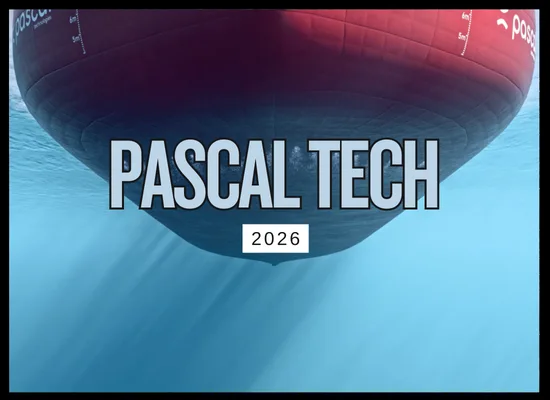
Pascal Technologies sits in that sweet spot where “new tech” is only useful if it turns into measurable efficiency on real hulls. Their focus is practical: use air-based hull and lubrication approaches (plus control software) to reduce resistance, cut energy use, and make electric or fuel-agnostic vessel concepts more viable without turning operations into a science project.
0278 Oslo, Norway
- Lowering energy use by reducing resistance: Their AirHull concept is described as using an air cushion beneath the hull to reduce hydrodynamic resistance, targeting major efficiency gains for planing vessels.
- Making electric boats more usable at speed: For high-speed profiles, improved efficiency translates directly into range and battery sizing flexibility, which can be the difference between “demo” and “deployable.”
- Fuel-agnostic efficiency rather than fuel-specific lock-in: Their hull-tech messaging is built around reducing energy demand first, regardless of whether propulsion is electric or conventionally fuelled.
- Extending the same logic to large ships via air lubrication: Pascal has also described developing air lubrication solutions for larger vessels, where the value often shows up as fuel savings and emissions reduction over long trading cycles.
- Improving real-world results with advanced controls: Their “control system” approach for air lubrication is positioned around getting better performance across operating conditions than a simple on/off system.
- Reducing trial-and-error during integration: They describe collaborating with builders through to delivery, which matters because hull interfaces, pumping systems, and powertrain choices can make or break the realized gain.
- Turning efficiency into an operations story you can defend: When savings are measured and repeatable, it’s easier to justify capex to finance teams and explain performance to charterers or internal stakeholders.
-
Business Norway solution profile BusinessNorway.comA national export and solutions profile highlighting Pascal’s AirHull positioning for planing and high-speed vessels. Open the profile.
-
Partner announcement: concept boat sea trials Nimbus GroupNimbus Group announcement describing sea trials of an electric concept boat developed with Pascal Technologies and Evoy. Read the Nimbus post.
-
Electric boats “cushion of air” coverage PlugboatsCoverage describing two electric vessels integrating AirHull, comparing the approach to hydrofoils and other efficiency concepts. Open Plugboats.
-
Mainstream tech coverage (Europe) heise onlineAn explainer-style article on AirHull for electric boats, focusing on drag reduction and the “glide on air” concept. Read on heise.
-
Commercialisation progress write-up Yachting VenturesA sector write-up discussing Pascal’s energy-efficient hull technology and its commercialization trajectory. Open the article.
-
New electric models coverage Yachting VenturesCoverage of new electric boat models integrating AirHull, useful for tracking how the tech is moving into real products. Read the update.
-
Innovation ecosystem listing Creative Destruction LabA third-party company listing noting Pascal’s work spanning AirHull for boats and software/control for air lubrication systems in ships. View the listing.
For Pascal, the strongest “so what” is simple: efficiency tech is only valuable when it survives real operating conditions and still produces measurable savings. The external mentions above help because they show the concept appearing in partner programs, trials, and industry coverage, not only in a product page. If you are evaluating fit, the cleanest path is to map your duty cycle first (speed profile, sea state, load, operating days), then run a conservative payback case before you move into detailed engineering and trials.
We welcome your feedback, suggestions, corrections, and ideas for enhancements. Please click here to get in touch.