7 Ways to Salvage a Gulf Cargo Plan Without a Gulf Call
March 3, 2026
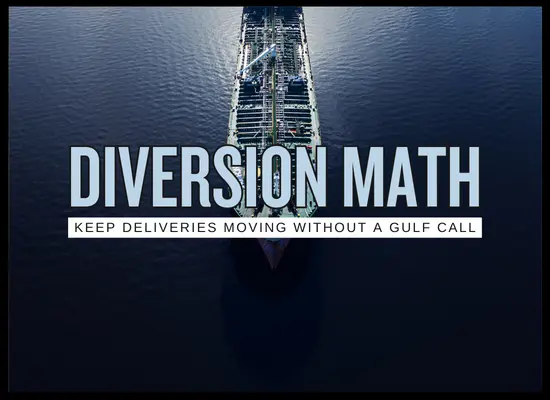
If the Strait and adjacent waters become insurance-gated, the biggest failure mode is not the threat itself. It is committing to an ETA and downstream promises before you know if the voyage is executable. Right now, war-risk terms are being pulled or rewritten and interference is being reported across approaches, so the most valuable alternatives are the ones that preserve commercial optionality while keeping the cargo plan moving in some form.
Seven alternatives to a Gulf call that keep cargo plans alive
Practical options when coverage, approvals, and approach conditions are unstable.
| Alternative | Best fit | First three checks | Fast operator move |
|---|---|---|---|
|
Oman-side substitution call plus onward movement
Hub and relayOutside Strait posture
Re-plan the Gulf call into an Oman-side call, then finish with feeders, inland transport, or a second leg.
|
|
|
Publish a re-plan clock
Assign one owner for onward logistics, set cut-offs, and confirm the cost split in writing inside 6 hours.
|
|
Structured drift hold with a trigger tree
Hold postureDecision discipline
Treat waiting as a managed operating mode with hold points, review cadence, and hard triggers.
|
|
|
Issue a one-page trigger tree
Proceed, hold, divert, substitute, with named approvers and time limits that match the next 72 hours.
|
|
Ship-to-ship transfer outside the highest-risk geometry
STSDecouple exposure
Transfer cargo to a different vessel or leg, then complete delivery under a different routing or approval set.
|
|
|
Pre-approve two STS locations
Build one primary and one alternate with an acceptance pack for underwriters, charterers, and terminals.
|
|
Split into two fixtures or two contractual legs
OptionalityContract hygiene
End the first leg at an intermediate node, then re-fixture the second leg when conditions are clearer.
|
|
|
Use a two-leg checklist
Run the same 10 questions across chartering, ops, and insurance before either leg is signed.
|
|
Change the discharge plan instead of changing the route
Regional deliveryLast-mile solve
Deliver to a different regional node, then distribute using smaller legs or inland transport.
|
|
|
Activate a substitute-node list
Keep a pre-approved list by cargo type with named owners for storage and inland distribution.
|
|
Partial discharge or re-sequencing strategy
Reduce penaltiesPrioritize urgency
Discharge the most time-sensitive portion at a safer node, then carry the balance onward later.
|
|
|
Run a priority release list
Name what must land now, what can wait, and what partial delivery does to claims and penalties.
|
|
Insurance-first routing with pre-bound approvals
InsurabilityAvoid last-minute veto
Build the plan around what can be insured and approved today, not what is shortest on the chart.
|
|
|
Do not publish a firm ETA early
Hold ETA until cover is bound and the decision-rights chain is confirmed for the next 72 hours.
|
Built for a 72-hour decision cycle where insurance terms, approvals, and interference conditions can shift faster than schedules.
Delay vs divert break-even calculator
Directional planning math. Compare the cost of waiting (drift or anchorage) versus the cost of diverting and re-planning the route.
Adjust inputs to see break-even days and directional cost comparison.
Notes:
• Waiting cost includes hire value, waiting fuel, and optional port-related daily costs.
• Diversion cost includes added sailing time value, added diversion fuel, and optional one-off costs.
• This is directional. Charter party allocation, demurrage, and insurance premiums can dominate in specific fixtures.
• Waiting cost includes hire value, waiting fuel, and optional port-related daily costs.
• Diversion cost includes added sailing time value, added diversion fuel, and optional one-off costs.
• This is directional. Charter party allocation, demurrage, and insurance premiums can dominate in specific fixtures.
72-hour execution pack
A compact internal-ready structure for high-volatility port calls. Expand the sections you need, then circulate the key decisions and checks.
72-hour trigger tree
Proceed
- War-risk cover is bound with current geography wording and effective dates.
- Agent confirms berth window and approach procedures, including any controlled movements.
- Bridge cross-check plan is active for interference conditions, including backups for position fixing.
Cadence 6 to 8 hours
Owner approvals Current
Hold points Defined
Proceed with buffers
- Cover is bound, but premium or exclusion changes are active and can move with little notice.
- Approach picture is stable enough to execute, but queue risk or stop-go behavior is rising.
- Schedule buffer exists and a defined drift plan is ready if the call slips.
Cadence 4 to 6 hours
Buffer 24 to 48h
Plan B Ready
Hold outside
- Cover is pending, buyback terms are unclear, or effective dates do not match the voyage profile.
- Interference or incident reports increase execution risk on approaches.
- Port call is technically open, but services and windows are unstable and high-cost drift is likely.
Cadence Every 4 hours
Hold limit Time-box
Escalation Named
Substitute port
- Cover is excluded or approvals will not be granted within the next 72 hours.
- Safe-port or deviation rights are likely to trigger disputes if the call is attempted.
- There is a viable alternative node and the customer accepts a different discharge plan.
Cadence Immediate
Routing Re-plan
Docs Re-issue
Keep the trigger tree tied to named approvers. If decision rights are unclear, the operating picture will outrun the organization.
First-call checklist
Insurance and approvals
- Confirm cover is bound, not pending, with current exclusions and effective dates.
- Confirm geography wording matches route and any defined boundaries.
- Confirm who can issue hold or diversion orders, and how costs allocate.
Approach execution
- Confirm onboard cross-check procedures for position fixing under interference conditions.
- Confirm reporting cadence and required contacts for the route and port call.
- Confirm pilotage, tugs, and controlled movement procedures with the agent.
Crew and endurance
- Confirm a drift fuel and consumables plan that covers a time-boxed hold.
- Confirm crew-rest guardrails to avoid fatigue-driven errors during prolonged waiting.
- Confirm medical and emergency readiness and communications fallback.
Commercial readiness
- Confirm customer acceptance for alternate discharge nodes and timelines.
- Confirm documentation posture for re-issue or amendment without disputes.
- Confirm a clear escalation chain for schedule changes and penalty exposure.
This is a practical structure, not legal guidance. Use it to align ops, chartering, insurance, and the master decision chain inside a tight window.
We welcome your feedback, suggestions, corrections, and ideas for enhancements. Please click here to get in touch.