12 Ports That Are Winning the Post-Pandemic Trade Race
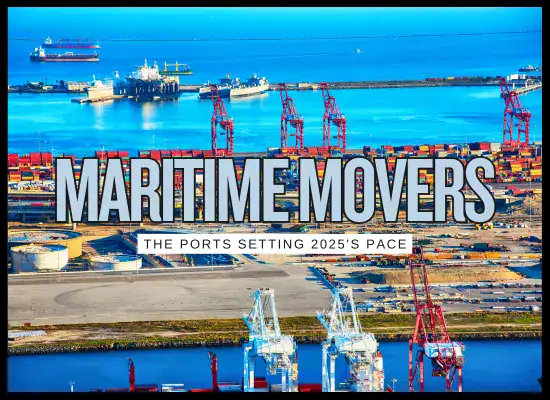
The chaos of the pandemic exposed which ports could adapt, invest, and lead under pressure. In 2025, a handful of seaports aren't just back to normal, they’re setting the new global standard with record volumes, cutting-edge automation, and bold environmental shifts. These 12 ports are not only moving cargo faster, they’re redefining what it means to be a world-class gateway in the modern age.

- 50.1 million TEUs
- Growth: +8% year over year
- Massive investment in automation at the Yangshan Deep-Water Terminal
- Round-the-clock container movement with unmanned vehicles and smart cranes
- Backbone of China’s global export network
- Heavily automated (especially Yangshan terminal)
- Uses AGVs, smart cranes, and remote control systems
- Partnered with other major ports to develop green shipping corridors
- Building a plant to produce 70,000+ tons of green methanol annually
- Electrified equipment and lower-carbon infrastructure being deployed
- Top origin port for Asia–Europe and transpacific routes
- Key hub for China’s Belt and Road logistics corridors
- Expansion of deep-water berths at Yangshan
- Integration of AI-based terminal management systems
- Advanced green methanol production facility under construction
- Geopolitical risks in Asia-Pacific affecting shipping lanes
- Pressure to hit aggressive carbon reduction targets by 2030
- 41.1 million TEUs
- Growth: +5.4% year over year
- Nearly 90% of containers are transshipment, serving 600+ ports worldwide
- Handles over 130,000 vessel calls annually with industry-leading turnaround time
- Critical link in global trade through the Strait of Malacca
- Tuas Mega Port features fully automated yard and crane operations
- Deployment of AI for berth planning and terminal optimization
- Autonomous vehicles and drones tested in live port environments
- Leading bunkering port for alternative fuels including LNG, biofuels, and e-methanol
- 100% of new terminal operations designed to be electric or low-emission
- Part of global green corridor agreements with Rotterdam, Los Angeles, and more
- Anchors Southeast Asia’s logistics and maritime economy
- Key gateway between the Indian Ocean, South China Sea, and Pacific routes
- Phased opening of Tuas Mega Port with 11 berths online and 7 more by 2027
- Launch of digitalPORT@SG for fully digital port clearance and scheduling
- Smart traffic management system for real-time vessel coordination
- Maintaining growth amid regional competition from Malaysia and Indonesia
- Balancing rapid digitalization with cybersecurity risk management
- 39.3 million TEUs
- Growth: +11% year over year
- The only port with two terminals each handling over 10 million TEUs
- Operates more than 300 shipping routes including direct services to Europe, Southeast Asia, and Africa
- Crossed 20 million TEUs by mid-2025—15 days ahead of last year’s pace
- Advanced automation at Meishan port area with smart cranes and unmanned yard equipment
- Sea-rail intermodal system connecting 67 inland cities, handling 1.8 million TEUs in 2024 alone
- Launched regional LNG bunkering center with over 100,000 m³ supplied in first half of 2025
- Home to Zhejiang’s first terminal fully powered by wind, solar, and battery storage (26 million kWh annually)
- Key gateway in China’s Belt and Road and dual circulation strategies
- Rapid growth in exports to Southeast Asia, Africa, and South America (20%+ YoY in some lanes)
- Completed Meishan Port Berth 10 for dual 400,000-ton vessel capacity
- Expanded China-Europe rail-sea logistics services for better inland connectivity
- Commissioned integrated renewable-powered terminal infrastructure
- Geopolitical tensions and global route shifts impacting long-haul planning
- Balancing sustainability upgrades with rapid growth and global demand
- Approximately 28.8 million TEUs
- Yantian area alone grew ~7% year over year
- Major gateway for high-tech exports, including electronics and consumer goods
- Over 130 global container routes with strong links to Southeast Asia and North America
- Scaled operations efficiently during peak export surges like Lunar New Year
- Yantian East terminal under development with 3M TEU automated capacity
- Mawan terminal piloting autonomous trucks and smart crane systems
- Over 95% of berths equipped with shore power capability
- LNG bunkering volume reached 300,000 m³ in 2024 with higher targets set for 2025
- Serves China’s top tech zones: Huawei, DJI, Tencent, and others
- Critical link between mainland manufacturing and Hong Kong re-export logistics
- Yantian East expansion: three new berths for 200,000-ton class vessels
- Smart port integration: blockchain, AI logistics, and scheduling systems
- Rapid expansion of LNG fuel infrastructure and green equipment upgrades
- Recurring congestion and export rush delays during high seasons
- Balancing rising green infrastructure costs with operational efficiency
- Approximately 30.9 million TEUs
- Up more than 40% compared to pre-pandemic levels
- Asia’s first fully automated container terminal in commercial operation
- High crane productivity rates exceeding 60 moves per hour
- Extensive multimodal integration with sea-rail logistics corridors
- AI-controlled cranes, 5G-connected yard vehicles, and unmanned stacking operations
- Fully autonomous bulk cargo terminal and hydrogen-powered port equipment in pilot use
- Launched the world’s first hydrogen-powered 5G smart terminal
- First hydrogen-powered tugboat operating in China deployed in 2025
- Port generates over 1.7 million kWh annually from solar panels on-site
- Critical link for northern China’s manufacturing exports
- Part of China’s key northern corridor serving Japan, Korea, and Belt and Road destinations
- Expansion of Qianwan terminal with full 5G+AI automation suite
- Deployment of hydrogen-powered port logistics vehicles and cranes
- Investments in smart grid, solar capacity, and shore power across terminals
- Scaling hydrogen infrastructure beyond pilot programs
- Weather-related slowdowns impacting winter throughput
- Approximately 24.3 million TEUs
- Record high for the port, with +5% year-over-year growth
- Handles over 55% transshipment volume, connecting China, Japan, and Russia
- Highly efficient vessel turnaround with deepwater berths and dense sailing schedules
- Expanding direct services to Europe and North America
- Opened its first fully automated terminal in 2023 at Busan New Port
- Equipped with Korean-built robotic cranes and autonomous guided vehicles
- Plans to automate additional terminals by 2030
- Active participant in green shipping corridor planning with Pacific ports
- Implementing shore power systems across major berths
- Incorporating renewable energy into port operations and cold ironing systems
- Located at the crossroads of major Northeast Asian trade lanes
- Key transfer point for cargo between Asia, Europe, and North America
- New automated terminal at Busan New Port fully operational
- Investments in blockchain pilot programs for trade documentation
- Port expansion plan underway to reach 32 million TEUs by 2040
- Maintaining transshipment dominance amid competition from Chinese and Southeast Asian ports
- Port congestion during peak export seasons and growing labor cost pressures
- Approximately 15.5 million TEUs
- Highest volume in nearly a decade, up ~7% year over year
- Largest container port between Rotterdam and Singapore
- Major re-export hub serving the GCC, East Africa, and Indian subcontinent
- Home to the Jebel Ali Free Zone (JAFZA), one of the world's largest bonded logistics areas
- Terminal 3 is one of the world’s largest semi-automated facilities
- Smart gate systems, remote crane operations, and IoT sensors widely deployed
- Expansion of Terminal 4 includes next-gen automation and capacity boosts
- Runs entirely on renewable electricity as of 2025
- 88,000 solar panels generating 35 MW of power across port and logistics centers
- Shore power systems and zero-emission yard equipment being scaled
- Links Red Sea, Indian Ocean, and Persian Gulf corridors
- Critical node for oil and non-oil trade into the Middle East and North Africa
- Ongoing expansion of Terminal 4 to increase total port capacity to over 22 million TEUs
- Full rollout of DP World’s Dubai Trade digital platform for customs, clearance, and cargo tracking
- Massive investment in renewable power infrastructure across port and JAFZA
- Geopolitical instability in nearby Red Sea and Gulf shipping lanes
- Rising competition from emerging regional ports in Saudi Arabia and East Africa
- Approximately 13.8 million TEUs
- Growth: +2.8% year over year after three years of decline
- Europe’s largest seaport and primary hub for Asia-Europe trade
- Hosts some of the world’s most advanced and automated terminals (e.g., Maasvlakte)
- Efficient hinterland connections via barge, rail, and truck throughout Europe
- Fully automated terminals with unmanned vehicles and robotic cranes
- AI-based traffic management systems for vessel scheduling and yard operations
- Leading in port digitalization via PortXchange and digital twin tech
- On track to become a zero-emission port by 2050
- Expanding shore power access for cruise, container, and offshore vessels
- Major hub for green hydrogen imports and carbon capture initiatives
- Main entry point for maritime cargo into the EU
- Strategic location between the North Sea and Central Europe
- Expanded Maasvlakte terminals and capacity for 24,000+ TEU vessels
- Rollout of Nextlogic platform for smarter inland shipping coordination
- Massive investments in hydrogen infrastructure and CO₂ storage networks
- Pressure from regulatory changes and EU carbon taxation
- Adapting legacy infrastructure to meet zero-emission targets
- Over 10 million TEUs
- +13% year over year — one of the port’s strongest recoveries since the pandemic
- Handles roughly 20% of all inbound U.S. containerized cargo
- Major gateway for transpacific trade, especially China and Southeast Asia
- Collaborative operating model with neighboring Port of Long Beach
- Port Optimizer™ digital platform provides real-time supply chain visibility
- Automated container terminals and on-dock rail efficiency improvements
- Investing in AI and IoT for predictive operations and cargo flow analytics
- All container berths equipped with shore power systems
- Clean Air Action Plan targets zero-emission cargo handling by 2030
- Pilot programs underway for hydrogen and electric drayage trucks
- Serves as the U.S.’s primary import hub for consumer goods
- Strong rail and highway connections to major U.S. inland markets
- Completed $1+ billion in terminal and rail infrastructure improvements
- Strengthened cooperation with Port of Shanghai on green corridor efforts
- Expanded digitalization to manage vessel queuing and truck scheduling
- Labor tensions and policy shifts affecting automation and expansion
- Competitive pressure from Gulf and East Coast ports gaining market share
- Approximately 8.7 million TEUs
- +11% year over year — third-highest annual volume in port history
- Busiest port on the U.S. East Coast, serving a dense consumer and industrial base
- Key hub for all-water Asia–East Coast services via Panama and Suez canals
- Strong performance during West Coast congestion drew permanent cargo shifts
- Widespread use of truck appointment systems and terminal management software
- Ongoing investments in semi-automated equipment and data dashboards
- Integrated ExpressRail system connects port to regional and national markets
- Enforcing strict clean truck standards for port drayage fleets
- Electrification pilots underway for yard tractors and cargo handling gear
- Shore power operational at cruise terminals with container terminal rollout in progress
- Closest major port to the largest population center in the U.S.
- High-capacity rail, barge, and highway links to the Midwest and Northeast
- Bayonne Bridge raised to allow ultra-large vessels up to 18,000 TEUs
- Channel deepening project to 50 feet fully completed
- Expanded terminal footprints and automation investments
- Labor negotiations and regulatory constraints may limit automation progress
- Harsh winters and storm surge risks require ongoing climate resilience upgrades
- Approximately 7.4 million TEUs
- Growth: +12% year over year
- Handles over one-third of India’s total containerized cargo
- End-to-end ecosystem includes terminals, rail, trucking, warehousing, and inland connectivity
- Strategic partnerships with major lines like MSC and CMA CGM
- Semi-automated terminals with remote crane operations and gate digitization
- AI-powered cargo movement optimization within the port complex
- Digitally integrated with Adani’s pan-India logistics infrastructure
- Certified Zero Waste to Landfill across all port operations
- Powered by 225 MW of renewable energy across the Adani port network
- Extensive mangrove afforestation and shoreline protection initiatives
- Closest major port to India’s industrial and agricultural heartlands
- Acts as a vital alternative to congested ports like Mumbai and Nhava Sheva
- New berths added to accommodate ultra-large container vessels (ULCVs)
- Rail corridor expansion for double-stack container movement to northern India
- ESG upgrades recognized in global port sustainability rankings
- Environmental scrutiny due to rapid coastal industrialization
- Geopolitical risk exposure as India ramps up global exports and trade ties
- Approximately 7.5–8 million TEUs
- Growth: +79% compared to 2019 levels
- Busiest port in Africa, with strong connections to over 180 ports in 70 countries
- Critical gateway for cargo moving between Europe, West Africa, and Asia
- Strategic location at the Strait of Gibraltar enables rapid transshipment
- Modern terminals with remote-controlled equipment and smart gate systems
- Digital port community system for end-to-end cargo visibility
- Hybrid straddle carriers deployed to reduce emissions and increase efficiency
- 100% of port electricity comes from renewable sources as of 2025
- Infrastructure in place to deliver green shore power to vessels at berth
- Comprehensive carbon reduction strategy for operators and tenants
- Ideal transshipment hub between Atlantic and Mediterranean trade routes
- Connected to Europe’s logistics backbone by short-sea and ro-ro services
- Tanger Med 2 expansion doubled container capacity to ~9 million TEUs
- Port-wide rollout of digital tracking and customs automation systems
- Launch of clean energy transition program across terminals and logistics zones
- Maintaining rapid growth amid shifting European regulatory frameworks
- Regional competition from emerging African ports with state-led investments
The ports featured in this report are not just recovering from the pandemic, they’re reshaping what global trade looks like in 2025 and beyond. They represent the shift from traditional port operations toward intelligent, resilient, and climate-conscious logistics hubs. Here’s what their progress reveals about where the maritime world is heading:
- Automation is becoming the standard — From Qingdao to Rotterdam, ports are investing heavily in AI-powered cranes, remote-operated vehicles, and 5G-driven control systems to boost productivity and cut labor bottlenecks.
- Green transition is not optional anymore — Ports like Los Angeles, Singapore, and Tanger Med are already powering entire terminals with renewable energy and offering shore power to vessels, setting the stage for zero-emission shipping corridors.
- Strategic connectivity is redefining competitiveness — Ports that integrate seamlessly with inland rail, trucking, and intermodal logistics (like Mundra, Rotterdam, and New York/New Jersey) are winning long-term shipping commitments.
- Transshipment hubs are thriving — Locations like Busan, Singapore, and Tanger Med are leveraging their geography to become essential routing points, especially as carriers diversify away from bottleneck-prone mega-routes.
- Digitalization is the backbone of resilience — From real-time berth scheduling to port community systems, digital tools are enabling ports to handle surges, reroute cargo, and reduce idle time more effectively than ever before.
These 12 ports are a roadmap to the future of maritime infrastructure. Whether you're in shipping, trade policy, logistics, or investment, keeping an eye on how these ports evolve may give you an edge in navigating what’s next.